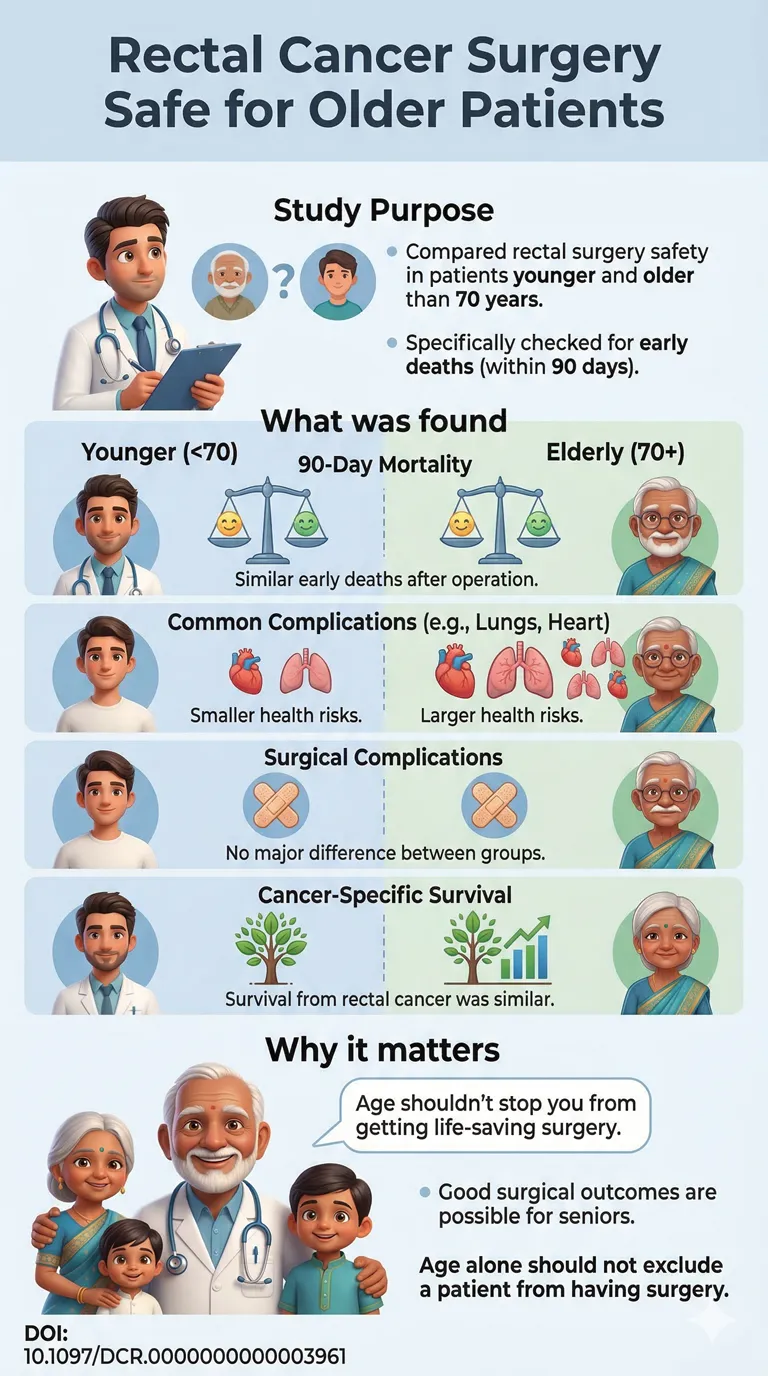
Rectal Cancer Surgery Can Be Safe Even for Older Patients
Many people diagnosed with rectal cancer are over the age of 70. Doctors sometimes worry that surgery may be too risky for older patients.
 Skip to main content

Many people diagnosed with rectal cancer are over the age of 70. Doctors sometimes worry that surgery may be too risky for older patients.
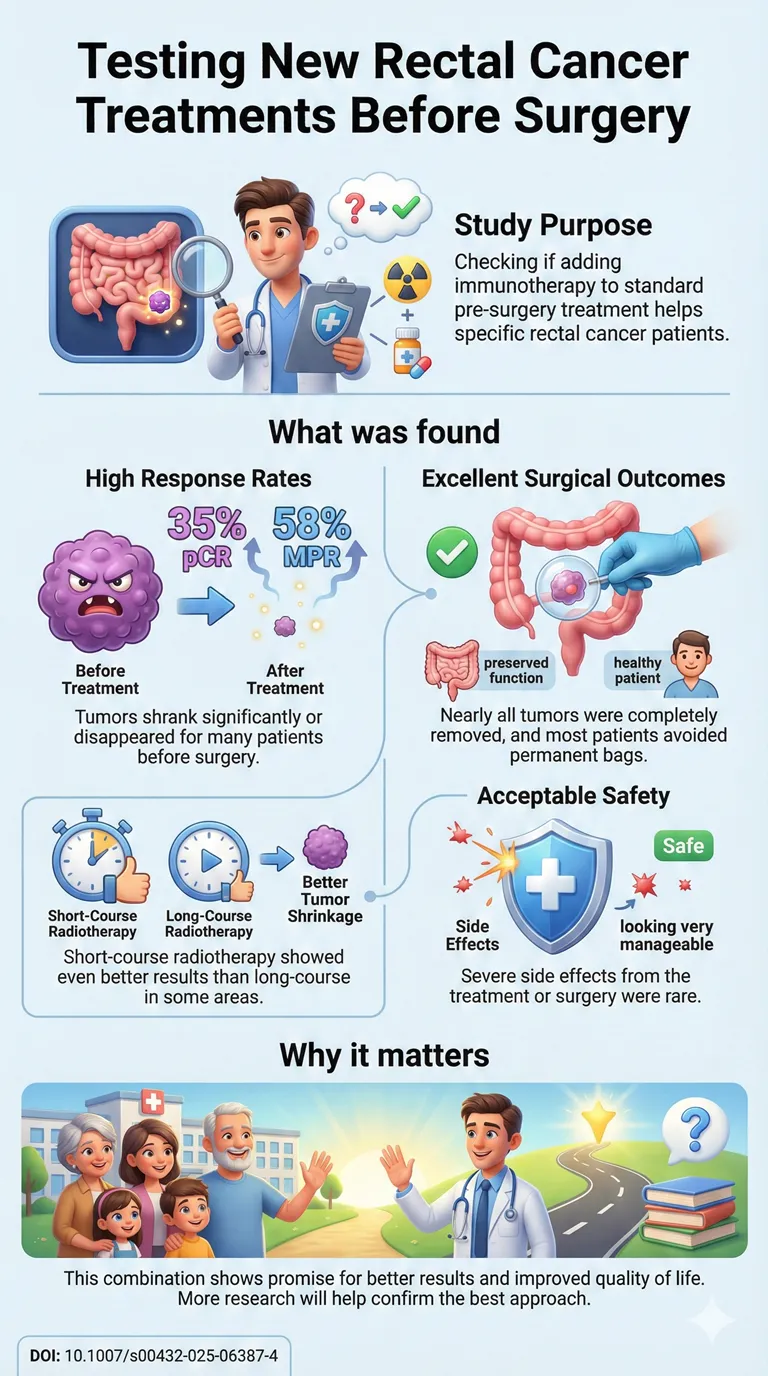
A new treatment approach for rectal cancer is showing hope. It combines standard therapy with immunotherapy before surgery.

After rectal cancer surgery, one of the biggest risks is a complication called an anastomotic leak. This happens when the newly joined parts of the bowel do not heal properly, causing leaks.

Doctors often give treatment before surgery for rectal cancer. This is called neoadjuvant therapy (NAT). It can include chemotherapy, radiation, or both.
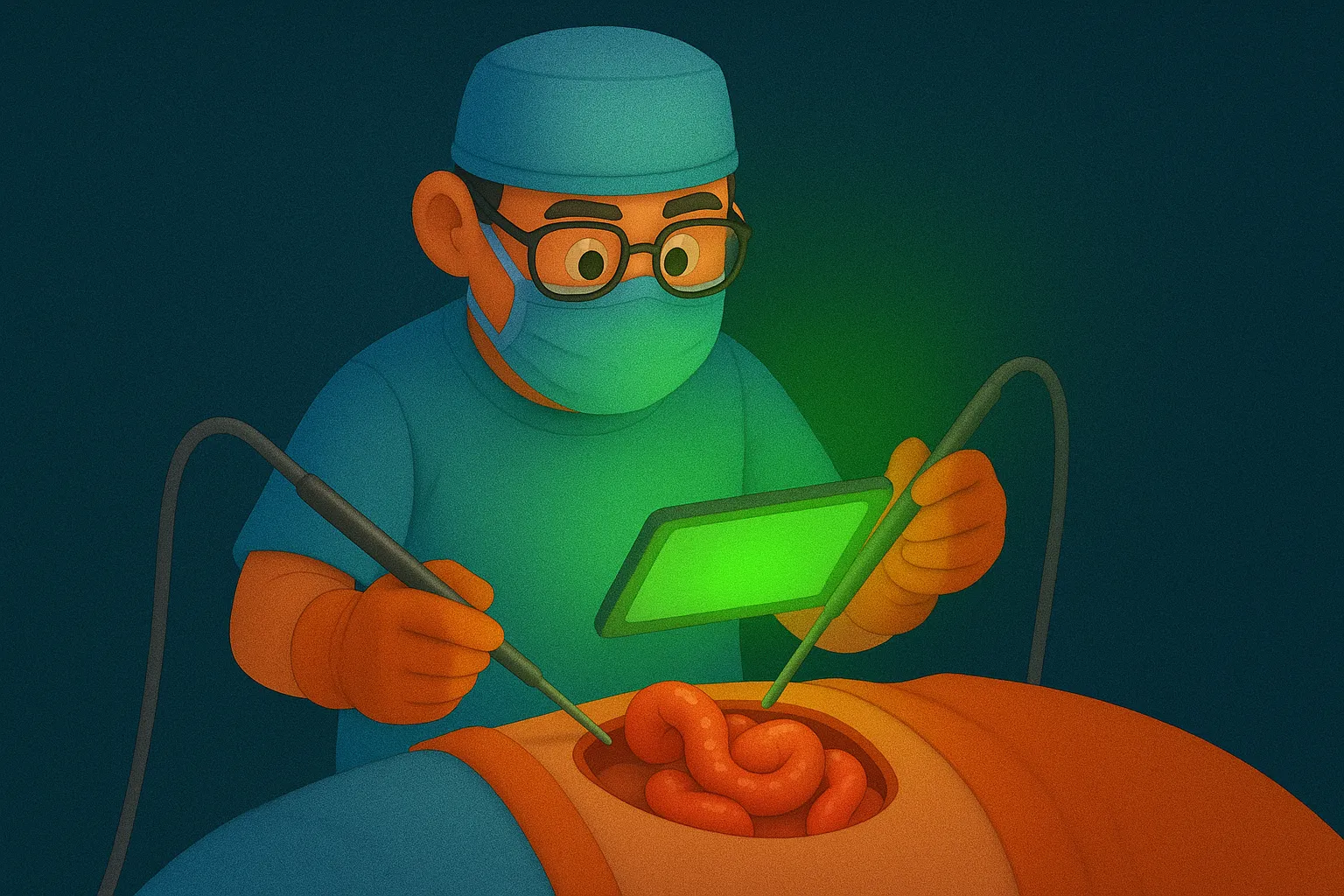
When patients have surgery for rectal cancer, the surgeon often removes the tumor and then reconnects the bowel. This connection is called an anastomosis.

Many people who have surgery for rectal cancer face ongoing bowel problems. This is called Low Anterior Resection Syndrome (LARS).

Promising New Treatment for Advanced Rectal Cancer

Double-Row vs. Triple-Row Staple Technology for Colorectal Surgery
