You are here >> Home > Blog > Cancer > Cancer Surgery > Surgery English > Feeding Tube Placement
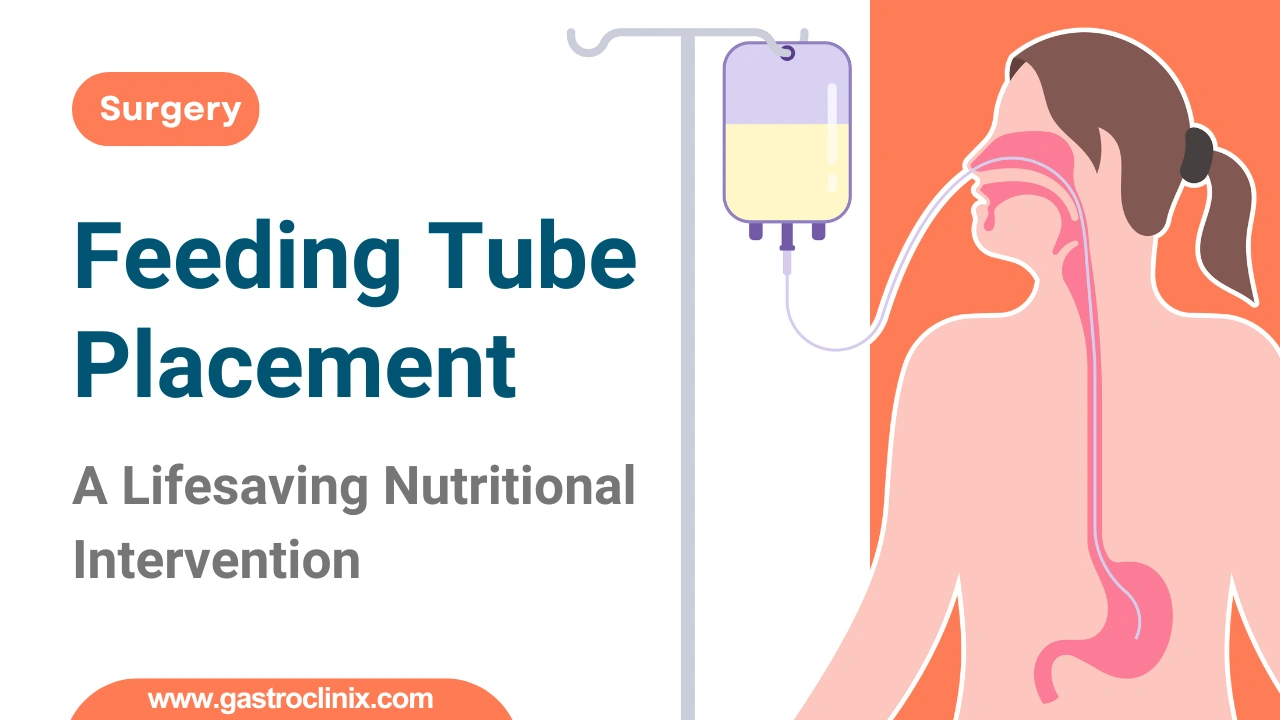

⦿ What it is: A Gastrostomy tube, or G-tube, is placed directly into the stomach through a small opening in the skin of the abdomen.
⦿ When it’s used: This type of tube is suitable for people who need long-term feeding support, for many months or even years. It is more comfortable for the patient than an NG tube for long-term use as it doesn’t irritate the nose or throat.
⦿ How it’s placed: The most common method for a G-tube Feeding Tube Placement is a procedure called Percutaneous Endoscopic Gastrostomy, or PEG. An endoscope (a thin tube with a camera) is used to guide the placement. It can also be placed surgically.
⦿ What it is: A Jejunostomy tube, or J-tube, is inserted through the abdominal wall directly into the jejunum, which is the middle part of the small intestine.
⦿ When it’s used: This tube is used when feeding into the stomach is not possible or safe. For example, if a person has severe stomach problems like gastroparesis (a condition where the stomach empties too slowly) or a very high risk of aspiration (food or liquid going into the lungs), a J-tube is preferred.
⦿ How it’s placed: Similar to a G-tube, a J-tube is placed surgically or with the help of an endoscope or imaging guidance. The decision for this type of Feeding Tube Placement is made when bypassing the stomach is medically necessary.
| Feature | Nasogastric Tube (NG-Tube) | Gastrostomy Tube (G-Tube) | Jejunostomy Tube (J-Tube) |
|---|---|---|---|
| Placement Route | Through the nose, down to the stomach. | Directly into the stomach through the abdomen. | Directly into the small intestine (jejunum) through the abdomen. |
| Duration of Use | Short-term (less than 4–6 weeks). | Long-term (months or years). | Long-term (months or years). |
| Ideal For | Patients in hospital, post-surgery, or those needing temporary support. | Patients with swallowing issues who need nutrition for a long time. | Patients who cannot tolerate stomach feeding or are at high risk of aspiration. |
| Visibility | Visible on the face, secured with tape. | Small button or tube on the abdomen, easily hidden under clothes. | Small button or tube on the abdomen, similar to a G-tube. |


Before recommending a feeding tube, a team of healthcare professionals evaluates the patient. This team often includes a doctor, a dietitian, and a nurse. They will assess:
⦿ Nutritional Status: How malnourished is the person?
⦿ Gastrointestinal (GI) Function: Is the stomach and intestine working properly?
⦿ Prognosis: What is the long-term outlook for the patient’s illness?
The team discusses the situation with the patient (if they are able) and their family to make a shared decision.

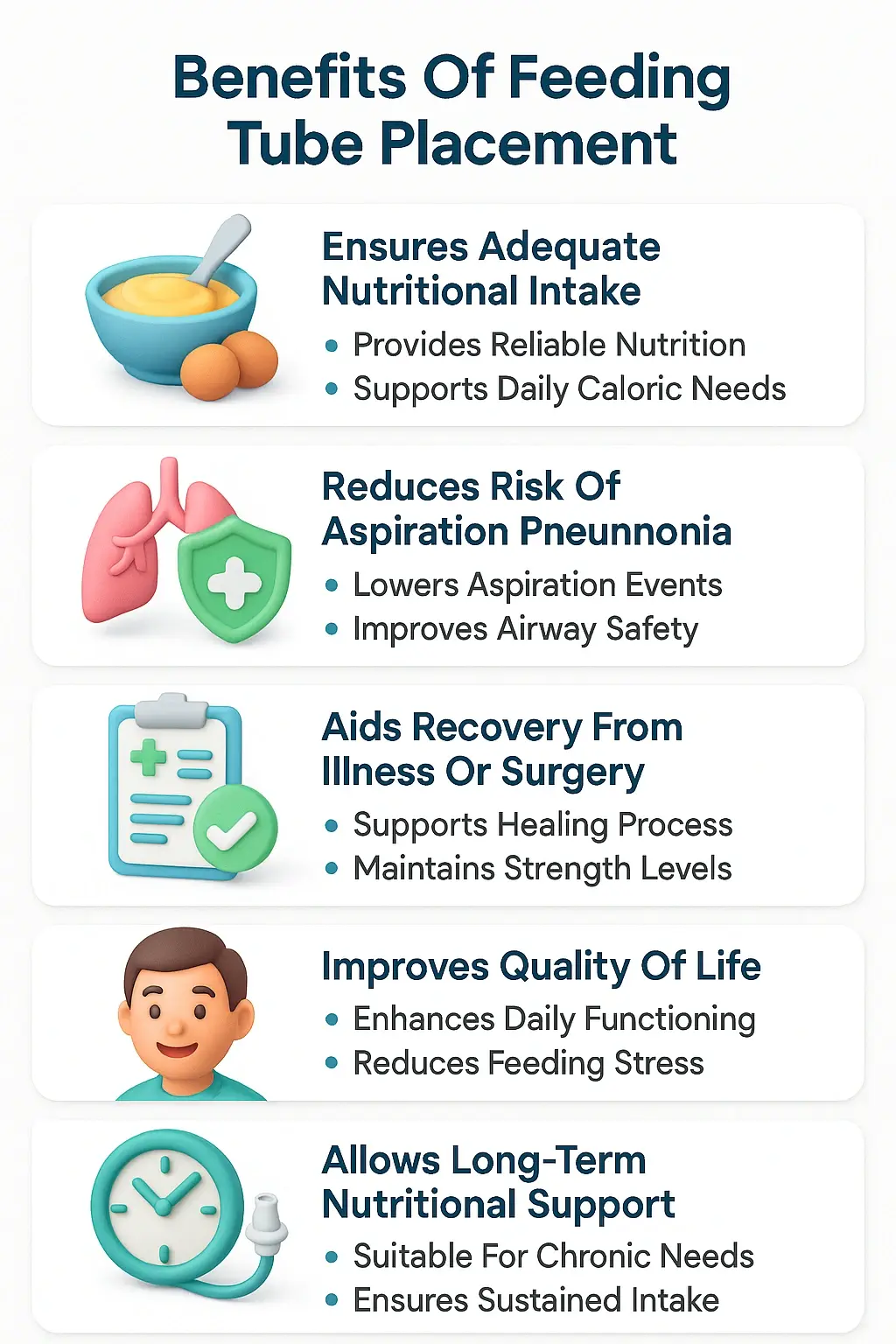
The most common technique for placing a G-tube is the Percutaneous Endoscopic Gastrostomy (PEG).
⦿ What happens: The patient is given a light sedative to make them sleepy and comfortable. A doctor then passes an endoscope (a thin, flexible tube with a camera and light) through the mouth and into the stomach.
⦿ The process: The light from the endoscope shines through the stomach and abdominal wall, showing the doctor the exact spot to make a small cut on the abdomen. The feeding tube is then guided into place. The peg tube placement steps are well-established and the procedure usually takes less than an hour. This is a very common type of Feeding Tube Placement.
Sometimes, the endoscopic method is not possible. For example, if there is a blockage in the throat or a previous stomach surgery makes it difficult to use an endoscope. In these cases, a Feeding Tube Placement can be done surgically.
⦿ Laparoscopic Surgery: This involves making a few small cuts in the abdomen and using a camera and special instruments to place the tube. It’s a “keyhole” surgery.
⦿ Open Surgery: This involves a larger incision and is usually done if other abdominal surgery is being performed at the same time.
The skin around the tube insertion site needs to be kept clean and dry to prevent infection.
⦿ For the first week or so, a special dressing may be used.
⦿ After that, the site should be cleaned gently with soap and water every day.
⦿ It’s important to watch for any signs of infection, such as redness, swelling, pain, or discharge.
Feeding doesn’t start at full volume immediately. It is introduced gradually. A dietitian will create a plan, often starting with water and then slowly introducing a liquid nutrition formula. The medical team will monitor how well the patient is tolerating the feeds, looking for any signs of bloating, cramps, or discomfort.
The care team and family members must be vigilant in monitoring for any potential problems. This includes:
⦿ Clogging: Is the tube blocked?
⦿ Dislodgement: Has the tube accidentally come out?
⦿ Aspiration: Are there any signs of breathing difficulty that could signal aspiration?
Early detection of any issue allows for quick and effective management. This continuous monitoring is a critical part of the overall Feeding Tube Placement journey.
| Complication | Signs to Watch For | What to Do |
|---|---|---|
| Local Site Infection | Redness, warmth, swelling, pain, or a foul-smelling discharge from the tube site. | Keep the area clean and dry. Apply any prescribed antibiotic ointment. Contact your doctor or nurse immediately. |
| Tube Blockage (Clogging) | Difficulty flushing the tube or administering feeds. The pump may alarm frequently. | Try flushing the tube with warm water using a gentle push-pull motion with a syringe. Never force it. If it doesn't clear, contact your healthcare provider. |
| Tube Dislodgement | The tube has partially or completely come out of the stomach. | Do not try to re-insert it yourself. Cover the opening with a clean, dry dressing and go to the nearest emergency room or contact your doctor immediately. |
| Aspiration Pneumonia | Coughing during or after feeds, difficulty breathing, fever. | Stop the feeding immediately. Sit the person upright. Contact your doctor right away as this can be a medical emergency. |
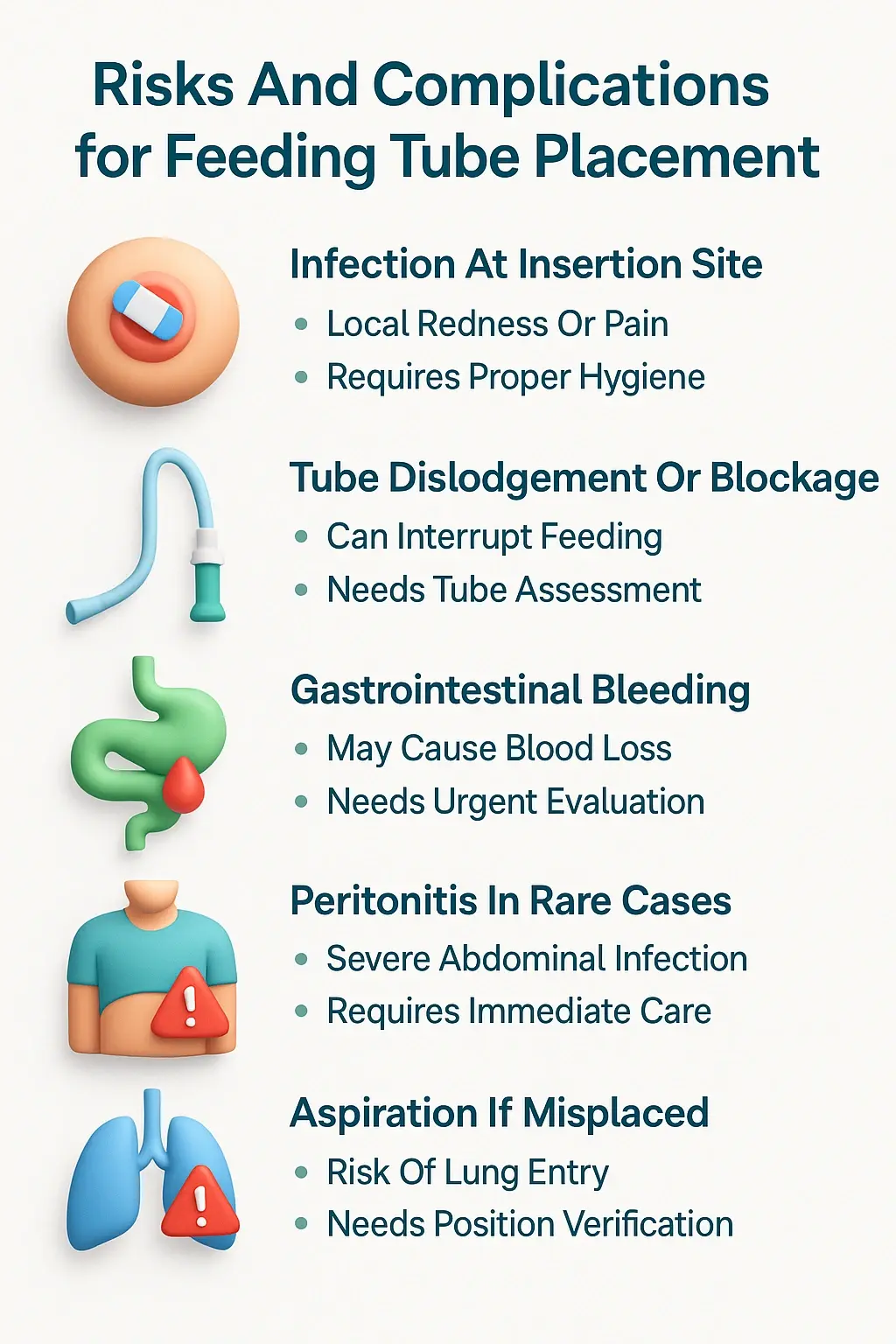
Tubes can become blocked, especially if thick formulas or crushed medications are put through them. The best way to prevent this is to flush the tube with water before and after every feed and every medication. If a tube is accidentally pulled out (displaced), it is a serious situation, and medical help should be sought immediately to replace it before the stoma site closes.
A registered dietitian plays a central role in a patient’s care after a Feeding Tube Placement. They will:
⦿ Calculate the patient’s exact needs for calories, protein, fluids, vitamins, and minerals.
⦿ Choose the right formula for the patient.
⦿ Create a feeding schedule (e.g., continuous feeds over 24 hours or scheduled “bolus” feeds several times a day).
⦿ Monitor the patient’s weight and lab results to make sure the plan is working.
There are many different types of liquid nutrition formulas available.
⦿ Standard formulas: Suitable for most people with normal digestion.
⦿ High-protein formulas: For patients who need extra protein to heal, like after surgery.
⦿ Fiber-enriched formulas: To help with regular bowel movements.
⦿ Disease-specific formulas: Special formulas for people with kidney disease, diabetes, or lung problems.
In special cases, such as with newborns, the plan is highly specialized. The feeding tube size for newborn and the feeding tube size for infant are much smaller and chosen with extreme care. Sometimes, a special feeding tube for breastfeeding is used. This is a very thin tube that is taped alongside the mother’s nipple, delivering formula or expressed milk while the baby suckles, helping them learn to breastfeed while still getting enough nutrition.
The goal of a Feeding Tube Placement is to improve health. The dietitian and medical team will regularly track the patient’s progress. They check weight, hydration status (by looking at skin and urine), and blood tests to see if the nutrition plan needs to be adjusted.
Before a patient is discharged from the hospital, the caregiver (usually a family member) will receive detailed training. They will learn how to:
⦿ Prepare and administer the formula.
⦿ Flush the tube.
⦿ Clean the tube site.
⦿ Operate the feeding pump.
⦿ Troubleshoot common problems like a clogged tube.
This training ensures the caregiver feels confident and capable of managing the feeding tube at home.
A medical supply company will provide all the necessary equipment. This includes the feeding pump, bags or syringes for the formula, the formula itself, and dressings for the site. It is also important to know the specifications of your supplies, as the feeding tube size and colour can vary, and using the correct connecting pieces is vital.
| Task | Frequency | Key Points |
|---|---|---|
| Check Tube Position | Before each feed | Ensure the external bumper is snug against the skin but not too tight. Check for the marking on the tube to ensure it hasn't moved. |
| Clean the Stoma Site | Daily | Use mild soap and water. Gently clean around the tube. Pat the area dry thoroughly. Do not use creams or powders unless prescribed. |
| Flush the Tube | Before and after each feed/medication | Use the prescribed amount of water (usually 30-50 mL for adults). This prevents clogging and keeps the patient hydrated. |
| Elevate the Head | During and for 1 hour after feeding | Keep the head of the bed raised at least 30-45 degrees to prevent reflux and aspiration. |
| Inspect the Skin | Daily | Look for any redness, swelling, leakage, or signs of skin breakdown around the tube site. |
| Check Supplies | Weekly | Make sure you have enough formula, syringes, and other necessary supplies to last until your next delivery. |
MS, MCh (GI cancer Surgeon)
Dr Harsh Shah is a well known GI & HPB Robotic Cancer Surgeon in ahmedabad. He treats cancers of esophagus, stomach, liver, pancreas, colon, rectum & small intestines. He is available at Apollo Hospital.