WhatsApp

Feeding Tube Placement

A Lifesaving Nutritional Intervention

A Lifesaving Nutritional Intervention

You are here >> Home > Blog > Cancer > Cancer Surgery > Surgery English > Feeding Tube Placement
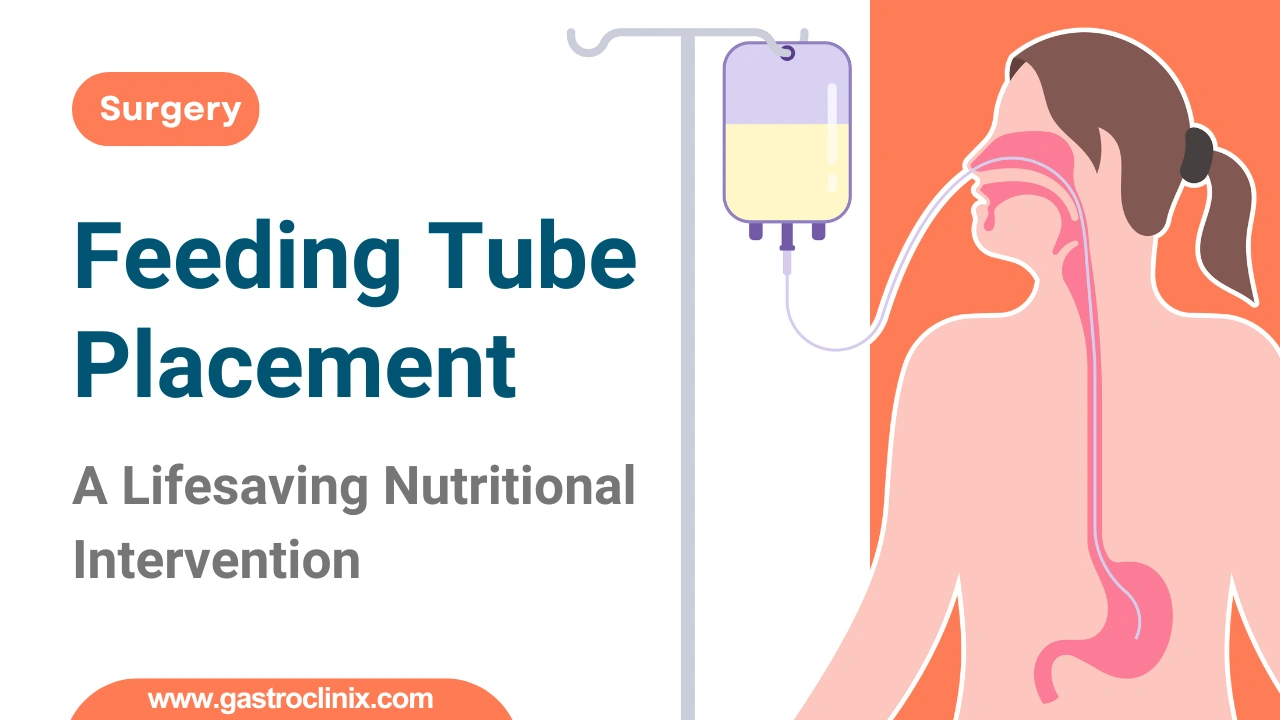
When someone we love cannot eat or drink enough to stay healthy, it can be a very worrying time. The body needs nutrition—food and water—to heal, to have energy, and to live. Sometimes, due to illness or injury, a person’s ability to swallow is lost. In these situations, modern medicine offers a wonderful solution: a feeding tube. This blog is a complete guide to understanding Feeding Tube Placement, a procedure that provides life-sustaining nutrition directly to the stomach or intestines.

We will explain everything in very simple language, so that everyone, from a concerned family member to a curious student, can understand. We’ll talk about the different types of tubes, why someone might need one, and how to care for a person with a feeding tube. Let’s begin this journey of understanding.

Summary

Feeding tube placement helps people who cannot eat or swallow safely get the nutrition, fluids, and medicines they need. It can support recovery, improve strength, and sometimes prevent life-threatening complications like severe weakness or infections.
A feeding tube is a soft, flexible tube placed through the nose or directly into the stomach or small intestine. Liquid food, water, and medicines are given through it. Doctors choose the type and position of the tube based on the patient’s age, illness, and how long support is needed.
When someone cannot eat enough—because of stroke, cancer, injury, or severe illness—a feeding tube keeps the body nourished. It helps maintain weight, immunity, and energy, and can reduce hospital stay and complications.
Proper cleaning, correct tube position, and slow feeding reduce risks like infection, blockage, or aspiration. Family members can be trained to give feeds confidently at home. Emotional support is also important, because patients may feel scared or embarrassed.
Feeding Tube Placement

What is Feeding Tube Placement?

Feeding tube placement is a procedure where a soft tube is gently inserted into the stomach to provide nutrition when a person cannot eat or swallow properly. It ensures the body gets enough calories, protein, and fluids to stay healthy. This method also helps prevent weakness and weight loss during illness. Medicines and liquids can be given easily through the tube. It is a safe and commonly used procedure recommended by doctors when needed.
Historically, the use of feeding tubes dates back to ancient times, but modern techniques emerged in the 20th century with advancements in surgical and endoscopic methods. The introduction of percutaneous endoscopic gastrostomy (PEG) in the 1980s significantly improved safety and accessibility. Today, feeding tube placement is a standard procedure in hospitals and long-term care facilities worldwide, improving outcomes for patients who struggle with nutritional intake.

Types of Feeding Tubes and Their Uses

A feeding tube is not just one single thing; there are different types designed for different needs. The type of tube a doctor recommends depends on how long the person will need feeding support and their specific medical condition. The process of Feeding Tube Placement is tailored to each patient.
Types Of Feeding Tubes
⦿ What it is: A Nasogastric tube, or NG tube, is a thin, flexible tube that is passed through the nose, down the back of the throat, and into the stomach.

⦿ When it’s used: This tube is perfect for short-term nutritional support, typically for a period of less than 4 to 6 weeks. It’s often used in hospitals, especially in the Intensive Care Unit (ICU) or for patients recovering from surgery who cannot eat right away. The ng tube placement steps are relatively simple and can be done at the bedside by a trained nurse or doctor.

⦿ How it’s placed: A key part of the process is the ng tube placement measurement, where the nurse measures the tube from the tip of the nose, to the earlobe, and then down to the bottom of the breastbone. This ensures the tube is long enough to reach the stomach. After insertion, ng tube placement confirmation is extremely important to make sure the tube is in the stomach and not the lungs. This is usually done by taking an X-ray or testing the pH of the fluid pulled back from the tube.

⦿ What it is: A Gastrostomy tube, or G-tube, is placed directly into the stomach through a small opening in the skin of the abdomen.

⦿ When it’s used: This type of tube is suitable for people who need long-term feeding support, for many months or even years. It is more comfortable for the patient than an NG tube for long-term use as it doesn’t irritate the nose or throat.

⦿ How it’s placed: The most common method for a G-tube Feeding Tube Placement is a procedure called Percutaneous Endoscopic Gastrostomy, or PEG. An endoscope (a thin tube with a camera) is used to guide the placement. It can also be placed surgically.

⦿ What it is: A Jejunostomy tube, or J-tube, is inserted through the abdominal wall directly into the jejunum, which is the middle part of the small intestine.

⦿ When it’s used: This tube is used when feeding into the stomach is not possible or safe. For example, if a person has severe stomach problems like gastroparesis (a condition where the stomach empties too slowly) or a very high risk of aspiration (food or liquid going into the lungs), a J-tube is preferred.

⦿ How it’s placed: Similar to a G-tube, a J-tube is placed surgically or with the help of an endoscope or imaging guidance. The decision for this type of Feeding Tube Placement is made when bypassing the stomach is medically necessary.

Feature Nasogastric Tube (NG-Tube) Gastrostomy Tube (G-Tube) Jejunostomy Tube (J-Tube)
Placement Route Through the nose, down to the stomach. Directly into the stomach through the abdomen. Directly into the small intestine (jejunum) through the abdomen.
Duration of Use Short-term (less than 4–6 weeks). Long-term (months or years). Long-term (months or years).
Ideal For Patients in hospital, post-surgery, or those needing temporary support. Patients with swallowing issues who need nutrition for a long time. Patients who cannot tolerate stomach feeding or are at high risk of aspiration.
Visibility Visible on the face, secured with tape. Small button or tube on the abdomen, easily hidden under clothes. Small button or tube on the abdomen, similar to a G-tube.

Indications for Feeding Tube Placement

Why would a person need a feeding tube? The reasons are varied, but they all come down to one simple fact: the person cannot take in enough nutrition by mouth to keep their body strong. A Feeding Tube Placement becomes a necessary and life-saving intervention.
Indications For Feeding Tube Placement
Dysphagia means difficulty in swallowing. It can happen after a stroke, or in people with neurological conditions like Parkinson’s disease or Motor Neuron Disease (ALS). When swallowing is not safe, food and liquids can accidentally go into the lungs instead of the stomach. This is called aspiration and can cause a serious lung infection called aspiration pneumonia. A feeding tube prevents this by delivering nutrition directly where it needs to go.
Patients being treated for cancer of the head and neck often face major challenges with eating. Radiation therapy can cause painful sores in the mouth and throat, and surgery can affect the structures needed for swallowing. A Feeding Tube Placement during treatment helps these patients maintain their weight and strength, which is crucial for tolerating cancer treatments and for recovery.
In some long-term illnesses, the body becomes very weak (a state called debility), or the person may be unconscious for a long time. This can be seen in advanced dementia, after a severe head injury, or in cases of severe malnutrition. In these situations, a feeding tube helps provide the basic calories, protein, and fluids the body needs to sustain its functions.

Pre-Procedural Assessment and Preparation

A Feeding Tube Placement is a medical procedure, and like any procedure, it requires careful planning and preparation to ensure it is safe and successful.
Procedure For Inserting A Feeding Tube

Before recommending a feeding tube, a team of healthcare professionals evaluates the patient. This team often includes a doctor, a dietitian, and a nurse. They will assess:

⦿ Nutritional Status: How malnourished is the person?

⦿ Gastrointestinal (GI) Function: Is the stomach and intestine working properly?

⦿ Prognosis: What is the long-term outlook for the patient’s illness?

The team discusses the situation with the patient (if they are able) and their family to make a shared decision.
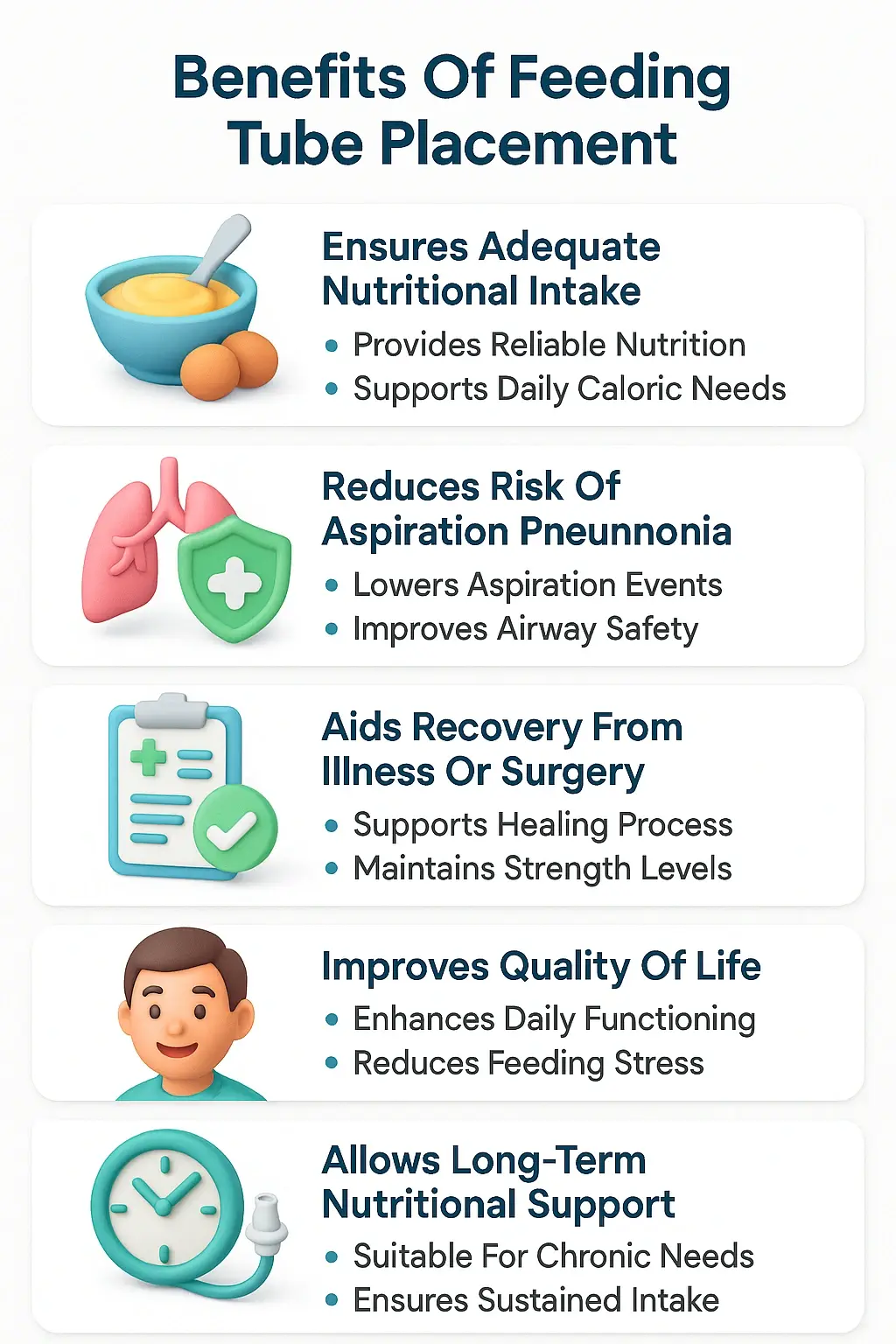
This is a very important step. The doctor will explain the Feeding Tube Placement procedure in detail. They will talk about the benefits (getting nutrition, preventing aspiration), the risks (like infection or tube problems), and any alternative options. The patient or their legal caregiver must understand this information and agree to the procedure by signing a consent form.
To ensure the stomach is empty and reduce the risk of vomiting during the procedure, the patient will be asked not to eat or drink anything for several hours beforehand. The medical team will also review the patient’s medications. Some medicines, like blood thinners (anticoagulants), may need to be stopped for a few days before the procedure to reduce the risk of bleeding. The hospital uses a specific medical code, such as an ng tube placement icd 10 code, for record-keeping and billing for these procedures.
OncoBot - Dr Harsh & Swati Shah - -

Consult GastroBot

Your AI-Powered Gastro Assistant

Feeding Tube Placement Techniques

There are several ways to place a feeding tube, and the doctor chooses the best method based on the patient’s health and the type of tube needed. The goal of any Feeding Tube Placement technique is to be as safe and minimally invasive as possible.
Benefits Of Feeding Tube Placement

The most common technique for placing a G-tube is the Percutaneous Endoscopic Gastrostomy (PEG).

⦿ What happens: The patient is given a light sedative to make them sleepy and comfortable. A doctor then passes an endoscope (a thin, flexible tube with a camera and light) through the mouth and into the stomach.

⦿ The process: The light from the endoscope shines through the stomach and abdominal wall, showing the doctor the exact spot to make a small cut on the abdomen. The feeding tube is then guided into place. The peg tube placement steps are well-established and the procedure usually takes less than an hour. This is a very common type of Feeding Tube Placement.

Sometimes, the endoscopic method is not possible. For example, if there is a blockage in the throat or a previous stomach surgery makes it difficult to use an endoscope. In these cases, a Feeding Tube Placement can be done surgically.

⦿ Laparoscopic Surgery: This involves making a few small cuts in the abdomen and using a camera and special instruments to place the tube. It’s a “keyhole” surgery.

⦿ Open Surgery: This involves a larger incision and is usually done if other abdominal surgery is being performed at the same time.

In this technique, a radiologist uses imaging, like an X-ray (fluoroscopy), to guide the placement of the tube. The stomach is first filled with air through a temporary NG tube to make it visible on the X-ray. A needle is then used to access the stomach, and the feeding tube is placed over a guidewire. This method is another less invasive option, often used for high-risk patients for whom sedation or surgery is not ideal.

Post-Procedure Care and Monitoring

After a successful Feeding Tube Placement, the care and monitoring that follow are just as important as the procedure itself. This ensures the patient stays comfortable and gets the full benefit of the nutrition.

The skin around the tube insertion site needs to be kept clean and dry to prevent infection.

⦿ For the first week or so, a special dressing may be used.
⦿ After that, the site should be cleaned gently with soap and water every day.
⦿ It’s important to watch for any signs of infection, such as redness, swelling, pain, or discharge.

Feeding doesn’t start at full volume immediately. It is introduced gradually. A dietitian will create a plan, often starting with water and then slowly introducing a liquid nutrition formula. The medical team will monitor how well the patient is tolerating the feeds, looking for any signs of bloating, cramps, or discomfort.

The care team and family members must be vigilant in monitoring for any potential problems. This includes:

⦿ Clogging: Is the tube blocked?
⦿ Dislodgement: Has the tube accidentally come out?
⦿ Aspiration: Are there any signs of breathing difficulty that could signal aspiration?

Early detection of any issue allows for quick and effective management. This continuous monitoring is a critical part of the overall Feeding Tube Placement journey.

Complication Signs to Watch For What to Do
Local Site Infection Redness, warmth, swelling, pain, or a foul-smelling discharge from the tube site. Keep the area clean and dry. Apply any prescribed antibiotic ointment. Contact your doctor or nurse immediately.
Tube Blockage (Clogging) Difficulty flushing the tube or administering feeds. The pump may alarm frequently. Try flushing the tube with warm water using a gentle push-pull motion with a syringe. Never force it. If it doesn't clear, contact your healthcare provider.
Tube Dislodgement The tube has partially or completely come out of the stomach. Do not try to re-insert it yourself. Cover the opening with a clean, dry dressing and go to the nearest emergency room or contact your doctor immediately.
Aspiration Pneumonia Coughing during or after feeds, difficulty breathing, fever. Stop the feeding immediately. Sit the person upright. Contact your doctor right away as this can be a medical emergency.

Complications and How to Manage Them

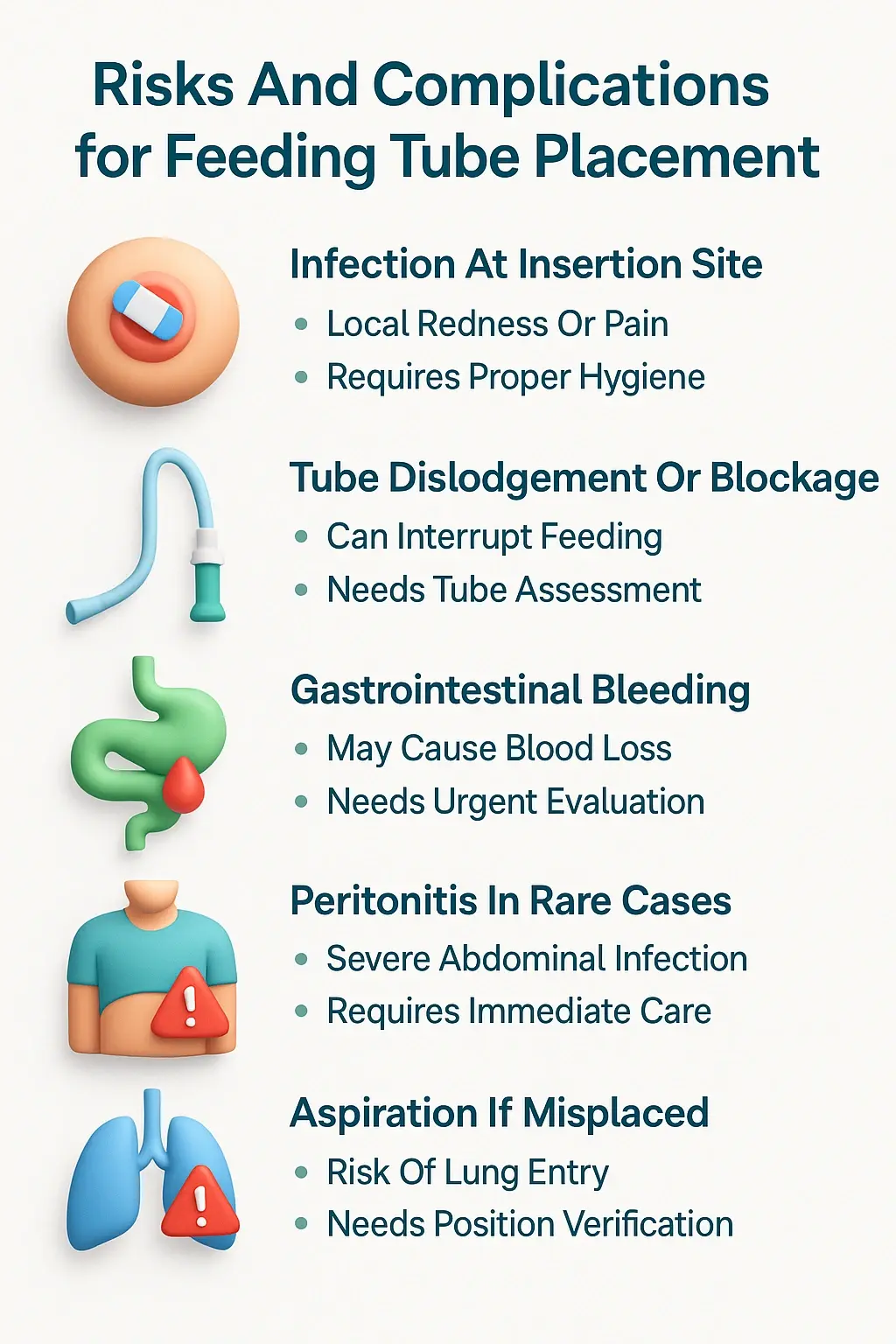
While Feeding Tube Placement is generally a safe procedure, complications can occur. Knowing what to look for and how to respond is key.
Risks And Complications for Feeding Tube Placement
The opening in the skin (called the stoma) can get infected. Good hygiene is the best prevention. Cleaning the site daily as instructed and keeping it dry can significantly reduce this risk. If an infection does occur, it is usually treated with antibiotics.

Tubes can become blocked, especially if thick formulas or crushed medications are put through them. The best way to prevent this is to flush the tube with water before and after every feed and every medication. If a tube is accidentally pulled out (displaced), it is a serious situation, and medical help should be sought immediately to replace it before the stoma site closes.

This is one of the most serious risks, especially for patients with G-tubes who have severe reflux. It happens when stomach contents flow back up and enter the lungs. To prevent this, the head of the bed should always be elevated at least 30-45 degrees during and for an hour after feeding. For very high-risk patients, a J-tube Feeding Tube Placement is chosen specifically to avoid this complication.

Nutritional Planning and Support

A feeding tube is just a tool; the real magic is in the nutrition it delivers. This requires a carefully crafted plan.

A registered dietitian plays a central role in a patient’s care after a Feeding Tube Placement. They will:

⦿ Calculate the patient’s exact needs for calories, protein, fluids, vitamins, and minerals.

⦿ Choose the right formula for the patient.

⦿ Create a feeding schedule (e.g., continuous feeds over 24 hours or scheduled “bolus” feeds several times a day).

⦿ Monitor the patient’s weight and lab results to make sure the plan is working.

There are many different types of liquid nutrition formulas available.

⦿ Standard formulas: Suitable for most people with normal digestion.

⦿ High-protein formulas: For patients who need extra protein to heal, like after surgery.

⦿ Fiber-enriched formulas: To help with regular bowel movements.

⦿ Disease-specific formulas: Special formulas for people with kidney disease, diabetes, or lung problems.

In special cases, such as with newborns, the plan is highly specialized. The feeding tube size for newborn and the feeding tube size for infant are much smaller and chosen with extreme care. Sometimes, a special feeding tube for breastfeeding is used. This is a very thin tube that is taped alongside the mother’s nipple, delivering formula or expressed milk while the baby suckles, helping them learn to breastfeed while still getting enough nutrition.

The goal of a Feeding Tube Placement is to improve health. The dietitian and medical team will regularly track the patient’s progress. They check weight, hydration status (by looking at skin and urine), and blood tests to see if the nutrition plan needs to be adjusted.

Long-Term Care and Home Management

For many, a feeding tube becomes a part of daily life at home. Proper training and support are essential for caregivers.

Before a patient is discharged from the hospital, the caregiver (usually a family member) will receive detailed training. They will learn how to:

⦿ Prepare and administer the formula.
⦿ Flush the tube.
⦿ Clean the tube site.
⦿ Operate the feeding pump.
⦿ Troubleshoot common problems like a clogged tube.

This training ensures the caregiver feels confident and capable of managing the feeding tube at home.

A medical supply company will provide all the necessary equipment. This includes the feeding pump, bags or syringes for the formula, the formula itself, and dressings for the site. It is also important to know the specifications of your supplies, as the feeding tube size and colour can vary, and using the correct connecting pieces is vital.

Regular follow-up appointments with the doctor and dietitian are crucial. During these visits, the tube’s condition is checked, the stoma site is examined, and the nutritional plan is reviewed. Most tubes need to be replaced periodically (every few months to a year or two), and these visits help determine when that is necessary. This ongoing care is a vital part of the long-term success of the Feeding Tube Placement.
Task Frequency Key Points
Check Tube Position Before each feed Ensure the external bumper is snug against the skin but not too tight. Check for the marking on the tube to ensure it hasn't moved.
Clean the Stoma Site Daily Use mild soap and water. Gently clean around the tube. Pat the area dry thoroughly. Do not use creams or powders unless prescribed.
Flush the Tube Before and after each feed/medication Use the prescribed amount of water (usually 30-50 mL for adults). This prevents clogging and keeps the patient hydrated.
Elevate the Head During and for 1 hour after feeding Keep the head of the bed raised at least 30-45 degrees to prevent reflux and aspiration.
Inspect the Skin Daily Look for any redness, swelling, leakage, or signs of skin breakdown around the tube site.
Check Supplies Weekly Make sure you have enough formula, syringes, and other necessary supplies to last until your next delivery.

Ethical and Quality-of-Life Considerations

The decision to proceed with a Feeding Tube Placement is not always simple, especially for patients with advanced or terminal illnesses. It involves deep, thoughtful conversations.
In cases of advanced dementia or terminal cancer, the family and medical team must weigh the benefits against the burdens. Does the Feeding Tube Placement align with the patient’s wishes and goals? Will it improve their quality of life, or will it merely prolong the dying process? A palliative care team can be very helpful in guiding these difficult conversations.
It is normal for patients and families to feel overwhelmed, sad, or anxious about a feeding tube. Counseling and support groups can provide emotional and psychological support. Having an honest discussion about what to expect and the goals of care can help everyone feel more prepared and in control.
It is important to respect the patient’s wishes. If a patient has an “advanced directive” or “living will,” it should guide the decision. If the patient cannot make decisions for themselves, a legally appointed guardian or family member will make the decision in the patient’s best interest. Clear documentation of these discussions and consent is a standard part of the medical process for Feeding Tube Placement.

Frequently Asked Questions

How long can a feeding tube stay in?
It depends on the type. NG tubes are for short-term use (weeks). G-tubes and J-tubes (like PEG tubes) are designed for long-term use and can last for many months or even years, though they may need to be replaced periodically.
Is feeding through a tube painful?
The Feeding Tube Placement procedure itself is done with sedation or anesthesia, so it is not painful. Afterwards, there might be some discomfort around the site for a few days, which can be managed with pain medicine. The act of feeding itself is not painful.
Can patients eat normally with a feeding tube?
This depends on the reason for the tube. Some patients with a feeding tube can still eat and drink small amounts for pleasure if their swallowing is deemed safe by a speech therapist. Others must rely entirely on the tube for all their nutrition and hydration.
How is the tube removed?
Removing a tube is usually a much simpler process than placing it. An NG tube is simply pulled out by a nurse. A G-tube or J-tube is typically removed by a doctor, sometimes using an endoscope or by simply deflating a balloon that holds it in place and gently pulling it out.
Where do feeding tubes go?
Feeding tubes go directly to where your body can use food. A nasogastric (NG) tube goes through your nose into your stomach. Other types, like G-tubes or J-tubes, are placed through a small opening in your belly skin, leading directly into your stomach or small intestine.
How do you check feeding tube placement?
The safest way to check placement is with an X-ray, which is called the 'gold standard'. At the bedside, nurses can also check by drawing out a small amount of fluid from the tube and testing its acidity (pH). This helps confirm it's in the stomach and not the lungs.
Why are feeding tubes necessary?
Feeding tubes are necessary when a person cannot eat or swallow enough food and water to stay healthy. This can be due to an illness, surgery, or a swallowing problem. The tube provides the body with the essential nutrition it needs to get strong and heal.
What is the purpose of tube feeding?
The purpose of tube feeding is to give nutrition, fluids, and medicines directly into the stomach or intestine. It is used for people who can't eat by mouth but whose digestive system is still working. This ensures they get all the calories and protein needed to live.
How long does PEG tube placement take?
A PEG (Percutaneous Endoscopic Gastrostomy) tube placement is usually a quick procedure. It typically takes about 20 to 30 minutes to complete. The patient is given a light sedative to stay comfortable and relaxed during this time.
Where can feeding tubes be placed?
Feeding tubes can be placed in two main ways. They can be inserted through the nose to reach the stomach (nasogastric). Alternatively, they can be placed through a small surgical opening in the abdomen, going directly into the stomach (gastrostomy) or the small intestine (jejunostomy).
Is G-tube placement a surgery?
Yes, placing a G-tube (gastrostomy tube) is considered a medical procedure. The most common method, called a PEG, is a minor procedure done with an endoscope and is not major surgery. However, in some cases, it can be placed through a more formal surgical operation.
What is G-tube placement?
G-tube placement is a procedure to place a feeding tube directly into the stomach. A small opening is made on the skin of the abdomen that leads into the stomach. This allows liquid food, water, and medicines to be given directly without using the mouth or throat.
What is NG tube placement?
NG tube placement is the process of putting a thin, flexible tube through a person's nose. The tube is gently guided down the back of the throat and into the stomach. It is a non-surgical procedure often used for short-term feeding in the hospital.
How often should NG tube placement be checked?
The placement of an NG (nasogastric) tube must be checked very carefully and regularly. It is standard practice for a nurse to confirm its correct position before giving every single feed or medication. This is a critical safety step to prevent complications.
Dr-Harsh-Shah-Robotic-Cancer-Surgeon

Dr. Harsh Shah

MS, MCh (GI cancer Surgeon)

Dr Harsh Shah is a well known GI & HPB Robotic Cancer Surgeon in ahmedabad. He treats cancers of esophagus, stomach, liver, pancreas, colon, rectum & small intestines. He is available at Apollo Hospital.

5/5 - (25 votes)
Dr. Harsh J Shah
Dr Harsh Shah - GI & HPB Oncosurgeon in India
Privacy Overview

This website uses cookies so that we can provide you with the best user experience possible. Cookie information is stored in your browser and performs functions such as recognising you when you return to our website and helping our team to understand which sections of the website you find most interesting and useful.