Skip to main content
Last updated: 09-Nov-2026
Tapping Book on WhatsApp will likely open the WhatsApp app on your phone.
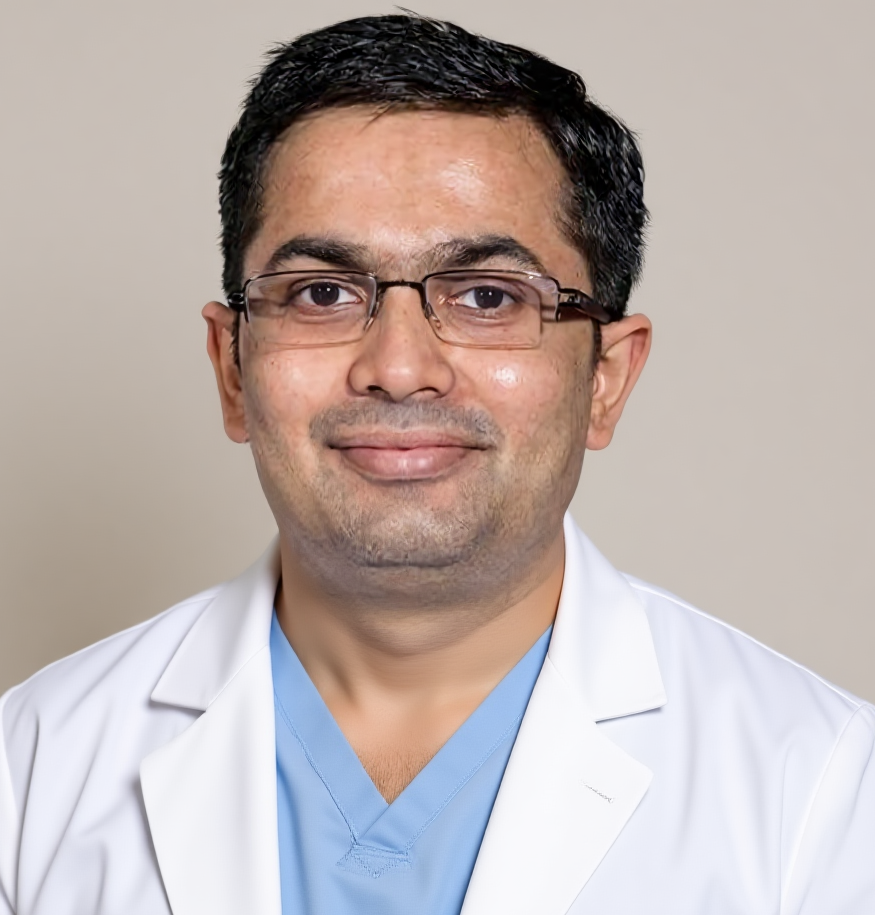
Dr Harsh Shah
MS, MCh (Surgical Gastroenterology), DrNB (Surgical Gastroenterology)
Registered with Gujarat Medical Council, Reg. No. G-38738
Pancreas Cancer Surgeon
Dr. Jivraj Mehta Hospital, Vasna, Ahmedabad · 18 years of experience
In short
Resectable pancreatic cancer is a tumour that scans show can be taken out completely. It stays clear of the main blood vessels and has not spread to other organs.
The usual plan is an operation, then about six months of chemotherapy. Some patients with warning signs receive drugs before the operation instead.
Both the surgeon and the hospital matter. A planned operation at a centre that does many pancreas operations is safer than a rushed one.
This post explains the plan for a tumour that can be removed. For the wider picture, see our pancreatic cancer treatment page.
It means the surgeon can remove the whole tumour with a clear margin. Your scans must show no spread and no wrapping of the key blood vessels.
The word is a scan-based label, not a promise. A tumour is called resectable when a good pancreas CT, with contrast, shows a fat plane around the main vessels. The team then looks at your fitness, your jaundice and your blood tests before choosing the first step. Our post on how pancreatic cancer is staged explains how this label is given.
| Question | Resectable | Borderline resectable |
|---|---|---|
| Spread to liver or lungs | None seen | None seen |
| Contact with the main veins | Absent, or small and short | More than half of the vessel wall, or a short blocked stretch |
| Contact with the main arteries | None | Small contact, or contact with the liver artery only |
| Usual first step | Operation, or short drug course first in chosen patients | Drugs first, then an operation |
For most patients with a clearly resectable tumour, the operation comes first and chemotherapy follows. Drugs before surgery are used when the cancer looks biologically aggressive.
Doctors weigh a few signs before deciding. Some cancers act as if they have already spread, even when the scan looks clean. Drugs first test this and treat hidden cells early.
Studies of drugs before surgery are still being reported. So many centres still operate first and give drugs after. Others use a short course before the operation. Ask your team which approach they follow, and why.
The operation depends on where the tumour sits. Head tumours need a Whipple operation. Body and tail tumours need a distal pancreatectomy.
| Site of the tumour | Operation | What is removed |
|---|---|---|
| Head, neck or hook of the pancreas | Whipple operation (pancreaticoduodenectomy) | Head of the pancreas, first part of the small bowel, bile duct, gallbladder and sometimes part of the stomach |
| Body or tail | Distal pancreatectomy | Body and tail of the pancreas, usually with the spleen |
| Several parts, or the whole gland | Total pancreatectomy | The whole pancreas, with lifelong diabetes care after |
In a Whipple operation, the surgeon joins the rest of the pancreas, the bile duct and the stomach to a loop of bowel. Food and digestive juices then still flow. Nearby lymph glands are removed and sent for study. The operation takes several hours, and most patients spend a few days in intensive care or high-dependency care.
Dr Harsh Shah offers open and laparoscopic (keyhole) approaches. Open surgery remains the safe choice in many patients. Keyhole surgery is considered when the tumour is small, away from the vessels, and the team is experienced. A trial of keyhole Whipple in centres that did few such operations saw more deaths. So the experience of the team matters more than the method.
Preparation lowers risk. Fixing nutrition, relieving heavy jaundice when needed and choosing an experienced pancreas team all help recovery.
Pancreas surgery has a real risk of complications, such as a leak from the join with the pancreas, bleeding, infection or slow stomach emptying. These are managed in most patients with drains, antibiotics, tubes or a small procedure. A centre that does many such operations catches and treats them faster.
The report decides how the story continues. It shows whether the margin is clear, whether glands are involved and how aggressive the cancer looks.
| Finding | What it means |
|---|---|
| Margin clear (R0) | No cancer cells at the cut edge under the microscope, the aim of surgery |
| Margin involved (R1) | Cells reach the edge, so the chance of a local return is higher |
| Lymph glands involved | Cancer reached nearby glands, so chemotherapy matters even more |
| Nerve or vessel invasion | Cancer cells travel along tiny nerves or vessels, a sign of aggressive behaviour |
| Tumour size and grade | Larger or poorly formed tumours are more likely to return |
Ask for the full report and keep a copy. Our post on what the biopsy report and gene tests mean helps with the gene section, which can guide later drug choices.
Almost every patient who recovers well should receive chemotherapy for about six months. A three-drug combination is preferred for fit patients.
Surgery alone rarely removes every cancer cell. Drugs after the operation clear what is left and lower the chance of a return. A large trial found that a three-drug combination, called FOLFIRINOX, let fit patients live longer than gemcitabine alone. Gentler combinations suit patients who are older or weaker.
| Your situation | Usual drugs |
|---|---|
| Fit, good organ function | Modified FOLFIRINOX for about six months |
| Older age, or kidney, liver or nerve problems | Gemcitabine with capecitabine |
| Frail or slow recovery | Gemcitabine alone, or a shorter course |
| BRCA or PALB2 change | Platinum-based drugs are favoured |
Treatment should start within about two months of the operation. Some patients are too weak to start, so recovery after surgery is part of the cancer plan. Your medical oncologist gives the drugs, and Dr Harsh Shah stays in touch about your wound, digestion and weight. Radiation is added only for selected patients, such as those with a margin that was not clear.
Expect several weeks to regain strength. Digestion, blood sugar and weight need care, and scans and blood tests are repeated at set times.
Our post on eating and diabetes after a pancreas operation goes into more detail. The schedule of scans is in our post on follow-up after pancreatic cancer treatment.
If the cancer returns, see treatment when pancreatic cancer comes back.
Choose a team that does pancreas operations often, offers a full cancer plan and talks openly about risks. A second opinion is a normal part of this decision.
Do not delay the first step while you compare. A resectable tumour can change within weeks, but a few days spent on a careful second look are well spent. Dr Harsh Shah will tell you honestly if your tumour is not suited to an upfront operation.
It means scans show the whole tumour can be removed with a clear margin. There is no spread to other organs, and the main blood vessels are free or only slightly touched.
Usually, yes. Drugs before surgery are used in chosen patients, such as those with a very high CA 19-9 level, a BRCA change or a tumour near the edge of the resectable group.
A Whipple operation is done for tumours in the head of the pancreas. A distal pancreatectomy, often with removal of the spleen, is done for tumours in the body or tail.
Tiny cancer cells may remain after surgery or may already have travelled. Chemotherapy for about six months clears them and lowers the chance of the cancer returning.
Fit patients are usually given a modified three-drug combination called FOLFIRINOX. Patients who are older or weaker are offered gemcitabine with capecitabine, or gemcitabine alone.
Ideally within about two months, once you have recovered. Good nutrition and early walking help you reach the point where drugs can be started.
In selected patients with a small tumour away from the vessels, at an experienced centre. The experience of the team matters more than the method of surgery.
Some patients do. Enzyme capsules with meals help digestion, and blood sugar is checked regularly. If diabetes appears, it is treated with tablets or insulin.
For the whole treatment pathway, start at the pancreatic cancer treatment page. For questions before you travel, call +91-63555-64601.
Dr Harsh Shah — Dr. Jivraj Mehta Hospital, Vasna, Ahmedabad
Dr. Jivraj Mehta Hospital, Dr Jivraj Mehta Marg, Vasna, Ahmedabad 380007.
Consultations, review of reports and scans, operations and follow-up. OPD Monday to Saturday, 9 am to 5 pm.
Appointments: +91-63555-64601 · +91-63590-11009 · Hospital 079-2663 6363
Directions to the hospital · WhatsApp +91-63555-64601
Told that your pancreatic cancer can be removed with an operation? This is the time to plan with care, because the first step matters most. Dr Harsh Shah studies your scans, explains the operation and the drugs that follow, and agrees the order of treatment with your oncologist. Bring your CT or MRI films, biopsy report and blood tests, including CA 19-9. You can also call, or message us on WhatsApp. Call For Appointment Book on WhatsApp Tapping Book on WhatsApp will likely open the WhatsApp app on your phone.
Tapping Book on WhatsApp will likely open the WhatsApp app on your phone.
Swasth Parivar: every week, practical advice on recovery, diet and warning signs. No advertising. Stop any time.
Your number is used for these updates and for the clinic to reach you. It is never sold or passed on. To stop, reply STOP on WhatsApp.