Skip to main contentLast updated: 09-Nov-2026
Tapping Book on WhatsApp will likely open the WhatsApp app on your phone.

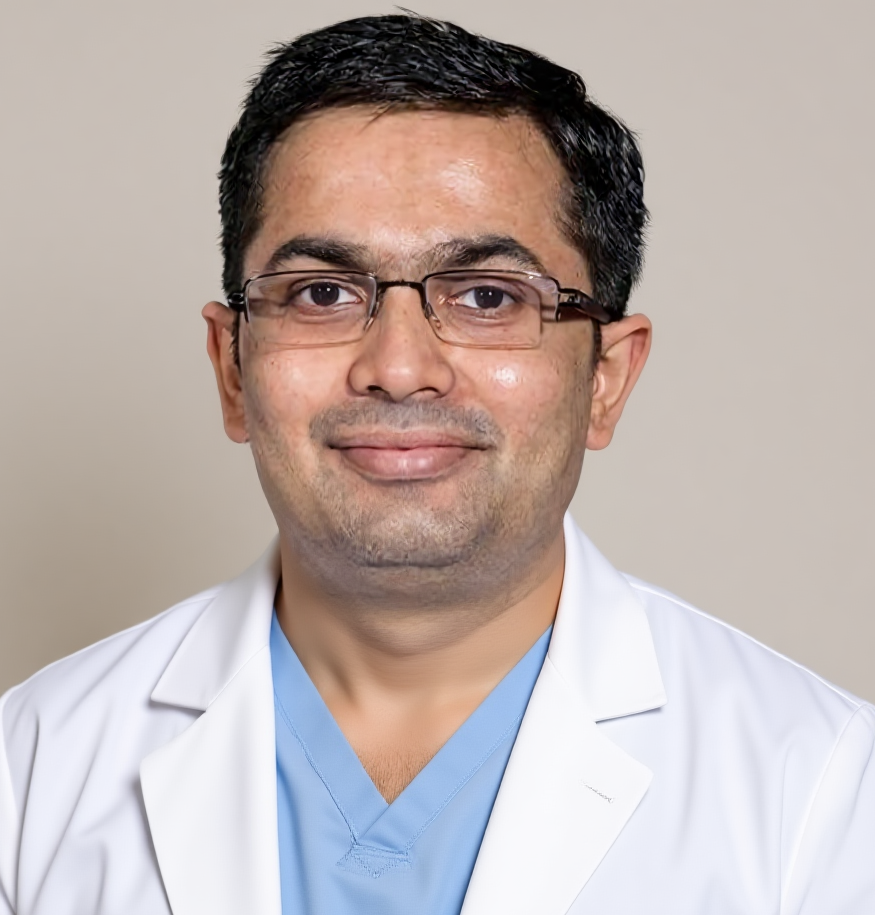
Dr Harsh Shah
MS, MCh (Surgical Gastroenterology), DrNB (Surgical Gastroenterology)
Registered with Gujarat Medical Council, Reg. No. G-38738
Pancreas Cancer Surgeon
Dr. Jivraj Mehta Hospital, Vasna, Ahmedabad · 18 years of experience
In short
Borderline resectable means the tumour touches a main blood vessel near the pancreas, but has not spread to other organs. A clean removal is possible, though not certain, if the operation is done first.
The usual plan is chemotherapy first, a repeat scan, and then the operation if the tumour responds. This gives the surgeon a better chance of removing all of it.
The operation is often a Whipple or a tail removal, sometimes with repair of the vein. It is safer in the hands of a team that does this work often.
This post explains the treatment path for borderline tumours. For the full picture, see our borderline resectable pancreatic cancer treatment page.
It is a scan term. It describes how closely the tumour sits against the large vessels beside the pancreas, and it decides the order of treatment.
The pancreas lies beside the portal vein and the superior mesenteric vein, and next to the superior mesenteric artery. A surgeon must keep these vessels intact, or repair them. When a tumour only touches them, the first cut may not give a clean edge. That is why the scan is read so carefully.
| Group | What the scan shows | Usual first step |
|---|---|---|
| Resectable | The tumour is clear of the main vessels | Operation first, in most patients |
| Borderline resectable | The tumour touches a vein, or touches an artery over a small part of its wall | Chemotherapy first, then re-scan |
| Locally advanced | The tumour wraps around an artery | Chemotherapy, then a decision on surgery |
Our post on how pancreatic cancer is staged and judged for surgery shows how a radiologist reads these images. A tumour wrapped around an artery is covered on our locally advanced pancreatic cancer page.
Because the first aim is a clean removal with no cancer cells at the edge. Chemotherapy first shrinks the tumour edge, treats unseen cells elsewhere, and shows how the cancer behaves.
Pancreatic cancer spreads early, even when a scan looks clear. If the operation comes first, many patients get cancer back soon after it. Chemotherapy first treats the whole body from the start.
Studies in borderline tumours support this order. Patients who had chemotherapy first more often went on to a complete removal than those who went straight to surgery.
Fit patients usually get a combination of four drugs called FOLFIRINOX, for about three to four months. A gentler two-drug combination is used when the body is frail.
| Option | Who it suits | Points to know |
|---|---|---|
| FOLFIRINOX | Fit patients with good liver, kidney and blood counts | Strong effect, but tiring. Support medicines are given alongside |
| Gemcitabine with nab-paclitaxel | Less fit or older patients | Milder, and often easier to continue |
| Radiation with chemotherapy | A few patients, when the vessel edge is still a worry | Added after chemotherapy, not for everyone |
Each cycle is given every two weeks. During this time you need to eat well, keep walking and report fever, diarrhoea or vomiting early. A short stay in hospital is sometimes needed. Before chemotherapy, a stent is placed first if the bile duct is blocked and the eyes are yellow.
Your gene test result may also shape the drug choice. Our post on what the pancreas biopsy report and gene tests mean explains this.
After about four to six cycles, the team repeats a pancreas-protocol CT scan and a CA 19-9 blood test. These decide whether to operate, to carry on, or to change course.
The tumour may look the same on the scan even though it has responded. A scan cannot always tell scar from living cancer. The decision is therefore based on the whole picture: the scan, the marker, and how you have coped.
The cancer is removed with the usual operation for its site, often with part of the vein cut out and rejoined. It is a long operation, and the result depends on the team doing it.
Cutting out a vein does not by itself make the case hopeless. The artery matters more. Cutting out an artery is done only in rare, carefully chosen patients. Open or laparoscopic surgery is chosen by the site and the vessels. Safety comes first. Our pancreatic cancer treatment page describes the Whipple operation in more detail.
Recovery takes a few weeks, and most patients then complete the rest of their chemotherapy. The removed specimen is studied to see how well the tumour responded.
Eating, digestion, and diabetes care after a pancreatic operation are covered in our post on life after pancreatic cancer surgery.
Then the team does not rush to operate. The treatment is changed, or the plan moves to disease control. Surgery on a tumour that is still growing seldom helps.
A change of drugs is the first step if the patient is still fit. If the cancer has spread to the liver or the belly lining, the plan is the one for advanced disease. It aims at control and comfort. In some patients the tumour pulls away from the vessel during treatment. They then go on to surgery, so the answer is not fixed on day one.
It means the tumour touches a main blood vessel beside the pancreas, but has not spread to other organs. A clean removal may be possible after chemotherapy, so treatment starts with drugs rather than the knife.
The edge of the tumour may not come out clean, and the cancer may already have tiny deposits elsewhere. Chemotherapy first treats both problems and shows how the cancer behaves before a big operation.
Usually about three to four months, with a repeat scan after four to six cycles. The exact length depends on how the tumour responds and how well you tolerate the drugs.
Not for everyone. It is added for some patients after chemotherapy when the edge near the vessel is still a worry. Many centres now rely on chemotherapy alone.
Yes. If the tumour is stuck to a vein, that part is removed and the ends are joined. A patch or short graft is used if needed. The artery matters more, and it is spared wherever possible.
The tumour may have responded even if the scan looks unchanged. The team looks at the scan, the CA 19-9 marker and your general health together before it advises an operation.
You recover in hospital for some days, then finish the rest of your chemotherapy once you are strong enough. Scans and blood tests continue at planned gaps for years.
In borderline disease the tumour only touches the vessels. In locally advanced disease it wraps around an artery. The first group has a good chance of reaching surgery, while the second is treated with chemotherapy and a later decision.
For the whole treatment pathway, start at the borderline resectable pancreatic cancer treatment page. For questions before you travel, call +91-63555-64601.
Dr Harsh Shah — Dr. Jivraj Mehta Hospital, Vasna, Ahmedabad
Dr. Jivraj Mehta Hospital, Dr Jivraj Mehta Marg, Vasna, Ahmedabad 380007.
Consultations, review of reports and scans, operations and follow-up. OPD Monday to Saturday, 9 am to 5 pm.
Appointments: +91-63555-64601 · +91-63590-11009 · Hospital 079-2663 6363
Directions to the hospital · WhatsApp +91-63555-64601
Told that your pancreatic tumour is "borderline" and that chemotherapy will come before surgery? Dr Harsh Shah goes through your scans with you, explains why the order matters, and plans each step. Bring your CT or MRI films and any biopsy report. You can also call, or message us on WhatsApp. Call For Appointment Book on WhatsApp Tapping Book on WhatsApp will likely open the WhatsApp app on your phone.
Tapping Book on WhatsApp will likely open the WhatsApp app on your phone.
Swasth Parivar: every week, practical advice on recovery, diet and warning signs. No advertising. Stop any time.
Your number is used for these updates and for the clinic to reach you. It is never sold or passed on. To stop, reply STOP on WhatsApp.