Skip to main content
Both doctors look after the stomach, bowel, liver and pancreas. One treats mainly with medicines and scopes. The other also operates. Here is how to tell who to see first.
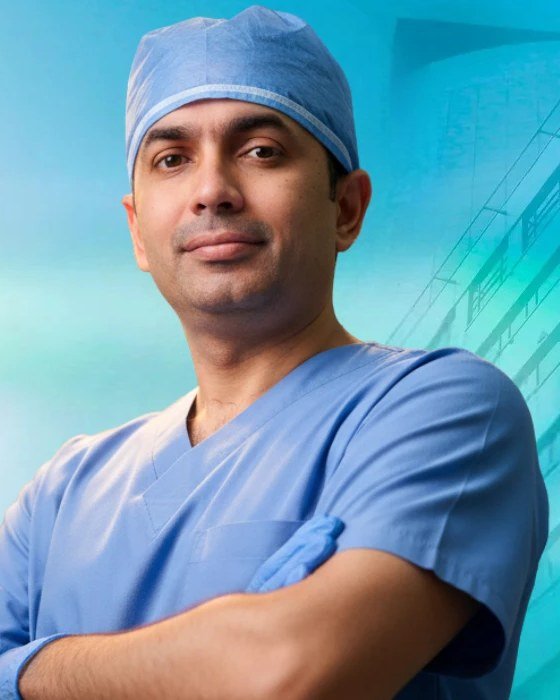
Dr Harsh Shah
MS, MCh (Surgical Gastroenterology), DrNB (Surgical Gastroenterology)
Gastro Surgeon · Apollo Hospital, Bhat, Gandhinagar · Gota OPD, Ahmedabad · 18 years of experience
Last updated: 4 October 2026
IN SHORT
A medical gastroenterologist treats stomach, bowel and liver problems without an operation. In India this doctor first trains in general medicine (MD) and then in gastroenterology (DM or DrNB).
Their main tools are medicines, diet advice and the endoscope. An endoscope is a thin tube with a camera. It goes in through the mouth to see the food pipe and stomach. From below, it shows the large bowel (colonoscopy). Through the tube they can take a small sample, stop some bleeding, or remove a polyp.
They also look after long-term problems. Examples are hepatitis, fatty liver, cirrhosis and colitis. These need check-ups for years. The medical gastroenterologist runs that follow-up.
A surgical gastroenterologist finds the cause of a gut problem and treats it. When an operation is needed, he or she does it. In India this doctor first trains in general surgery (MS) and then does a super-specialty course in surgical gastroenterology (MCh or DrNB).
Common operations are gallbladder removal for stones, surgery for severe reflux, and surgery for a blocked bowel. Others are for pancreatitis, or for the liver and pancreas. Many are now done by keyhole or robotic surgery. That means smaller cuts.
This doctor also sees many patients who never need an operation. A big part of the job is to decide, with you, if surgery is needed at all. If not, you get medicines and diet advice.
| Medical gastroenterologist | Surgical gastroenterologist | |
|---|---|---|
| Training | MD (Medicine), then DM or DrNB (Gastroenterology) | MS (Surgery), then MCh or DrNB (Surgical Gastroenterology) |
| Main tools | Medicines, diet, endoscopy, colonoscopy, ERCP | Medicines, diet, keyhole, robotic and open surgery |
| Typical problems | Acidity, gas, loose motions, fatty liver, hepatitis, colitis | Gallstones, hiatus hernia, bowel blockage, pancreas and liver disease needing surgery |
| Emergencies | Bleeding from the stomach or bowel, jaundice from a blocked bile duct | Burst ulcer, blocked or twisted bowel, severe pancreatitis complications |
| Long-term care | Ongoing follow-up of liver and bowel diseases | Follow-up before and after an operation |
Most digestive problems begin with medicines and tests, so either doctor can see you first. These problems usually start on the medical side:
Swasth Parivar: twice a month, practical advice on recovery, diet and warning signs. No advertising. Stop any time.
Your number is used for these updates and for the clinic to reach you. It is never sold or passed on. To stop, reply STOP on WhatsApp.
See a surgical gastroenterologist when a scan or test has found something that may need an operation, or when medicines have not worked. Common reasons are:
Some symptoms need urgent care, whichever doctor you plan to see. Go to an emergency department the same day if you have:
No. Seeing a surgical gastroenterologist does not mean you will have an operation. Many people leave the first visit with medicines, a diet plan and, if needed, a test.
For example, gallstones that cause no symptoms often need no operation. Most reflux settles with medicines and changes in eating habits. Many people with pancreatitis recover without surgery. An operation is advised only when it is the right fix for the cause. The reasons are explained to you and your family before you decide.
The two send patients to each other every day. If the scope or scan shows gallstones, a block or a growth, you are sent to the surgeon. If the surgeon needs a scope test, the other doctor does it.
Dr Harsh Shah is a surgical gastroenterologist. He sees patients at his Gota OPD in Ahmedabad and operates at Apollo Hospital, Bhat, Gandhinagar when surgery is needed. Endoscopy and colonoscopy are done by endoscopy specialists, and he reviews the findings with you. Read more on his surgical gastroenterologist in Ahmedabad page.
No. A general surgeon operates on many parts of the body. A surgical gastroenterologist has done extra super-specialty training only in operations on the food pipe, stomach, intestine, liver, gallbladder and pancreas.
No. Many patients who see a surgical gastroenterologist are treated with medicines and diet. An operation is advised only when it is the right treatment for that cause.
Stones in the gallbladder are removed by an operation, usually by keyhole surgery. Stones that slip into the bile duct can often be taken out by a medical gastroenterologist through an endoscope (ERCP).
Start with either one. Most acidity settles with medicines and lifestyle changes. If it keeps coming back despite treatment, or there is a hiatus hernia, a surgeon can talk to you about an anti-reflux operation.
No. You can book directly. Bring your old reports, scans and medicine list to the first visit.
OPD · Consultation
Shah’s Gastro, Cancer & Robotic Surgery Centre
SF-203, 2nd floor, Olive Greens, Gota, S G Highway, Ahmedabad 382481
Open in Google Maps
Hospital · Surgery
Apollo Hospital International Limited
Plot No. 1 A, GIDC Bhat Industrial Estate, Bhat, Gandhinagar
Open in Google Maps
Dr Harsh Shah, MS, MCh (Surgical Gastroenterology), DrNB (Surgical Gastroenterology). Call +91 63555 64601 · Ask on WhatsApp
Not sure which doctor you need? Call the Gota OPD to book a consultation.
Swasth Parivar: twice a month, practical advice on recovery, diet and warning signs. No advertising. Stop any time.
Your number is used for these updates and for the clinic to reach you. It is never sold or passed on. To stop, reply STOP on WhatsApp.