Skip to main content
Ahmedabad and Gandhinagar · Dr Harsh Shah, Stomach Cancer Surgeon
Not every stomach cancer is treated in the same order, and that order matters more than most people are told. A very early cancer can sometimes be lifted out through the endoscope with no cut at all. An early cancer with clean glands goes straight to the operating theatre. A cancer that has grown through the stomach wall, or reached the glands, does better when chemotherapy is given before the operation and again after it. And where the disease has already spread, an operation is not the treatment — medicine is. Your endoscopy report, your CT scan and a small set of biomarkers decide which of those four you are.
Shah’s Gastro, Cancer & Robotic Surgery Centre
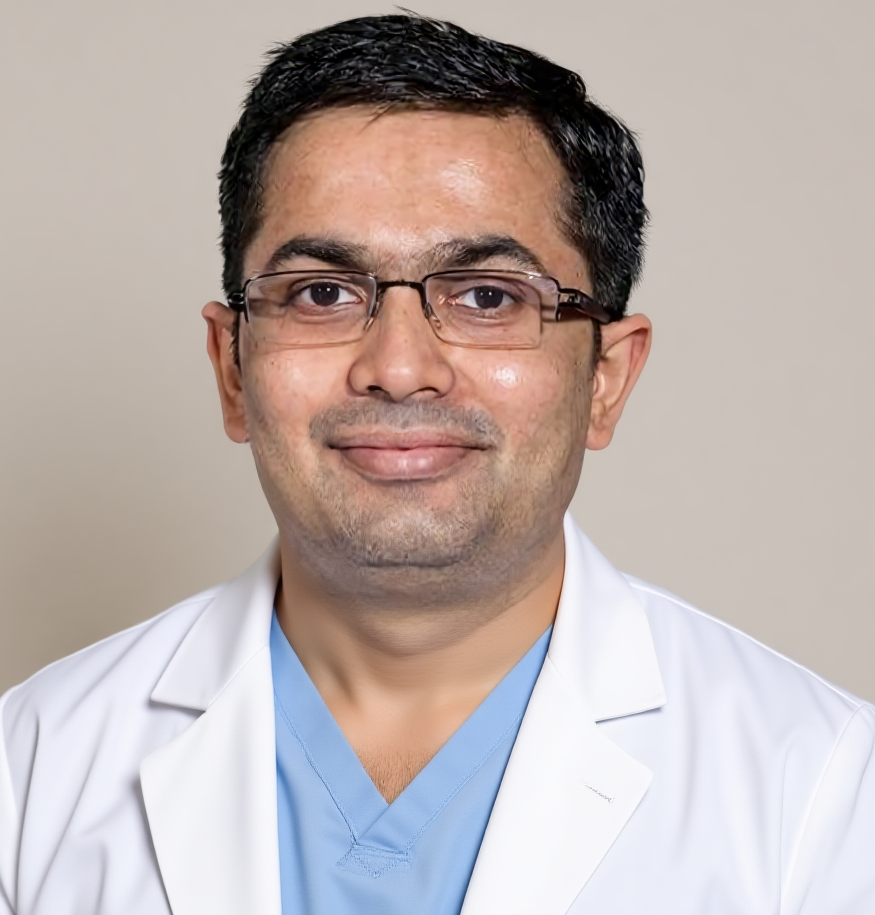
Dr Harsh Shah
MS, MCh (Surgical Gastroenterology), DrNB (Surgical Gastroenterology)
Stomach Cancer Surgeon
· Apollo Hospital, Bhat, Gandhinagar · Gota OPD, Ahmedabad
Qualified twice over in surgical gastroenterology, and in practice long enough to have followed these sequencing decisions out over years rather than weeks. The stomach is the part of gastrointestinal cancer surgery where the decision about what comes first is made in the first fortnight and cannot be taken back later — so it is made with the full team in the room, not by a surgeon alone. Google rating 4.89 from 216 reviews at the Gota listing, and 4.94 from 17 reviews at the Apollo, Bhat listing.
Most people referred with a suspicious stomach do not have cancer. Gastritis, a benign ulcer and a Helicobacter pylori infection produce the same pain, the same fullness and sometimes the same bleeding. Only the biopsy separates them — which is why the biopsy is taken before anybody is told what they have.
The complaints that bring people to a stomach clinic are ordinary: burning or gnawing pain in the upper abdomen, a sense of being full after a few mouthfuls, food sticking, dark stools, vomiting that keeps returning, or an iron-deficiency anaemia that no amount of tonic corrects. Persistent indigestion beyond about six weeks after the age of fifty-five, or any one of those warning signs at any age, is a reason to look inside rather than to prescribe another acid tablet.
What the scope finds is usually benign. Where it is not, the biopsy also has to answer a second question, because several quite different diseases grow in the same wall: adenocarcinoma, which is what most people mean by stomach cancer; a gastrointestinal stromal tumour, which is a muscle-wall tumour treated differently and often without removing the whole stomach; a gastric lymphoma, which can respond to medicine alone; and a neuroendocrine tumour, which follows its own rules. A plan built on the wrong one of those four is the wrong plan. Dr Harsh Shah asks for at least six biopsies from the edge of the ulcer or mass rather than one or two, because a single superficial bite off the floor of an ulcer frequently comes back reported as inflammation.
Four things have to be known before the sequence of treatment can be set: what the biopsy says, how far the tumour sits from the food-pipe junction above and the pyloric outlet below, whether the disease is confined to the stomach and its glands, and what the biomarkers show. Anything decided before those exist is a guess.
| Test | What it decides | When |
|---|---|---|
| Upper GI endoscopy with at least six biopsies | Confirms the diagnosis, separates adenocarcinoma from GIST, lymphoma and neuroendocrine tumour, and records the distance from the food-pipe junction and the pyloric outlet — which is what decides how much stomach has to come out | First, always |
| CT of chest, abdomen and pelvis with contrast | Whether the disease is confined to the stomach and the glands around it, or has gone beyond | Before any treatment decision |
| Blood tests — counts, kidney and liver function, albumin, CEA, CA 19-9 | Fitness for treatment, nutritional state, and a baseline to follow afterwards | With the CT |
| Biomarkers on the biopsy — HER2, PD-L1, MSI/dMMR, Claudin-18.2 where available | Which medicines will work. For advanced disease these must be back before the first cycle, not after it | Requested on the same biopsy |
| Staging laparoscopy with peritoneal washings | Looks for deposits and free cancer cells the CT cannot see. Positive washings change the whole plan, even when the scan looked operable | Before curative treatment in anything beyond a superficial tumour |
| Endoscopic ultrasound | Depth in the wall — asked for only where it would actually change the decision, typically a very early or borderline lesion | Selectively |
| PET-CT | Not part of the routine work-up; used for a specific unanswered question | Rarely |
Stomach cancer is treated in one of four sequences. Endoscopic removal alone for the most superficial tumours. Straight to surgery for early disease with clean glands. Chemotherapy first, then surgery, then chemotherapy again for tumours through the wall or in the glands — which is the largest group. And medicine-led treatment, without a major resection, where the disease has spread or the washings are positive.
| What the work-up shows | The sequence offered | Why in that order |
|---|---|---|
| A very superficial, small, well-behaved tumour confined to the lining | Endoscopic resection alone, with the specimen examined in full | The whole lesion can be taken through the scope with the stomach left intact — but only if the specimen is examined in full, because unfavourable histology means the plan is revisited |
| Early tumour, glands clear | Surgery first. Chemotherapy is decided afterwards on what the pathologist finds | Nothing is gained by delaying an operation that is already curative in intent |
| Tumour through the stomach wall, or glands involved, patient fit | Chemotherapy before surgery, then the operation four to six weeks after the last cycle, then chemotherapy again | Treatment before the operation shrinks the tumour, treats disease the scan cannot see, and is far better tolerated than the same treatment after a gastrectomy. This is the standard route for most stomach cancers that reach surgery |
| Same disease, but not fit for a three-drug regimen | A gentler two-drug combination on the same schedule, or surgery first with chemotherapy afterwards | Fitness is scored before treatment, not assumed from age. The sequence bends to the patient |
| Spread beyond the stomach, or free cancer cells in the washings | Biomarker-directed medical treatment, with nutrition and symptom control from the start. No major resection | Removing the stomach does not treat disease that is already elsewhere, and it costs months better spent on treatment that works |
| The outlet is blocked and nothing is staying down | Relieve the obstruction and secure feeding first, then stage, then treat | Nutrition and staging come before any definitive operation. An emergency resection of an unstaged stomach cancer is an oncological mistake |
Every one of those decisions is taken in a multidisciplinary meeting — surgeon, medical oncologist, radiation oncologist, radiologist and pathologist — and no curative plan is made outside it. Radiotherapy is not part of the routine stomach pathway at all: it belongs to the narrow situation of an incomplete gland clearance or a margin that came back involved.
There are four situations in which removing the stomach is the wrong operation: disease that has already spread, free cancer cells found in the peritoneal washings, a patient whose fitness will not survive the recovery, and a tumour that is not adenocarcinoma at all. In each of those, something else is offered — and saying so plainly is part of the job.
A patient who has been told an operation is impossible often hears it as abandonment. It is not. Where the disease has spread, treatment is led by the biomarkers, and the questions that decide it are whether the tumour is HER2-positive, whether PD-L1 is high, whether it is mismatch-repair deficient, and whether Claudin-18.2 is expressed. Those answers open genuinely different medicines, and they are the reason the biomarkers are requested at the start rather than when the first line has already failed.
Where the washings are positive but nothing else is, the situation is watched rather than closed off: treatment is given, the washings can be repeated, and an operation is reconsidered if the picture converts. Where fitness rather than cancer is the limiting factor, the honest option is a gentler regimen with good nutrition and symptom control. And where the biopsy turns out to be a stromal tumour or a lymphoma, the plan changes entirely — which is exactly why the biopsy question is settled first.
Between the diagnosis and the operation there is usually a gap of several months filled with chemotherapy. What happens to a patient's weight and strength in that window changes the outcome of everything afterwards — and unlike much of cancer treatment, it is something the family can act on directly.
Weight loss of more than about a tenth of body weight over six months, a low body-mass index, a low albumin, or eating less than half of what is needed for even a week — any one of those triggers a dietitian referral and a prehabilitation plan before surgery is contemplated. Where the outlet is narrowed and food will not pass, a feeding jejunostomy is the preferred answer when an operation is planned, because it keeps nutrition going through the chemotherapy without a tube in the nose and without interrupting the treatment. Chemotherapy abandoned because of malnutrition is a preventable loss, and preventing it is a stated aim rather than an afterthought.
How much stomach is removed is decided by where the tumour sits, not by how big it looks. A tumour in the lower stomach with room above it means a subtotal gastrectomy; a proximal or diffusely spreading tumour means the whole stomach. In both, the glands along the stomach's blood supply are cleared systematically — a D2 dissection — and the spleen and pancreas are not removed as a matter of routine.
Two lines of the pathology report tell you whether the operation did its job: the clearance of the cut margins, and the number of lymph nodes examined. Clearance is checked on frozen section during the operation if there is any doubt, and wider clearance is taken for the diffuse type that spreads invisibly within the wall. The node count matters because an operation that removes too few glands cannot stage the disease accurately, which leaves the chemotherapy decision afterwards resting on incomplete information. Dr Harsh Shah treats both numbers as an audit of his own work and discusses them with you at the two-week review.
On the approach: the operation can be done open or by keyhole surgery, and for tumours in the lower stomach the keyhole route is well established. What is being judged is the quality of the specimen and the clearance, not the size of the incision, and the approach is chosen for the individual abdomen — with a conversion made without hesitation if the dissection demands it.
Afterwards, life changes in ways worth knowing in advance rather than discovering: meals become small and frequent permanently, vitamin B12 is replaced for life where the whole stomach has been removed, and there is a settling period of some months. The complications that matter — a leak at the join, the duodenal stump, delayed emptying, dumping after meals, bile reflux, and the risk to life itself — are gone through by name at the consent discussion, with the figures that apply to your own age, fitness and operation rather than an average quoted on a web page.
★★★★★
“We are very thankful to Dr. Harsh Shah for treating and operating on my father for gastric (stomach) cancer. From the first consultation to the surgery and follow-up, he guided us with great care and explained everything clearly. My father is doing well now, and we are extremely grateful for the treatment and support provided by Dr. Harsh Shah and his team. He is a highly experienced and compassionate doctor. We would definitely recommend Dr. Harsh Shah to anyone looking for an experienced doctor for stomach cancer treatment. Thank you, Doctor, for everything!" — Moh. Ahsan, 5 stars, Dr Harsh Shah – Robotic GI Surgeon listing, Ahmedabad”
★★★★★
“Dr Harsh shah's dedication and commitment to his patients health are commendable. He always provides comprehensive explanations and ensures that we understood our treatment plans.Dr harsh shah is best stomach cancer surgeon in Ahmedabad Gujarat. Thank u so much sir for all support and help.🙏" — Haresh Chavda, 5 stars, Dr Harsh Shah, Gota, Ahmedabad”
★★★★★
“Dr. Harsh Shah operated me for stomach cancer. The surgery went very smoothly, and I am truly grateful for his expertise and care. Thank you so much, sir, for your support and excellent treatment. Highly recommended for anyone looking for the best stomach cancer surgeon." — Maganbhai Parmar, 5 stars, Shah's Cancer & Robotic Surgery Centre, Ahmedabad”
These are unedited Google reviews from patients treated for stomach cancer, quoted word for word from the Dr Harsh Shah listings, including the original spelling and phrasing.
From the first consultation to recovery there are five stages, and at each one you are told what happens next and when.
Stomach cancer treatment is covered by most health insurance policies and by cashless arrangements at Apollo Hospital, Bhat. The estimate depends on the sequence of treatment, the operation planned, the room category and the length of stay — so it is prepared for your case rather than quoted from a list.
What moves the estimate: whether chemotherapy forms part of the plan and how many cycles; whether a feeding jejunostomy or a procedure to relieve an obstruction is needed first; how much stomach is removed and by which approach; the room category you choose; how long you stay, which is longer if recovery is complicated; and the pathology, biomarker testing and imaging needed to plan and then to follow you.
On insurance, the office prepares the pre-authorisation paperwork with the clinical justification attached, and cashless approval is sought before admission wherever the policy allows. Bring the policy document, your ID, previous records, all imaging on disc as well as film, and the biopsy report.
Because for a tumour that has grown through the wall or reached the glands, treatment given beforehand shrinks the tumour, treats disease the scan cannot see, and is tolerated far better than the same treatment attempted on a patient recovering from a gastrectomy. Delay is not drift — the interval is planned, and the operation follows four to six weeks after the last cycle.
Only the most superficial, small and well-behaved lesions confined to the lining, and only when the whole lesion can be taken in one piece and examined in full. If the pathologist then finds unfavourable features, the plan is revisited and a formal operation is offered. It is a genuine option, but a narrow one.
No. It means a major resection is not the right first step, because free cancer cells behave like disease that has spread. Treatment is given, the washings can be repeated, and surgery is reconsidered only if the picture genuinely converts. The situation is reviewed, not closed.
It depends on where the tumour sits, not on how large it appears. A tumour low in the stomach with adequate clearance above it is treated by removing part of the stomach; a proximal tumour, or one spreading diffusely within the wall, needs all of it. That is why the distance from the food-pipe junction and the pyloric outlet is recorded at endoscopy.
Usually not. Unlike rectal cancer, radiotherapy is not part of the routine stomach pathway. It belongs to specific situations — an incomplete gland clearance, or a margin that came back involved — and it is not added after a proper clearance simply because it exists.
You will eat well, but differently: small, frequent meals become permanent, and there is a settling period of some months while the body adapts. A dietitian is part of the team from before the operation rather than called in afterwards, and vitamin B12 is replaced for life where the whole stomach has been removed.
Shah’s Gastro, Cancer & Robotic Surgery Centre
Gota, Ahmedabad, Gujarat
Google rating 4.89 from 216 reviews
Dr Harsh Shah consults at two addresses in the Ahmedabad–Gandhinagar area: the clinic at Gota, Ahmedabad, and Apollo Hospital at Bhat, Gandhinagar.
Patients travel to Dr Harsh Shah for stomach cancer treatment from across Gujarat — Gandhinagar, Rajkot, Surat, Vadodara, Bhavnagar, Jamnagar, Junagadh and Kutch — and from Rajasthan and Madhya Pradesh. If you are coming from out of town, send the scope report, the biopsy report and the scans on WhatsApp first, so the consultation is spent on the decision rather than on arranging tests.
Bring the endoscopy report with the biopsy, and the CT scan. Those two documents decide the order of your treatment, and the order is worth settling before anything begins. Call +91-63555-64601 · WhatsApp Dr Harsh Shah's office
Swasth Parivar: twice a month, practical advice on recovery, diet and warning signs. No advertising. Stop any time.
Your number is used for these updates and for the clinic to reach you. It is never sold or passed on. To stop, reply STOP on WhatsApp.