Pancreatic cancer can be broadly categorized into two main types:
Exocrine Pancreatic Cancer: This is the most common type, accounting for around 95% of all pancreatic cancer cases. It develops in the exocrine cells of the pancreas, which are responsible for producing enzymes that aid in digestion. The most common form of exocrine pancreatic cancer is pancreatic adenocarcinoma.
Endocrine Pancreatic Cancer: Also known as neuroendocrine tumors or islet cell tumors, this type of pancreatic cancer originates in the endocrine cells of the pancreas. These cells produce hormones that regulate various bodily functions. Endocrine pancreatic cancer is relatively rare, comprising about 5% of pancreatic cancer cases.
Symptoms can be caused by various conditions include:

⦿ Abdominal pain: Often starts in the upper abdomen and radiates to the back.
⦿ Jaundice: Yellowing of skin and eyes due to bile duct obstruction.
⦿ Unexplained weight loss: Rapid and unintended weight loss is common.
⦿ Loss of appetite: Decreased desire to eat is a noticeable symptom.
⦿ Fatigue: Generalized weakness and tiredness may be experienced.
⦿ Digestive issues: Changes in bowel habits or floating, pale stools.
⦿ Nausea and vomiting: Digestive disruptions can lead to these symptoms.
Causes of pancreatic cancer:
⦿ Genetic mutations: Inherited or acquired mutations play a key role.
⦿ Age and gender: Risk increases with age; slightly higher in men.
⦿ Smoking: Major lifestyle factor linked to pancreatic cancer.
⦿ Chronic pancreatitis: Long-term inflammation elevates risk.
⦿ Diabetes: People with long-standing diabetes face higher susceptibility.
⦿ Family history: Increased risk if close relatives had pancreatic cancer.
⦿ Obesity: Obesity and excess body weight contribute to higher risk.
⦿ Dietary factors: High intake of red meat and processed meats may play a role.
Tests for the Pancreatic Cancer:
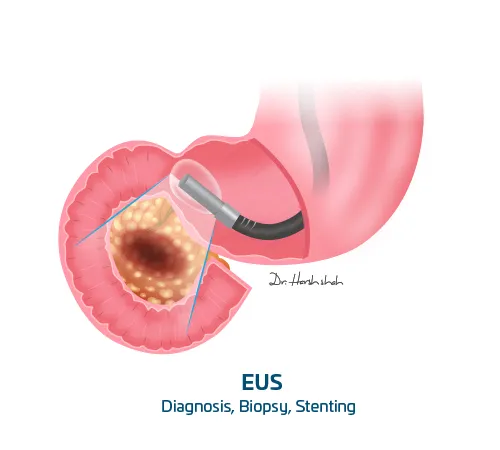
EUS (Endoscopic Ultrasound) is a procedure used to diagnose and stage pancreatic cancer. It involves using an ultrasound probe on a flexible endoscope to obtain detailed images of the pancreas and surrounding areas. EUS helps determine tumor characteristics, lymph node involvement, and guides biopsies. It is minimally invasive, accurate, and aids in treatment planning.
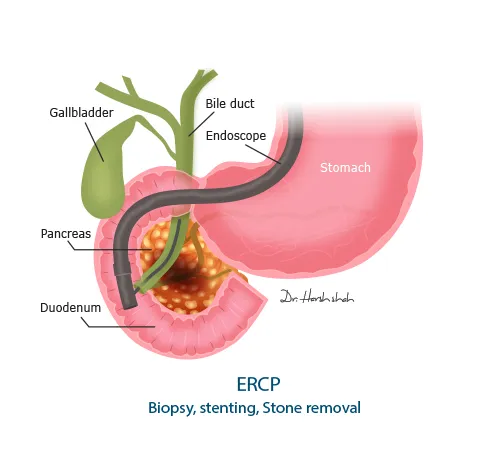
ERCP, or Endoscopic Retrograde Cholangiopancreatography, is a procedure used in the diagnosis and management of pancreatic cancer. It involves the use of an endoscope, which is inserted through the mouth and into the small intestine.
During ERCP, a dye is injected into the pancreatic and bile ducts, allowing for X-ray imaging. This helps in identifying any blockages, narrowing, or abnormalities in these ducts, which can be indicative of pancreatic cancer.
Pancreatic cancer is staged based on the extent of the disease. The stages of pancreatic cancer are as follows:
Stage 0: Also known as carcinoma in situ, cancer is confined to the top layers of cells in the pancreas and has not spread deeper.
Stage I: Cancer is localized to the pancreas and has not spread to nearby lymph nodes or distant sites.

Stage II: Cancer has spread to nearby lymph nodes but not to distant sites.
Stage III: Cancer has spread to major blood vessels near the pancreas or to nearby lymph nodes.
Stage IV: Cancer has spread to distant organs, such as the liver, lungs, or distant lymph nodes.
Staging for pancreatic cancer
CT scan: A CT scan, also known as a computed tomography scan, is a medical imaging technique that uses X-rays and computer processing to create detailed cross-sectional images of the body.

PET-CT scan: A PET-CT scan, or positron emission tomography-computed tomography scan, combines PET and CT technologies into a single imaging procedure.
Blood CA 19-9 level: CA 19-9 is a tumor marker that can be measured through a blood test. Elevated levels of CA 19-9 in the blood can indicate the presence of certain cancers, including pancreatic, gallbladder, and bile duct cancers.
Treatment options for pancreatic cancer
⦿ Surgery: Removal of the tumor or the entire pancreas in some cases.
⦿ Chemotherapy: Powerful drugs to kill or slow the cancer cells’ growth.
⦿ Radiation therapy: High-energy rays to target and destroy cancer cells.
⦿ Targeted therapy: Drugs targeting specific molecules involved in cancer growth.
⦿ Immunotherapy: Enhances the body’s immune system to fight cancer.
⦿ Palliative care: Focus on symptom relief and improving quality of life.