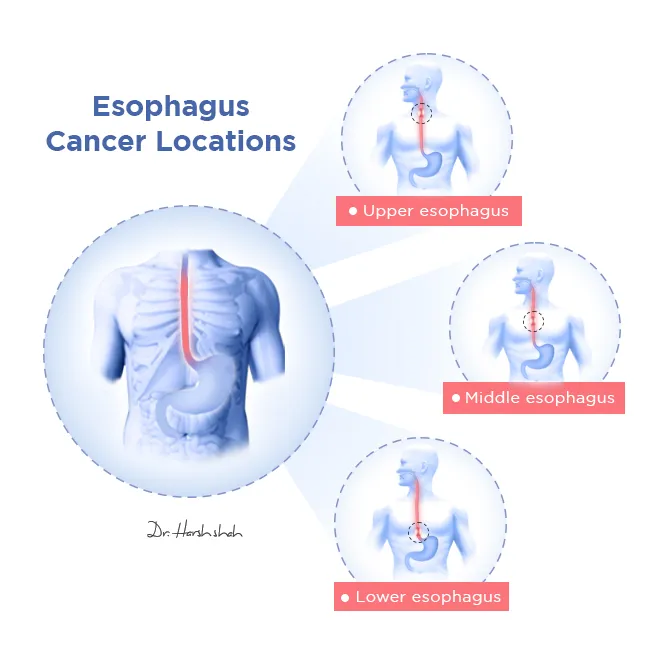
There are two types of esophagus cancer:
Squamous cell carcinoma: This type of esophageal cancer develops in the cells lining the esophagus.
Adenocarcinoma: Adenocarcinoma of the esophagus arises from the glandular cells in the lower part of the esophagus.
The different locations of esophageal cancer include:
Upper esophagus: Esophageal cancer can develop in the upper part of the esophagus, near the throat. This region is also known as the cervical esophagus.
Middle esophagus: The middle part of the esophagus is a common site for esophageal cancer. It is located between the upper and lower portions.
Lower esophagus: Esophageal cancer can occur in the lower part of the esophagus, near the junction where the esophagus meets the stomach. This region is referred to as the gastroesophageal junction.
There are several types of Symptoms of esophageal cancer include:
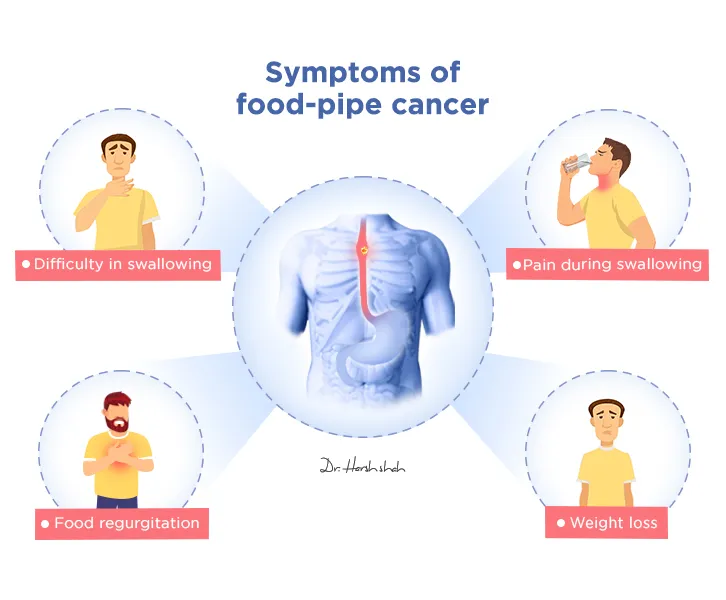
– Difficulty swallowing (dysphagia)
– Unintentional weight loss
– Persistent or worsening heartburn or acid reflux
– Chest pain or discomfort
– Chronic cough or hoarseness
– Frequent choking on food
– Painful or uncomfortable swallowing (odynophagia)
– Chronic indigestion or stomach discomfort
– Regurgitation of food or sour liquid
– Fatigue or weakness
There are three major treatments for food-pipe cancer include:

Surgery: Surgical removal of the cancerous tissue is a common treatment approach. This may involve removing a portion of the esophagus (esophagectomy) or, in more advanced cases, removing the entire esophagus (total esophagectomy).
Radiation therapy: High-energy X-rays or other types of radiation are used to kill cancer cells and shrink tumors. Radiation therapy may be used before surgery to shrink tumors, after surgery to kill remaining cancer cells, or as the primary treatment in certain cases.
Chemotherapy: Anti-cancer drugs are administered to destroy cancer cells. Chemotherapy can be used as a standalone treatment or in combination with other treatments, such as surgery or radiation therapy.