Skip to main contentGastroclinix · Dr Harsh Shah · Ahmedabad & Gandhinagar
Last updated: 18-Oct-2026
Piles (haemorrhoids) treatment in Ahmedabad · Gota OPD, Gota, Ahmedabad · Apollo Hospital, Bhat, Gandhinagar
In short: Dr Harsh Shah treats piles in three steps. Diet, fibre, tablets and warm sitz baths come first. Rubber band ligation in the OPD suits grade 1 to 3 internal piles. Open haemorrhoidectomy is kept for grade 3 and 4 piles, piles with a large outside part, or piles that come back after banding.
Bleeding from the back passage is never assumed to be piles. An examination comes first, and a colonoscopy is advised for people over 40, people with a change in bowel habit, weight loss or low blood count, and those with a family history of bowel disease.
Banding means a day or two of ache and a return to work the next day. Open surgery means one to two sore weeks, managed with tablets, sitz baths and stool softeners, and wounds that heal over four to seven weeks.
Piles are normal cushions of blood vessels inside the anus that have swollen and slipped down. The grade tells how far they come out, and it decides the treatment.
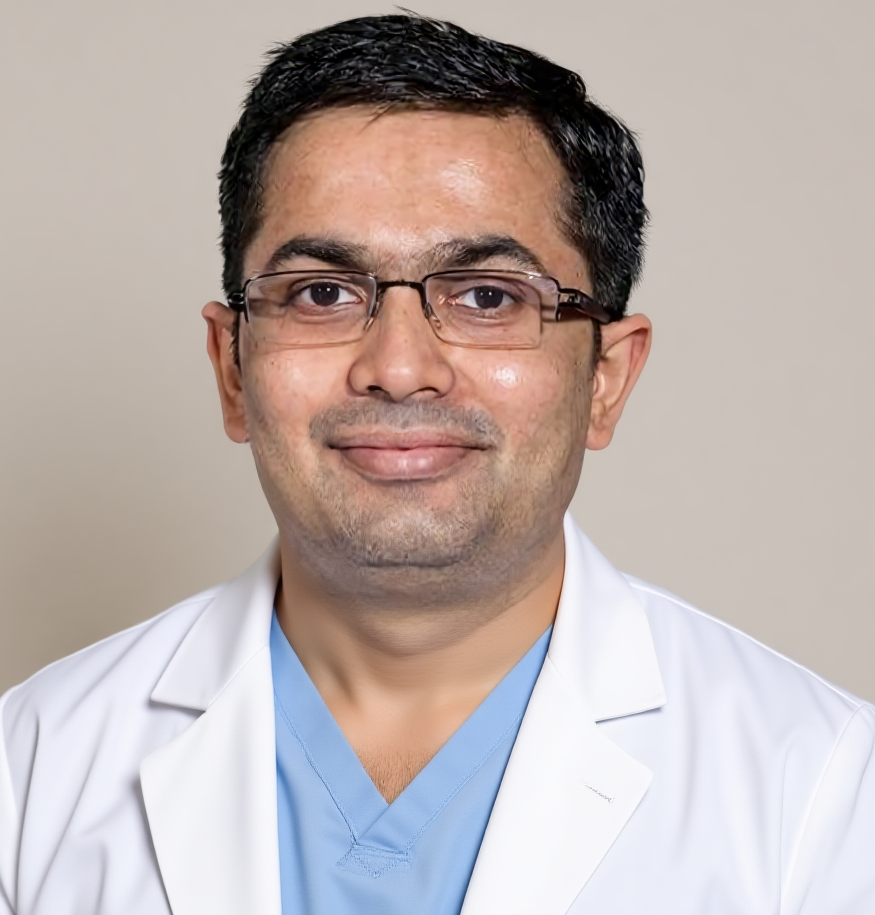
Dr Harsh Shah has 18 years of experience in gastro and bowel surgery. The examination, the grade, the treatment and the follow-up are with the same surgeon.
Dr Harsh Shah
MS, MCh (Surgical Gastroenterology), DrNB (Surgical Gastroenterology)
Registered with Gujarat Medical Council, Reg. No. G-38738
GI & Proctology Surgeon · Apollo Hospital, Bhat, Gandhinagar · Gota OPD, Ahmedabad
Google rating 4.89 from 216 reviews at the Gota clinic, and 4.94 from 18 reviews at Apollo, Bhat.
Everyone has these cushions; they help the anus close tightly. Hard stools, straining, long toilet sitting, pregnancy and age weaken their support, so they swell, bleed and slide down.
Internal piles sit inside, where the lining feels little pain, so they mostly bleed or come out. External piles sit under the sensitive skin at the edge, so a clot there hurts. Many people have both, called mixed piles.
| Grade | What you notice | What the surgeon sees |
|---|---|---|
| Grade 1 | Bright red blood on the paper or in the pan. Nothing comes out. | Swollen cushions that stay inside. |
| Grade 2 | Something comes out when passing stool and goes back by itself. | Cushions that slip down and return. |
| Grade 3 | Something comes out and has to be pushed back with a finger. | Cushions that slip out and stay out until pushed. |
| Grade 4 | A lump stays outside and cannot be pushed back. Often wet, itchy or sore. | Cushions that stay out, often with a large outside part. |
The rule is to use the smallest step that controls the symptoms. Most grade 1 and 2 piles never need an operation. Grade 4 piles usually do.
| Grade or type | First step | If that is not enough |
|---|---|---|
| Grade 1 | Fibre, water, stool softener, no straining, short course of tablets or cream. | Rubber band ligation in the OPD. |
| Grade 2 | Fibre and bowel habits, then rubber band ligation. | A second or third banding session. |
| Grade 3, small and few | Rubber band ligation, often over two or three sessions. | Open haemorrhoidectomy. |
| Grade 3, large or with an outside part | Open haemorrhoidectomy. | — |
| Grade 4, or mixed piles | Open haemorrhoidectomy. | — |
| Piles back after two or three bandings | Open haemorrhoidectomy. | — |
| Clotted (thrombosed) external pile | Seen early and very painful: removal of the clot and pile through a small cut. Seen later: tablets, sitz baths and ointment. | Formal surgery only if it keeps coming back. |
The fibre and bowel habits continue after any procedure. Without them, piles come back sooner, whatever was done.
Piles are the commonest cause of bright red bleeding, but not the only one. The first visit makes sure nothing else is causing it.
Bleeding can also come from a fissure, polyps, bowel inflammation, pouches in the bowel wall, or a growth. So every patient has a finger examination and a look inside with a short tube called a proctoscope.
Every patient starts here. For many people with grade 1 and 2 piles, this alone controls the bleeding and swelling.
A small rubber band is placed on the pile, above the area that feels pain. The pile shrinks and falls off in about a week. No anaesthesia or admission is needed.
Dr Harsh Shah places the band through a proctoscope while you lie on your side. It sits high on the pile, where the lining has little feeling. Sharp pain means it is too low, and it is moved at once.
One to three piles are banded per visit, with further sessions four to six weeks apart. If piles still bleed or come out after two or three sessions, open surgery is discussed.
Banding is avoided during an active fissure or infection, and planned with care in people on blood thinners, with poorly controlled diabetes or with weak immunity.
Open (Milligan-Morgan) haemorrhoidectomy removes the piles and leaves the small wounds open to heal. It is the most lasting treatment, and the most sore to recover from.
The operation is done at Apollo Hospital, Bhat, under spinal or general anaesthesia. Dr Harsh Shah removes the main piles, usually up to three, and ties each blood vessel at its top. Bridges of healthy skin are left between the wounds so the anus does not narrow as it heals.
The ring muscle of the anus is never cut, to protect control of stool and wind. A small skin tag is accepted rather than taking too much skin. Most patients go home the same day or next morning.
Fibre, a stool softener and pain tablets start before surgery and continue for at least two weeks after it.
A clot inside an external pile causes a tender bluish lump and sharp pain. Pain peaks in two to three days, then settles over two to four weeks.
Seen within about three days with severe pain, the clotted pile can be removed through a small cut under local anaesthesia. Pain settles faster and it returns less often. Simply pricking the clot is avoided, as it tends to re-form.
If the pain is already easing, surgery adds a wound for little gain. Tablets, sitz baths, a softener and ointment settle it in one to two weeks, sometimes leaving a small skin tag.
Come the same day if piles come out and will not go back, are swollen, very painful or turning dark. This is a trapped pile. It needs urgent care, and sometimes an operation.
Banding means a short ache and a near-normal next day. Open surgery means a sore first week, steady improvement in the second, and full healing in four to seven weeks.
| When | After rubber band ligation | After open haemorrhoidectomy |
|---|---|---|
| Day 0 | Fullness and a dull ache for a few hours. Home straight away. | Spinal or general anaesthesia. Home the same evening or next morning, after passing urine. |
| Days 1–2 | Ache and a feeling of needing to pass stool. Back to normal work. Avoid heavy lifting. | Sore. Pain is controlled with tablets, sitz baths and stool softeners. First stool by day 2 or 3, which is the hardest moment. |
| Days 3–7 | Usually comfortable. | Still sore, especially with stools. Some blood and discharge. Short walks at home. |
| Days 5–10 | The pile and band fall off. A little blood on the paper is expected. | Pain easing. A small chance of bleeding as the wounds heal. |
| Week 2 | Normal. | Most people return to desk work around two weeks. |
| Weeks 4–7 | Next banding session if needed. | Wounds heal fully. Some discharge until then, so a pad helps. |
| Review | Four to six weeks. | Two weeks, and again at six to eight weeks to check healing. |
Take the pain tablets on time in the first week, the stool softener every day, and a sitz bath after every stool. Avoid aspirin-type painkillers for a week after banding unless advised, as they raise the chance of bleeding.
Call or come back at once with any of these.
Severe pain, fever and difficulty passing urine together, after banding or surgery, can mean a rare deep infection. It needs to be seen the same day.
Banding carries small risks. Open surgery carries more, but most are short-lived. Each is explained in person before consent.
After banding: ache and fullness for a day or two; a little bleeding when the band falls off, and heavier bleeding in a few, around day 5 to 14; a clot in a nearby pile; brief difficulty passing urine; and, rarely, a deep pelvic infection. Piles can come back and need more banding or surgery.
After open haemorrhoidectomy:
Dr Harsh Shah goes through each of these in person before consent.
Other centres in Ahmedabad use newer devices for piles. Dr Harsh Shah uses banding and open surgery, which have the longest track record. Here is how they compare.
| Option | Used by Dr Harsh Shah? | Early soreness | Chance of piles returning | Suits |
|---|---|---|---|---|
| Diet, fibre, medicines, sitz baths | Yes | None | High if used alone | All grades, first step |
| Rubber band ligation | Yes | Mild, a day or two | Moderate; repeat sessions help | Grade 1 to 3 internal piles |
| Open haemorrhoidectomy | Yes | Most; one to two sore weeks | Lowest | Grade 3 and 4, mixed piles, failed banding |
| Laser or stapler procedures | No. Other centres use them. Dr Shah does not, because studies show piles come back more often after them, and they do not deal well with a large outside part or grade 4 piles. | Less than open surgery | Higher than open surgery | Selected grade 2 and 3 piles |
A quicker early recovery is a real advantage. The trade is a higher chance of needing treatment again, and Dr Harsh Shah explains this at the consultation.
The estimate depends on the treatment. Banding is an OPD procedure. Open surgery means a short hospital stay with anaesthesia and theatre charges.
What moves the cost: the number of banding sessions, a colonoscopy, the anaesthesia, a same-day or overnight stay, the room category, and other illnesses. Haemorrhoidectomy is usually covered as an admitted procedure; OPD banding may not be, so check your policy. Apollo Hospital, Bhat, works with the major insurers and cashless schemes, and the office handles pre-authorisation. Bring: reports, a list of medicines, the insurance card and identification. You can also call +91-63555-64601 to ask what to bring.
No. Most grade 1 and 2 piles settle with fibre, water, better toilet habits and a short course of medicines, or with banding in the OPD. An operation is usually kept for grade 3 and 4 piles, mixed piles, and piles that keep coming back after banding.
Most people feel fullness and a dull ache for a day or two. The band is placed above the part of the anus that feels pain. If it hurts sharply when placed, it is moved at once. Most people go back to work the next day.
The first week is sore, especially with stools. Pain is controlled with tablets, sitz baths and stool softeners. Most people return to desk work in about two weeks, and the wounds heal fully in four to seven weeks.
Bleeding can also come from polyps, inflammation or a growth higher in the bowel. A colonoscopy is advised if you are over 40, if your bowel habit has changed, if you have lost weight or have low blood, or if a close relative had bowel disease.
This is often a clot in an external pile. If you are seen within about three days and the pain is severe, it can be removed through a small cut under local anaesthesia. Later, it usually settles in one to two weeks with tablets, sitz baths and ointment.
Other centres use laser and stapler procedures, which can mean an easier first week. Dr Shah does not use them, because studies show piles return more often after them, and they suit large outside piles and grade 4 piles less well. He uses banding and open surgery, matched to the grade.
Yes. They come back more often after medicines alone or banding than after open surgery. Keeping up fibre, water and good toilet habits for life lowers the chance. Piles that return after banding can be banded again or removed.
Usually yes, with planning. Some thinners are paused for about a week after banding or around surgery, only if your heart doctor agrees. Thinners after a recent heart stent are never stopped for piles; another plan is chosen instead.
Shah’s Gastro, Cancer & Robotic Surgery Centre — Gota, Ahmedabad
SF-203, 2nd Floor, Olive Greens, Gota, Ahmedabad.
Consultations, examination and grading of piles, rubber band ligation, and follow-up.
Google: Dr Harsh Shah · 4.89 from 216 reviews
Directions to the Gota clinic · +91-63555-64601
Apollo Hospital, Bhat, Gandhinagar
Apollo Hospital International Limited, Plot No. 1 A, GIDC Bhat Industrial Estate, Bhat, Gandhinagar.
Open haemorrhoidectomy, emergency care for trapped or bleeding piles.
Google: Dr Harsh Shah, Apollo Bhat listing · 4.94 from 18 reviews
Directions to Apollo, Bhat · WhatsApp +91-63555-64601
Patients come to Ahmedabad from across Gujarat, including Gandhinagar, Mehsana, Nadiad, Anand, Rajkot and Kutch, and from southern Rajasthan.
Bleeding, a lump that comes down, or a sudden painful swelling at the back passage? Colonoscopy, blood and earlier treatment reports can be sent ahead, so the consultation starts with them already read. The grade is confirmed and treatment decided at the consultation, after examination. Heavy bleeding with clots, or pain with fever and difficulty passing urine, needs the nearest emergency department today. Call +91-63555-64601 · Send the reports ahead on WhatsApp
Swasth Parivar: twice a month, practical advice on recovery, diet and warning signs. No advertising. Stop any time.
Your number is used for these updates and for the clinic to reach you. It is never sold or passed on. To stop, reply STOP on WhatsApp.