Beger, Berne and Whipple for Chronic Pancreatitis | Dr Harsh Shah
Drainage suits a blocked, widened duct. Resection suits a hard, swollen head of the pancreas, the lump that causes the pain.
 Skip to main content

Drainage suits a blocked, widened duct. Resection suits a hard, swollen head of the pancreas, the lump that causes the pain.
Endoscopy helps most when pain comes from one clear blockage in a widened duct, such as a stone or a narrowing.
Surgery is considered when pain keeps returning despite medicines and endoscopy, and the main duct is widened and blocked, often by stones.
Most fluid collections need no treatment. Draining is advised only for pain, infection, steady growth, or pressure on the stomach or bile duct.
In severe pancreatitis, part of the gland can die. Some weeks later a firm wall forms around it. If germs enter that pocket, it is infected walled-off necrosis.
You stay in hospital for a few days. The team watches for fever, pain and bleeding while the pocket empties into the stomach or a tube.
A pseudocyst is a pocket of pancreatic fluid with a wall of scar tissue. It forms a few weeks after an attack of pancreatitis.
No. Many pockets shrink on their own, so drainage is kept for pockets that cause trouble. Size alone is not a reason.
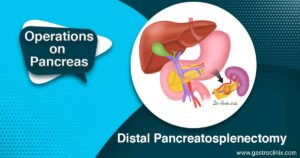
A distal pancreatectomy is a surgery to remove part of pancreas called body & tail.

Frey’s procedure is a surgical technique over the pancreas. It is performed for chronic pancreatitis.

Pancreatic Necrosectomy is the surgical removal of dead tissue from the patient with pancreatic swelling (called necrotizing pancreatitis).

The Whipple procedure, or pancreaticoduodenectomy, is the most common surgery to remove tumors in the pancreas.
Swasth Parivar: every week, practical advice on recovery, diet and warning signs. No advertising. Stop any time.
Your number is used for these updates and for the clinic to reach you. It is never sold or passed on. To stop, reply STOP on WhatsApp.