Skip to main contentLast updated: 14-Nov-2026
Tapping Book on WhatsApp will likely open the WhatsApp app on your phone.

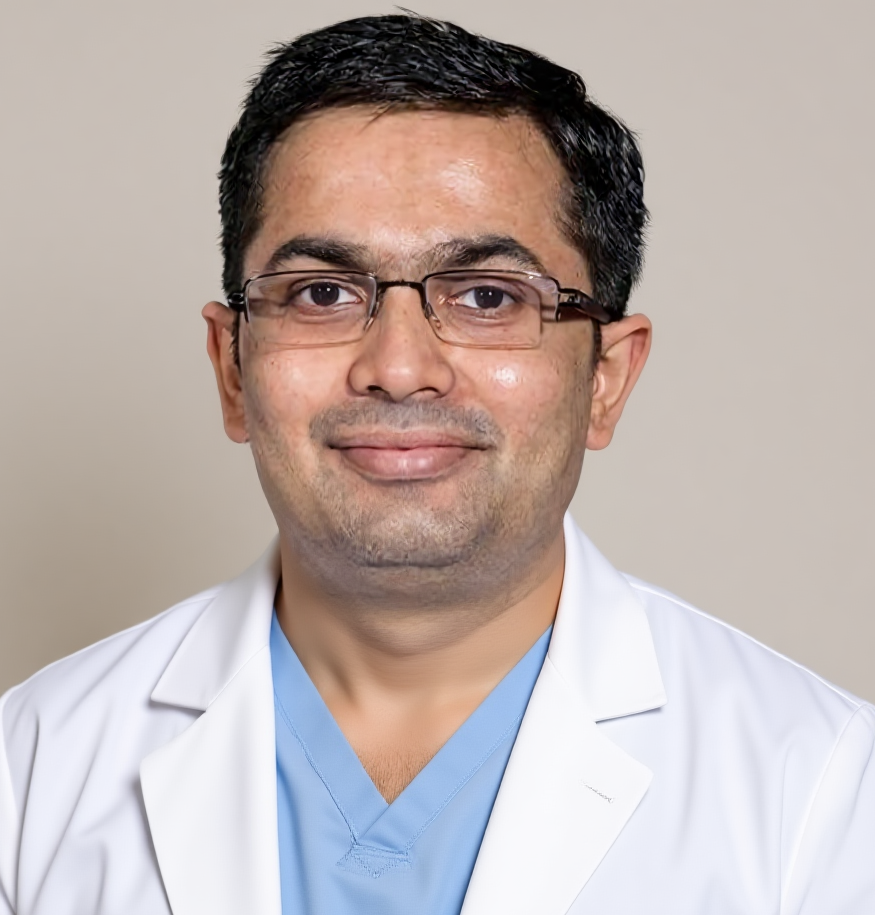
Dr Harsh Shah
MS, MCh (Surgical Gastroenterology), DrNB (Surgical Gastroenterology)
Registered with Gujarat Medical Council, Reg. No. G-38738
Gallbladder Surgeon
Dr. Jivraj Mehta Hospital, Vasna, Ahmedabad · 18 years of experience
In short
A difficult gallbladder is one that is badly inflamed or scarred, so the surgeon cannot see the bile duct clearly. Pushing on in that state is what causes injuries.
When the safe view cannot be reached, the surgeon stops. The usual safe choice is a subtotal cholecystectomy, which removes most of the gallbladder and leaves a small cuff on the duct side.
Taking out only part is a planned safety step, not a half operation. Most people recover well, and a small leak, if it happens, is treated simply.
This post explains one hard situation in gallbladder surgery. For the whole picture of stones and infection, see our gallstone and cholecystitis treatment page.
A gallbladder becomes difficult when swelling or scarring hides the small space where the bile duct and artery lie. The surgeon then cannot tell which tube is which.
Most gallbladder operations are routine. A few are not, and the cause is nearly always the same: long or repeated infection that has glued the gallbladder to the liver and the bile duct. Here are the usual reasons.
Men, older people and those with many past attacks more often have a difficult gallbladder. A scan can hint at it, but the final answer comes only when the surgeon looks inside.
It is a clear look at two structures, the cystic duct and the cystic artery, going into the gallbladder, and nothing else. Only then are they clipped and cut.
Every careful surgeon aims for this view before cutting anything. It is a rule that protects the main bile duct, which carries bile from the liver to the gut. If the main duct is cut or clipped by mistake, the injury is serious and may need a major repair.
In a difficult gallbladder, the view cannot always be reached. The key rule is simple. If the safe view is not possible after a fair effort, the surgeon does not guess. The surgeon switches to a safer plan, and that is a sign of good judgement.
The surgeon can start from the top, take a dye picture of the ducts, remove only part, or change to an open cut.
| Step | What it means | When it helps |
|---|---|---|
| Top-down dissection | The gallbladder is freed from the liver, starting at the top and working towards the neck | When the neck area is too scarred to enter first |
| Dye picture of the ducts | Dye is passed into the system and an X-ray or light scan shows the ducts | When the anatomy is unclear or a bile duct stone is suspected |
| Subtotal cholecystectomy | Most of the gallbladder is removed, and the danger zone near the neck is left alone | When the neck is fused and the safe view is not possible |
| Change to an open cut | The operation moves from keyhole to a standard cut, for a better feel and view | When bleeding or scarring makes the keyhole route unsafe |
None of these is a defeat. We explain them before the day. They are also written on the consent form. A change of plan then never comes as a shock.
It removes the loose, diseased part of the gallbladder. A small cuff stays near the neck, where cutting would risk the main duct.
The surgeon empties the gallbladder, removes the stones, and takes away the free walls. Then there are two ways to finish the cuff that remains.
Both are accepted ways to finish. The choice depends on what the surgeon sees. A drain is usually left for a few days. Any bile that seeps out can then leave the body and not collect inside.
Most people go home within a few days. A little bile may seep from the cuff at first. It usually stops by itself while the drain does its work.
If bile keeps leaking, a short tube, called a stent, can be placed in the bile duct by endoscopy. It lowers the pressure and lets the leak close. Rarely, a stone left in the cuff or a small pocket of fluid needs a second look.
The main trade-off is clear. Leaving a small cuff may give a minor leak or a later stone. It avoids a far worse harm, a damaged main duct. Our post on jaundice or bile leak after gallbladder surgery lists the warning signs to watch for at home.
We plan ahead. A senior surgeon operates. The consent covers part removal and a change to open surgery. A drain and dye pictures are kept ready.
If your scans suggest a hostile gallbladder, we choose a calm time and not the end of a busy emergency list. We do not rush an acute attack into the theatre if it can safely settle first. Our notes on why the timing of bile duct repair matters show what is at stake when the duct is hurt.
No. It means the gallbladder is badly inflamed or scarred, and the surgeon chooses a safer way to remove it. Changing the plan to protect the bile duct is good surgery.
Near the neck, the gallbladder can be fused to the main bile duct. Cutting there blind risks a serious duct injury, so the dangerous cuff is left alone.
It is uncommon but possible, because a small cuff remains. A stone in the cuff can cause pain again, and a repeat operation or endoscopic treatment can deal with it.
A small leak is common and usually settles with the drain. If it continues, a stent placed by endoscopy lets it close. Fever, yellow eyes or swelling need a call at once.
Often yes. The surgeon starts with keyhole and changes to an open cut if bleeding or scarring makes it unsafe. We explain this before the day.
It depends on the attack. Some settle with treatment and surgery is planned a few weeks later, and others need an earlier operation. Your scans and blood tests guide the timing.
Not always. It is used when the anatomy is unclear or a duct stone is suspected. It helps the surgeon avoid cutting the wrong tube.
For questions before you travel, call +91-63555-64601. The pages below cover the next steps.
Dr Harsh Shah — Dr. Jivraj Mehta Hospital, Vasna, Ahmedabad
Dr. Jivraj Mehta Hospital, Dr Jivraj Mehta Marg, Vasna, Ahmedabad 380007.
Consultations, review of reports and scans, operations and follow-up. OPD Monday to Saturday, 9 am to 5 pm.
Appointments: +91-63555-64601 · +91-63590-11009 · Hospital 079-2663 6363
Directions to the hospital · WhatsApp +91-63555-64601
Told that your gallbladder operation may be "difficult"? That can feel frightening, but it is a planned, safe path and not a failure. Dr Harsh Shah explains your scans in plain words and tells you what to expect, including the chance that only part of the gallbladder is taken out. Call, or message us on WhatsApp. Call For Appointment Book on WhatsApp Tapping Book on WhatsApp will likely open the WhatsApp app on your phone.
Tapping Book on WhatsApp will likely open the WhatsApp app on your phone.
Swasth Parivar: every week, practical advice on recovery, diet and warning signs. No advertising. Stop any time.
Your number is used for these updates and for the clinic to reach you. It is never sold or passed on. To stop, reply STOP on WhatsApp.