Skip to main contentLast updated: 09-Nov-2026

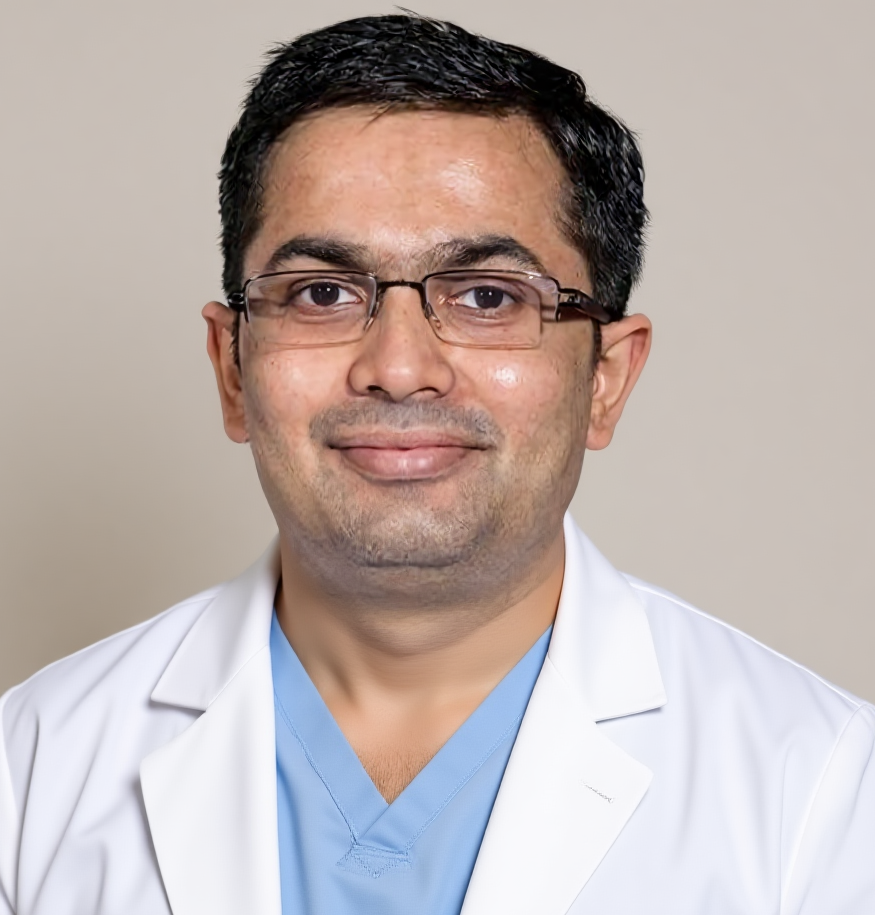
Dr Harsh Shah
MS, MCh (Surgical Gastroenterology), DrNB (Surgical Gastroenterology)
Registered with Gujarat Medical Council, Reg. No. G-38738
Pancreas Cancer Surgeon
Dr. Jivraj Mehta Hospital, Vasna, Ahmedabad · 18 years of experience
In short
Recurrent pancreatic cancer returns after a first operation, in the surgical area or another organ. It usually behaves like spread cancer, so whole-body drugs form the base of the plan.
A small group have just one or two spots, found late after surgery. For them, an operation or focused radiation on that spot can be added to the drugs.
Time since your operation matters. A return after more than a year often allows more choices than one within months. Symptom care runs alongside every plan.
This post walks through the options one by one. For the wider picture, see our pancreatic cancer treatment page.
It returns in a few usual places: the surgical bed, liver, belly lining, lungs and deep lymph nodes. The place decides the next step.
Even after a complete operation, tiny cancer cells may already have travelled before the surgery. They stay silent for months and then grow large enough to be seen. This is why chemotherapy is given after the operation, and why regular follow-up scans matter.
| Site of return | What it means | What usually follows |
|---|---|---|
| Surgical bed | Soft tissue near the joined bowel and the pancreas stump | Drugs, and focused radiation in selected patients |
| Liver | The most frequent site of spread | Drugs, and rarely an operation on one spot |
| Belly lining | Small seeds on the lining, often with fluid | Drugs and symptom care |
| Lungs | Small round spots on the chest scan | Drugs, and sometimes removal of one or two spots |
| Deep lymph nodes | Glands along the main blood vessels | Drugs, with radiation in selected patients |
| Bone | Uncommon, often with pain | Pain relief, radiation and bone-protecting medicines |
Our post on follow-up after pancreatic cancer treatment explains the scan schedule that finds a return early.
Usually by a rising CA 19-9 level or a new finding on a follow-up scan. The team then confirms the return and checks how far it has spread.
The biopsy matters because the cancer can change. A gene change absent in the first tumour may now be present and may open a new drug. A scar after the operation can also look like cancer on a scan. Treatment should never be started on a scan alone if the doubt is real.
Sometimes. When the cancer returns as one spot, long after the first operation and responding to drugs, treating that spot may be added to the plan.
This applies to a small group only. The usual rules we look for are these.
For the liver, the options are removal of a small part, or focused radiation or heat treatment. For a lung spot, a keyhole operation removes a wedge of lung. A single deep lymph node may be removed in a fit patient. In every case, drugs continue alongside. A return within a few months of the first operation points to fast-growing cancer, so a second operation is usually not advised. The decision is made at a team meeting of the surgeon, oncologist and radiologist.
A return in the surgical area is difficult to remove again. Drugs are the base, and focused radiation may be added for a well-defined spot.
Scar tissue after a Whipple operation can look like a tumour, so a biopsy or a PET-CT is often needed. If cancer is confirmed, stereotactic body radiation treats the spot with high precision in a few sittings. It aims to relieve pain and hold the spot back, along with the drugs. A second major operation at the same site is rarely possible, and it is offered only at an expert centre for a very carefully chosen patient.
Be careful with any promise of a repeat operation. The risk is high, and the gain is small unless the spot is truly alone. Ask for the reasons in writing and seek a second opinion at a high-volume pancreas centre.
The gap since your last chemotherapy guides the choice. A long gap often allows the same drugs again. After a short gap, a switch is usual.
| Situation | Usual approach |
|---|---|
| Return more than six months after the last drugs | The same group of drugs can be offered again if you tolerated them well |
| Return within six months of the last drugs | A different group of drugs is chosen |
| BRCA or PALB2 change, olaparib not yet used | Platinum-based drugs, then olaparib as a tablet to keep the cancer quiet |
| MSI-high or another rare change on the new biopsy | Immunotherapy or a targeted tablet, if available |
| Low strength or other illness | A gentler single drug, or comfort care |
Drugs such as FOLFIRINOX, gemcitabine with nab-paclitaxel and newer combinations are explained in our post on treatment of spread pancreatic cancer. Your medical oncologist gives the drugs. Dr Harsh Shah works with that team on the surgical and procedural side, and on the choice of who should be considered for a direct treatment of a single spot.
Spread to the belly lining is treated mainly with drugs. A heated chemotherapy wash during surgery is not routine and is considered only in rare, chosen patients.
The lining spreads cancer in small seeds that cannot be seen well on a scan. Fluid collects in the belly, appetite falls, and food may not pass easily. The aim is to control symptoms and keep you eating and moving.
Our post on what the biopsy report and gene tests mean helps you read the results of a repeat biopsy.
Symptoms are treated at the same time as the cancer. Good symptom care helps patients stay stronger and cope better with the drugs.
| Problem | What helps |
|---|---|
| Deep back or belly pain | Pain medicines adjusted early, a nerve block near the coeliac artery, and radiation for a bone or local spot |
| Yellow eyes and itching | A stent through an endoscope, or a drain through the skin when the stent cannot be placed |
| Vomiting after meals | A stent or a bypass lets food leave the stomach |
| Weight loss and weakness | Enzyme capsules with meals, protein-rich food, a dietitian and, if needed, appetite medicines |
| Low mood and worry | Counselling, family support and, when needed, medicines |
Pain that is new, or a change in the colour of your eyes, should be reported early. Small, frequent meals and daily walking help. A return after surgery often brings fear of what the next months will be like, and the team should talk about it with you openly.
When strength is too low for drugs, or the cancer no longer responds, comfort care becomes the main plan. It aims at relief, dignity and time at home.
Palliative care is not a last step. A palliative care team can join from the first weeks, alongside chemotherapy. It treats pain, poor appetite, breathlessness, sleep problems and worry, and it helps the family plan ahead.
Choosing comfort care is not giving up. It is a way to use your remaining strength for what matters to you. Dr Harsh Shah will tell you honestly what to expect, and will stay with you at each stage.
It means the cancer has come back after the first treatment, usually after an operation and chemotherapy. It may return in the surgical area or in another organ, most often the liver.
Most often through a rising CA 19-9 level or a new finding on a follow-up CT scan. A biopsy then confirms the return, and an MRI or PET-CT may be added to see how far it has spread.
Rarely. A second operation is considered only for a single spot, found long after the first operation, that has responded well to drugs. It is decided at a team meeting, not by one doctor.
In selected patients, yes. Focused radiation can treat a clearly seen spot in a few sittings. It is added to drugs, mainly to ease pain and hold the spot back.
If the cancer returns more than six months after the last drugs and you tolerated them well, the same group may be offered again. A shorter gap usually means a switch to a different group.
Yes, when possible. The cancer can change, and a new gene finding, such as a BRCA or MSI-high result, can open a new drug choice.
Pain medicines are adjusted early. A nerve block near the coeliac artery, or radiation to a bone or local spot, can add relief. Your care team reviews pain at every visit.
When strength is too low for drugs to help or the cancer no longer responds. Palliative care can also start earlier, alongside chemotherapy, to ease symptoms and support the family.
For the whole treatment pathway, start at the pancreatic cancer treatment page. For questions before you travel, call +91-63555-64601.
Dr Harsh Shah — Dr. Jivraj Mehta Hospital, Vasna, Ahmedabad
Dr. Jivraj Mehta Hospital, Dr Jivraj Mehta Marg, Vasna, Ahmedabad 380007.
Consultations, review of reports and scans, operations and follow-up. OPD Monday to Saturday, 9 am to 5 pm.
Appointments: +91-63555-64601 · +91-63590-11009 · Hospital 079-2663 6363
Directions to the hospital · WhatsApp +91-63555-64601
Did a follow-up scan or a rising blood marker show that pancreatic cancer may be back after your operation? It is hard news, but it is not the end of the road. Dr Harsh Shah reads the new scans against your old ones, explains where the cancer has returned, and plans what comes next with your oncologist. Bring every scan, the operation and biopsy reports, and your CA 19-9 results. You can also call, or message us on WhatsApp. Call For Appointment Book on WhatsApp Tapping Book on WhatsApp will likely open the WhatsApp app on your phone.
Swasth Parivar: every week, practical advice on recovery, diet and warning signs. No advertising. Stop any time.
Your number is used for these updates and for the clinic to reach you. It is never sold or passed on. To stop, reply STOP on WhatsApp.