Skip to main content
Dr Harsh Shah · Pancreas Cancer Surgeon · Apollo Hospital, Bhat, Gandhinagar and Gota OPD, Ahmedabad
A locally advanced pancreatic cancer is one that has grown around a main artery behind the pancreas but has not spread anywhere else. It is not operable at the moment it is found, and the correct first treatment is chemotherapy, not an operation. After several months of treatment the disease is re-staged, and in a proportion of patients an operation that was impossible at diagnosis becomes possible.
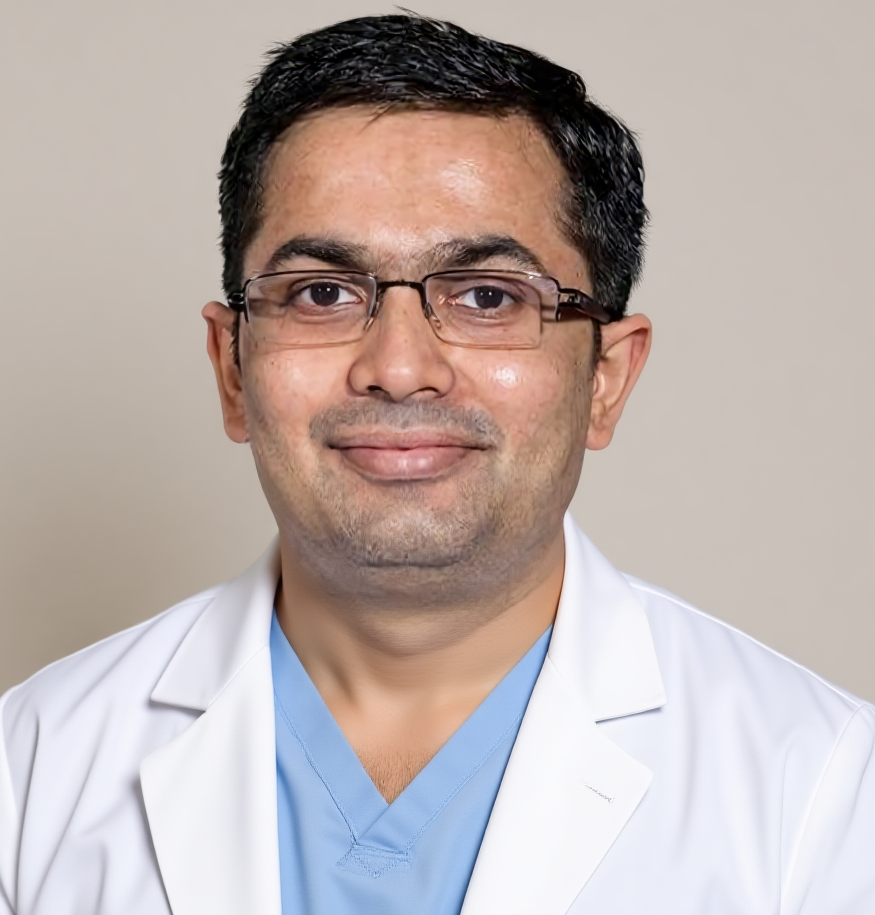
Shah’s Gastro, Cancer & Robotic Surgery Centre
Dr Harsh Shah
MS, MCh (Surgical Gastroenterology), DrNB (Surgical Gastroenterology)
Pancreas Cancer Surgeon
· Apollo Hospital, Bhat, Gandhinagar · Gota OPD, Ahmedabad
Qualified twice over in surgical gastroenterology, and in practice long enough to have followed pancreatic cancers through the whole of their course rather than only at the operating table. The locally advanced group is the one where families most often hear a flat no somewhere else and arrive believing nothing can be done. Some of those patients do come to an operation, months later, and the difference is usually that somebody kept re-staging instead of closing the file. Google rating 4.89 from 216 reviews at the Gota clinic, and 4.94 from 17 reviews at the Apollo, Bhat listing.
Pancreatic cancer is not classified by how big it is. It is classified by what it is touching. Behind the pancreas run the superior mesenteric artery and the coeliac axis, the two vessels that supply the entire intestine and the liver. When a tumour has grown around more than half the circumference of one of them, or has blocked the main draining vein in a way that cannot be rebuilt, the disease is called locally advanced — and no surgeon can remove it safely at that moment.
This is worth understanding properly, because the word patients usually hear is “inoperable”, and it is heard as “untreatable”. They are not the same thing. Locally advanced pancreatic cancer has, by definition, not spread to the liver, the lungs or the lining of the abdomen. It is still confined to where it started. What stands in the way is one anatomical relationship, and that relationship can change with treatment.
Dr Harsh Shah separates four situations at the first consultation, because the whole plan follows from which one a patient is in: a resectable tumour, clear of both arteries; a borderline resectable tumour, touching an artery by less than half its circumference or involving a vein that can still be rebuilt; a locally advanced tumour, which exceeds that; and a metastatic cancer, which has travelled elsewhere and is a different conversation altogether.
Several conditions that are not cancer at all produce the same picture: painless jaundice, pain boring through to the back, weight loss, and a mass at the head of the pancreas on a scan. Long-standing pancreatitis that has formed a hard lump, autoimmune pancreatitis, and a benign stricture or stone in the bile duct can each look exactly like a locally advanced cancer on imaging.
Autoimmune pancreatitis matters most of all, because it responds to steroids and disappears. A patient put straight onto chemotherapy for it would be treated for a disease they do not have. Long-standing pancreatitis is the other common trap, and inflammation around an artery can be indistinguishable from tumour on a scan alone.
This is the reason for a rule that is not negotiable here. Before any chemotherapy is started, tissue is obtained — usually by endoscopic ultrasound with a needle passed into the mass through the stomach wall. A biopsy that comes back negative never excludes a cancer and is simply repeated; a biopsy that shows something other than the expected cancer changes the entire plan. For a clearly resectable mass going straight to an operation the rule runs the other way and tissue is not mandatory, but no patient in this group goes to treatment on a picture alone.
One scan settles resectability, and it is a specific one: a pancreatic-protocol CT, thin-slice, taken in two phases of contrast, with reconstructions in every plane. A routine abdominal CT cannot answer the question and is repeated. Everything else — tissue, tumour marker, genetic testing, and in some patients a look inside with a camera — is arranged around it.
| Test | What it decides | When |
|---|---|---|
| Pancreatic-protocol CT | Which vessels the tumour touches, and through how much of their circumference — the single test that decides resectability | Before any treatment decision; repeated if the scan done elsewhere was a routine one |
| Endoscopic ultrasound with needle sampling | The diagnosis in tissue, which is mandatory before chemotherapy begins | Before treatment starts |
| CA 19-9 blood test | A baseline to measure the response against later — unreliable while the bilirubin is high, so repeated after the jaundice is drained | At diagnosis, and again after drainage |
| MRI with MRCP | Used where the CT is equivocal, where a liver spot is indeterminate, or to map the ducts | Selected patients |
| Germline genetic testing | Whether an inherited change is present — it changes which chemotherapy is chosen and has consequences for the family | Every patient with this diagnosis |
| Staging laparoscopy | A short look inside with a camera for deposits too small for any scan, in body and tail tumours and where the marker is disproportionately high | Selected patients, before a planned resection |
| Nutrition and diabetes assessment | Whether enzyme replacement and dietitian support are needed to get through treatment | At diagnosis, then repeatedly |
Every case is taken to the tumour board before a plan is offered — surgeon, medical oncologist, radiation oncologist, radiologist and pathologist in one room. For pancreatic cancer this is not a formality. Whether a tumour is locally advanced or borderline is a radiological judgement, and it is deliberately not left to a single reader, because the two categories are treated differently and the boundary between them is a matter of degree.
An operation that cannot remove all of the tumour does not help a patient with pancreatic cancer and takes months of good time away from them. So in locally advanced disease the sequence is deliberately reversed: chemotherapy first, for several months, and the question of surgery is put aside until the disease has been re-assessed. This is a plan with an operation in it, not a plan that has given up on one.
Which chemotherapy depends on how fit a patient is, not on how advanced the tumour is. A patient who is up and about and looking after themselves is offered the stronger combination regimen. A patient who is more limited is offered a gentler two-drug combination, or a single drug, because a regimen that cannot be completed is worse than a milder one that can. Fitness is assessed honestly at the outset and re-assessed at every cycle.
Where the germline test has found an inherited BRCA1, BRCA2 or PALB2 change, the choice narrows usefully: these cancers are particularly sensitive to platinum-based chemotherapy, and a targeted maintenance tablet can follow once the disease has been stable for some months. That is one of the concrete reasons the genetic test is sent on everybody rather than only on those with a family history.
Radiotherapy has a place here too, but later and in selected patients — after several months of chemotherapy, in those whose disease has not progressed, as a way of tightening local control. It is not the opening move.
After four to six cycles the disease is re-staged with the same pancreatic-protocol CT and a repeat CA 19-9. The single most important thing to understand about that scan is that CT systematically under-estimates how much a pancreatic cancer has responded to chemotherapy. A tumour that looks much the same on the pictures, in a patient whose marker has fallen and who is eating and gaining weight, is a patient who should still be explored.
The reason is that chemotherapy turns tumour into scar, and scar around an artery looks like tumour around an artery. The radiologist is not wrong; the instrument simply cannot tell the two apart. So three things are weighed together at re-staging rather than one: what the scan shows, what the tumour marker has done, and how the patient is in themselves. When the last two have moved in the right direction, the case goes back to the tumour board with a recommendation to consider exploration rather than another six months of treatment by default. Every locally advanced patient is re-discussed at that meeting — that is the rule, not a courtesy, because a proportion of this group converts to an operable state and the only way to find them is to look again at all of them.
If the disease converts, the operation depends on where in the pancreas the tumour sits. A tumour in the head or the uncinate process is removed by a Whipple's operation. A tumour in the body or tail is removed by a distal pancreatectomy with the spleen taken in the same specimen. Where the tumour has involved the vein, the vein is removed and rebuilt in the same operation. Where it has involved an artery, removing the artery is not standard practice and is not offered as a routine.
That last distinction is the honest one, and it is the reason this page exists. Vein resection and reconstruction is established surgery with a clear benefit when it achieves a complete clearance. Arterial resection is a different matter — it carries far greater risk and its benefit is unproven, so it belongs to a small number of highly selected patients in specialist units and to research protocols, not to a standard offer. A tumour that still wraps the artery after all of its chemotherapy is, for most patients, a tumour that is better treated without an operation.
One variant sits between the two: a tumour of the body involving the coeliac axis can sometimes be removed together with that vessel, because the liver can be supplied from another route. It is a specialist operation, decided only at the tumour board. Whichever operation is done, the measures that matter afterwards are the ones the pathologist reports — whether the tumour is clear of every margin by at least a millimetre, and how many lymph nodes were examined. A standard node clearance is taken, not a wider one, because a wider clearance adds complications without helping patients live longer.
The supportive side of this illness is not an afterthought — it decides whether a patient can complete their chemotherapy, and therefore whether they ever reach an operation. Four things are attended to from the first week: draining the jaundice, replacing the digestive enzymes, controlling the back pain, and preventing clots.
Jaundice is drained with a stent passed at endoscopy before chemotherapy begins, because the drugs cannot be given safely through a high bilirubin. A metal stent is used rather than a plastic one where months of treatment lie ahead, because plastic ones block and each blockage costs weeks.
Enzyme replacement is the most commonly missed treatment in pancreatic cancer. A tumour obstructing the duct stops the digestive juices reaching the food, and the result is loose, pale, floating stool and weight that falls however much is eaten. Capsules with every meal correct it, and patients who take them tolerate chemotherapy better. Back pain that no longer answers to tablets has its own specific answer, used far too rarely — an injection that numbs the nerve plexus behind the pancreas. Because this is one of the most clot-prone of all cancers, blood-thinning prophylaxis is discussed with everyone, and nutrition review and early palliative care support are arranged at the start rather than at the end.
★★★★★
“My father underwent surgery for pancreas cancer under the care of Dr. Harsh Shah, and we are very satisfied with the treatment. Dr. Harsh Shah is highly skilled, caring, and explained everything clearly before and after the surgery. His confidence and expertise gave us great reassurance throughout the entire journey. The surgery was successful, and my father is recovering well. We are truly grateful for the excellent care and support provided by Dr. Harsh Shah and his team. I highly recommend Dr. Harsh Shah to anyone looking for the best pancreas cancer surgeon in Ahmedabad." — Gudia Khan, 5 stars, Dr Harsh Shah – Robotic GI Surgeon, Apollo, Bhat, Gandhinagar”
★★★★★
“We came from Banaskantha for my father's treatment. Dr. Harsh Shah performed his pancreas cancer surgery with great care and professionalism. He explained everything clearly and supported us throughout the treatment. We are grateful for the excellent care and highly recommend him to anyone looking for the best pancreas cancer surgeon in Ahmedabad. Thank you, Dr. Harsh Shah and the entire team." — Jay Chauhan, 5 stars, Dr Harsh Shah, Gota, Ahmedabad”
★★★★★
“We are very thankful to Dr. Harsh Shah for successfully performing the Whipple’s procedure. From the beginning, he explained everything clearly and gave us great confidence throughout the treatment. Today, we are happy to share that we received the discharge and are going home with a positive feeling. Thank you, Dr. Harsh Shah, for your expertise, care, and support. Highly recommended for GI surgery." — Desai Sonal, 5 stars, Dr Harsh Shah – Robotic GI Surgeon, Apollo, Bhat, Gandhinagar”
These are unedited Google reviews from patients treated for pancreatic cancer, quoted word for word from the Dr Harsh Shah listings, including the original spelling and phrasing.
From the first consultation to full recovery there are five stages, and at each one you are told what happens next and when.
No single figure covers this illness, because the treatment runs over months and the cost moves with how many cycles of chemotherapy are given, whether a stent is needed, whether an operation follows, and the room category chosen. What can be given is a written estimate for each stage before it happens, and a cashless pre-authorisation where the policy allows it.
What moves it: the chemotherapy regimen and the number of cycles, whether a biliary stent and later a replacement are needed, whether radiotherapy is added, whether an operation follows and whether that operation includes a vein reconstruction, the length of stay, and the room category. Because treatment here is staged, the estimate is given stage by stage rather than as one number at the start.
For insurance, the office prepares and submits the pre-authorisation before each admission. Bring the policy document and card, photo identity, the scans on disc, the biopsy and blood reports, and a list of your regular medicines with doses.
No. Locally advanced pancreatic cancer has not spread beyond the pancreas — what stands in the way of surgery is one artery. Treatment starts with chemotherapy, and after several months the disease is re-staged to ask whether an operation has become possible. A proportion of patients in this group do come to an operation that could not have been done at diagnosis.
Because an operation that leaves tumour behind does not help in this disease, and it costs a patient weeks of recovery at a time when treatment should be working. The evidence is consistent on this point: incomplete removal gives no survival benefit. The operation is worth doing when it can be complete, which is exactly what the months of chemotherapy are there to find out.
Not necessarily, and this is the most important misunderstanding in this illness. Chemotherapy converts tumour into scar tissue, and a CT scan cannot tell scar around an artery from tumour around an artery. If your CA 19-9 has fallen and you are eating, gaining weight and feeling stronger, the case should be re-discussed for possible surgery rather than written off on the pictures.
Not for this situation. Where a locally advanced tumour converts and comes to an operation, that operation usually involves removing and rebuilding a major vein, and it is done as an open procedure. Keyhole and robotic routes have their place in other pancreatic operations; they are not what a tumour that has involved the great vessels calls for, and Dr Harsh Shah will say so plainly rather than offer a route because it sounds more modern.
Because in pancreatic cancer the test is recommended for everyone, not only for those with a family history, and a meaningful number of inherited changes are found in people with no such history. It matters twice over: an inherited BRCA1, BRCA2 or PALB2 change makes the cancer more sensitive to platinum-based chemotherapy and opens a maintenance tablet, and it tells your brothers, sisters and children whether they should be tested themselves.
Most often because the tumour is blocking the duct that carries digestive enzymes into the intestine, so the food passes through without being absorbed. Pale, loose, floating stool is the clue. Enzyme capsules taken with every meal correct it, and they are under-prescribed almost everywhere. Ask about them — tolerating chemotherapy depends on keeping weight on.
Shah’s Gastro, Cancer & Robotic Surgery Centre
Gota, Ahmedabad, Gujarat
Google rating 4.89 from 216 reviews
Dr Harsh Shah consults at two addresses in the Ahmedabad–Gandhinagar area: the clinic at Gota, Ahmedabad, and Apollo Hospital at Bhat, Gandhinagar.
Patients travel to Dr Harsh Shah for pancreatic cancer treatment from across Gujarat — Gandhinagar, Rajkot, Surat, Vadodara, Bhavnagar, Jamnagar, Mehsana, Banaskantha and Kutch — and from Rajasthan and Madhya Pradesh. If you are coming from outside Ahmedabad, send the CT on WhatsApp first, so the consultation is spent on the decision rather than on arranging tests.
If a scan report says the tumour is "unresectable" or "encasing" an artery, that is a starting point, not a verdict. Bring the scan on disc, not as a printed report. Call +91-63555-64601 · WhatsApp Dr Harsh Shah's office
Swasth Parivar: twice a month, practical advice on recovery, diet and warning signs. No advertising. Stop any time.
Your number is used for these updates and for the clinic to reach you. It is never sold or passed on. To stop, reply STOP on WhatsApp.