Skip to main content
Shah's Gastro, Cancer & Robotic Surgery Centre · Ahmedabad & Gandhinagar
Cancer of the lower stomach — the antrum and pylorus — treated by Dr Harsh Shah at Apollo Hospital, Bhat, Gandhinagar and the Gota OPD, Ahmedabad.
Cancer in the antrum or distal stomach is usually treated with a subtotal (distal) gastrectomy and a D2 lymph node dissection, most often with chemotherapy before and after the operation. Because the tumour sits in the lower stomach, the upper stomach can normally be preserved — which is the single biggest difference between this operation and a total gastrectomy, and the reason eating after surgery is easier than most patients fear.
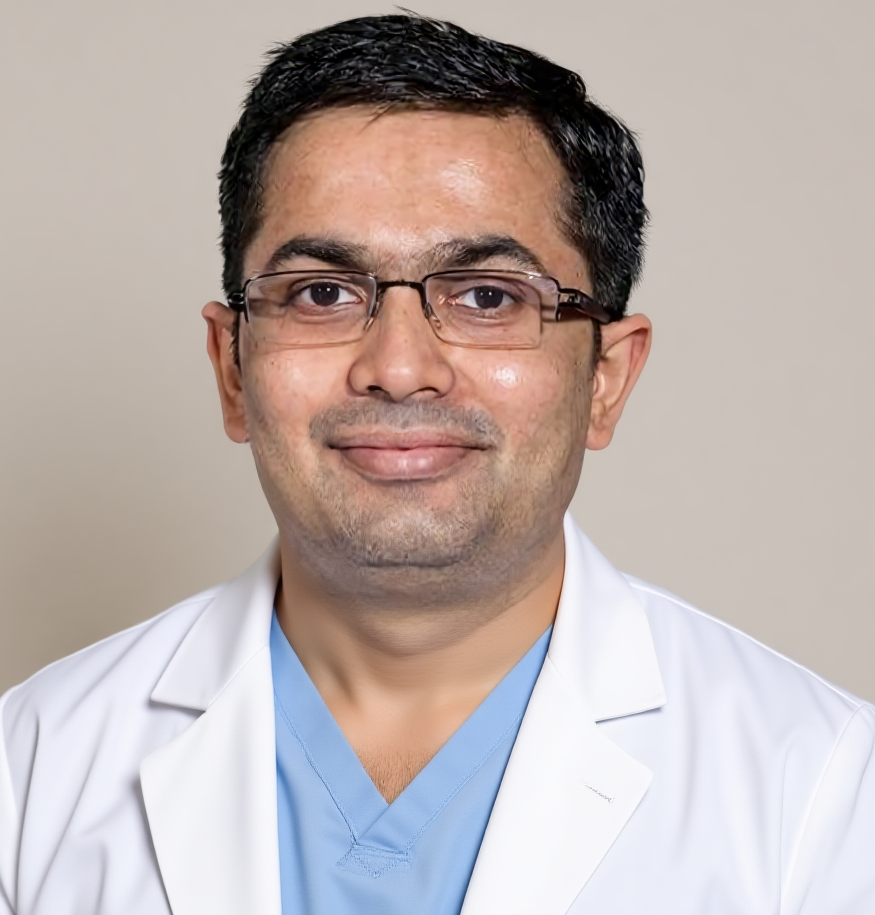
Shah’s Gastro, Cancer & Robotic Surgery Centre. Trained at the institutions that set the standard for gastrointestinal cancer surgery in India. Highly qualified in surgical gastroenterology specifically, not general surgery with an interest. A practice built on the upper gastrointestinal tract, week after week.
Dr Harsh Shah
MS, MCh (Surgical Gastroenterology), DrNB (Surgical Gastroenterology)
Stomach Cancer Surgeon · Apollo Hospital, Bhat, Gandhinagar · Gota OPD, Ahmedabad
Google rating 4.89 from 216 reviews at the Gota clinic, and 4.94 from 17 reviews at Apollo, Bhat.
The antrum is the lower third of the stomach, the funnel-shaped part that leads into the pylorus and then the duodenum. A cancer here is the commonest site of stomach cancer, and it behaves differently from a cancer higher up because of where it sits.
Two consequences follow from that position. The first is that the tumour narrows the stomach’s outlet, so the earliest symptoms are usually fullness after small meals, vomiting undigested food some hours after eating, and weight loss — not pain. Many patients are treated for months for acidity before anyone looks inside. The second is surgical: because there is healthy stomach above the tumour, Dr Harsh Shah can usually remove the lower stomach and leave the upper stomach in place.
The symptoms that should lead to an endoscopy rather than another course of antacids are dysphagia, early satiety, unexplained weight loss, iron-deficiency anaemia, black stools or vomiting of blood, and dyspepsia that has lasted more than four to six weeks in anyone over 55.
Four things must be known before a treatment plan can be made: what the tumour is under the microscope, how far it has spread, whether the abdominal lining is involved, and whether the patient is well enough for the full pathway.
| Test | What it decides |
|---|---|
| Endoscopy with biopsies | Confirms the cancer and measures the distance from the pylorus and from the junction with the food pipe — this is what decides subtotal versus total gastrectomy |
| CT scan, chest to pelvis | Stage: local extent, lymph nodes, spread to liver or elsewhere |
| Staging laparoscopy with peritoneal washings | Looks directly at the abdominal lining for deposits a CT cannot see. Positive washing cytology changes the whole plan |
| Blood tests, nutrition assessment | Haemoglobin, albumin, weight loss — these decide whether feeding support comes before chemotherapy |
| Biomarkers (HER2, PD-L1, MSI) | Only for advanced disease, and the results are needed before systemic treatment starts, not after |
A PET scan is not part of the routine workup. Neither is an endoscopic ultrasound, unless it would change the decision in an early or borderline tumour.
Every case is discussed in a multidisciplinary meeting before definitive treatment begins. That is not a formality — the choice between operating first and giving chemotherapy first is a meeting’s decision, not one surgeon’s.
A subtotal gastrectomy removes the lower part of the stomach containing the tumour, the first part of the duodenum, the fatty tissue around the stomach and the lymph nodes that drain it. The remaining upper stomach is joined to a loop of small bowel — a Roux-en-Y reconstruction.
Three things separate an adequate operation from a good one, and all three are decided in theatre by Dr Harsh Shah.
The margin. At least five centimetres of normal stomach above the tumour for the common intestinal type, and wider for the diffuse type, which spreads further through the wall than it appears to. Where there is doubt, the margin is checked by frozen section during the operation rather than assumed.
The lymph node clearance. A D2 dissection clears not only the nodes along the curvatures of the stomach but the deeper stations along the left gastric, common hepatic and splenic arteries. A minimum of 15 nodes must reach the pathologist, and the target is more than 25. The spleen and the tail of the pancreas are not removed to achieve this; that was old practice and it added complications without adding survival.
The approach. Laparoscopic and robotic surgery are both established for distal tumours and give the same cancer clearance with less pain and a faster recovery. For a bulky tumour, one growing through the stomach wall into neighbouring structures, or where a total gastrectomy is likely, the open approach remains the right judgement. Dr Harsh Shah decides this on the scan and the findings, not on preference, and tells the patient which is planned and what would change it.
Chemotherapy is part of the treatment for most patients, not an afterthought. The usual pattern is four cycles before surgery and four after, which improves survival more than surgery alone. Surgery is scheduled four to six weeks after the last pre-operative cycle.
★★★★★
“We are very thankful to Dr. Harsh Shah for treating and operating on my father for gastric (stomach) cancer. From the first consultation to the surgery and follow-up, he guided us with great care and explained everything clearly. My father is doing well now.”
Moh. Ahsan · Google review, Apollo Hospital, Bhat
★★★★★
“My father has carcinoma of stomach, Harsh sir did radical gastrectomy and he is recovering very nicely under Dr. Harsh's observation. He listens to each and every complaint calmly and with patience and makes the patient very comfortable during treatment, during the procedure and during the stay at hospital.”
Tina Parmar · Google review, Gota, Ahmedabad
★★★★★
“Dr Harsh Shah's dedication and commitment to his patients' health are commendable. He always provides comprehensive explanations and ensures that we understood our treatment plans. Dr Harsh Shah is the best stomach cancer surgeon in Ahmedabad, Gujarat.”
Haresh Chavda · Google review, Gota, Ahmedabad
Shared with the patient’s written consent. Every patient’s course differs; this is one person’s experience, not a promise of outcome.
With the upper stomach preserved, most patients return to a normal range of food — but in smaller, more frequent meals, permanently.
Expect six small meals rather than three large ones, at least for the first year. Some patients get dumping — weakness, sweating or palpitations twenty minutes after a sweet or milky meal — which settles with changes to what and when you eat rather than with medicine. Bile reflux causes a bitter taste and morning nausea in some. Vitamin B12 and iron are absorbed less well and are supplemented and monitored for life. Weight usually falls in the first three months and then stabilises; the dietitian’s job is to make that a plateau rather than a slide.
The estimate for gastric cancer surgery is built for the individual patient, and it is given in writing before admission — not quoted over the phone.
What moves it: whether the approach is open, laparoscopic or robotic; whether a total rather than a subtotal gastrectomy is needed; the room category you choose; how many nights are spent in intensive care; and whether a feeding jejunostomy or additional procedure is required. Chemotherapy before and after surgery is costed separately from the operation.
The Apollo insurance desk handles cashless pre-authorisation for all major insurers and TPAs. Send the policy card and the treating doctor’s papers as soon as surgery is planned — pre-authorisation takes working days, and a delayed approval delays the date. Bring, on admission: the policy documents and photo ID, every previous report and scan in original, the current medication list including anything for blood pressure, diabetes or blood thinning, and a family member who will stay.
Usually not. For a cancer in the antrum or distal stomach there is normally enough healthy stomach above the tumour to leave behind, so a subtotal gastrectomy is performed. A total gastrectomy becomes necessary when the tumour extends higher, or when it is the diffuse type that spreads widely through the wall. Dr Harsh Shah will tell you before the operation which is planned and what finding would change it.
Chemotherapy before surgery shrinks the tumour, treats disease too small to see on a scan, and is tolerated far better before an operation than after one. The standard pattern is four cycles before and four after. Giving it only afterwards is an option when surgery has already been done for another reason, but it is not the preferred sequence.
Yes, for most distal tumours. Laparoscopic and robotic distal gastrectomy achieve the same lymph node clearance and the same margins as open surgery, with less pain and an earlier discharge. Bulky tumours, those invading neighbouring organs, and most total gastrectomies are better served by the open approach.
Most patients leave between the fourth and sixth day after an uncomplicated subtotal gastrectomy. You go home when you are afebrile for 24 hours, eating a soft diet, walking independently and comfortable on tablets.
D2 means clearing the second tier of lymph nodes — those along the major arteries supplying the stomach — as well as the nodes beside the stomach itself. It matters because it determines the stage accurately and reduces the chance of cancer returning in the nodes. At least 15 nodes should be examined; more than 25 is the target.
Always, and no reasonable surgeon objects. What makes it worth the time is bringing the actual material — the biopsy slides and blocks, the CT images on a disc rather than a report alone, and the endoscopy report with measurements. A second opinion given on a summary letter is an opinion about a letter.
Shah’s Gastro, Cancer & Robotic Surgery Centre — Gota, Ahmedabad
Consultations, review of reports, follow-up and surveillance.
Google: Dr Harsh Shah · 4.89 from 216 reviews
Directions to the Gota clinic
Apollo Hospital — Bhat, Gandhinagar
Admission, surgery and inpatient care.
Google: Dr Harsh Shah – Robotic GI Surgeon · 4.94 from 17 reviews
Directions to Apollo, Bhat
Patients travel to Ahmedabad for stomach cancer surgery from across Gujarat — Gandhinagar, Mehsana, Nadiad, Anand, Bhavnagar, Rajkot, Jamnagar and Kutch — and from southern Rajasthan and western Madhya Pradesh. Send reports ahead on WhatsApp and the first visit can be a decision rather than a triage.
Swasth Parivar: twice a month, practical advice on recovery, diet and warning signs. No advertising. Stop any time.
Your number is used for these updates and for the clinic to reach you. It is never sold or passed on. To stop, reply STOP on WhatsApp.