WhatsApp Skip to main content
Dr. Harsh J Shah

Do Stomach Acid Medications Raise Cancer Risk? New Study Says No

You are here >> Home > Latest Updates >Stomach Cancer> Do Stomach…

Do Stomach Acid Medications Raise Cancer Risk New Study Says No

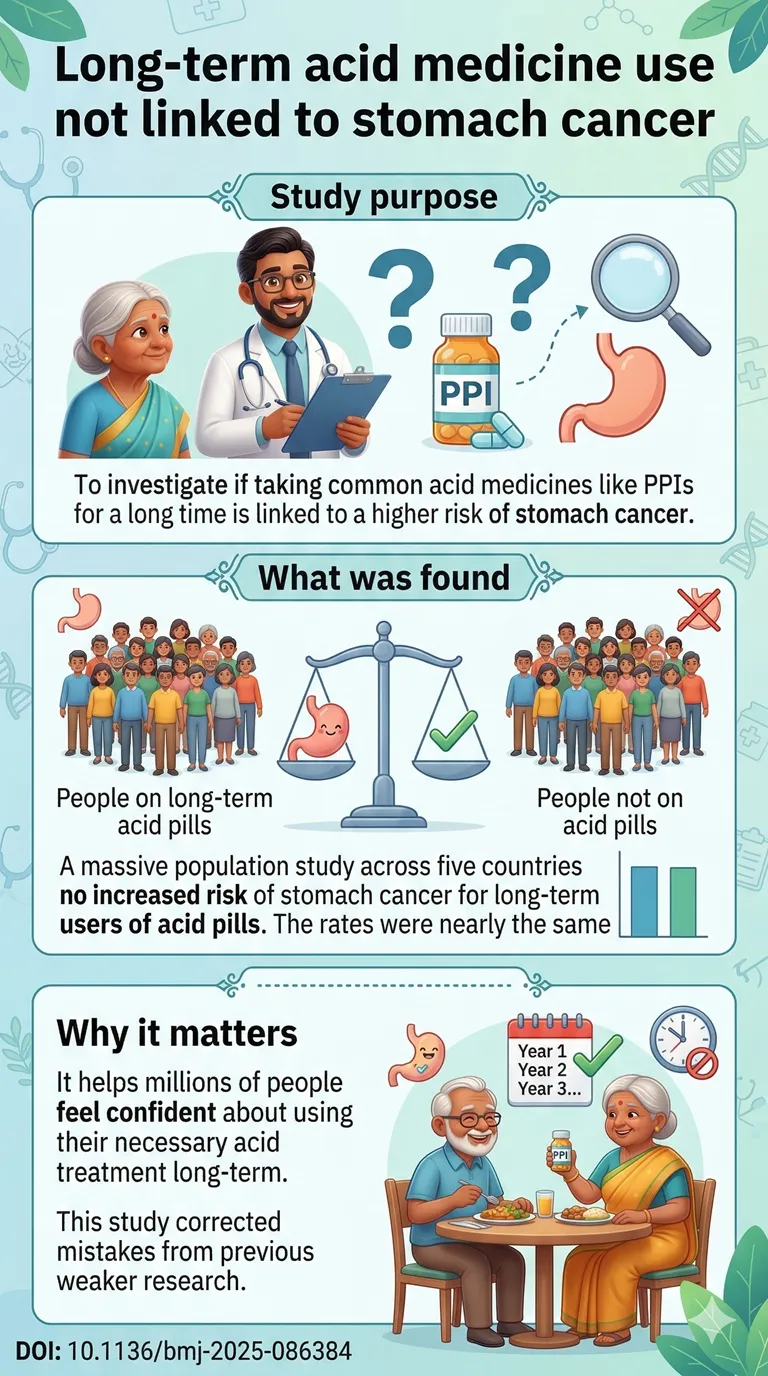
Proton pump inhibitors (PPIs) are medications used to reduce stomach acid. They’re commonly taken for problems like acid reflux, heartburn, or ulcers. Some earlier studies raised concerns that taking PPIs for a long time might increase the risk of stomach cancer. But this new research gives a more reassuring answer.

Scientists looked at health records from over 17,000 people with stomach cancer and more than 172,000 people without it across five Nordic countries.

They focused only on a type of stomach cancer not linked to acid reflux and excluded anyone who had recently started PPIs, to avoid confusing short-term use with long-term effects.

The result? People who used PPIs for more than a year were not at higher risk of stomach cancer. The risk was the same as in people who didn’t use these medications. The same result was found for a similar type of medication called H2 blockers.

This study was very careful to avoid past research errors—like not accounting for H. pylori infection, a common cause of stomach problems and cancer. With that in mind, the findings suggest that long-term PPI use is safe for most people.

If you’re taking a PPI and worried about cancer, this study should help put your mind at ease. Always talk to your doctor about the right dose and duration for you.

Rate this post

Get health updates from Dr Harsh Shah on WhatsApp

Swasth Parivar: every week, practical advice on recovery, diet and warning signs. No advertising. Stop any time.

Your number is used for these updates and for the clinic to reach you. It is never sold or passed on. To stop, reply STOP on WhatsApp.

Dr. Harsh J Shah
Dr Harsh Shah, Gastro, Cancer & Laparoscopic Surgeon, Ahmedabad
Privacy Overview

This website uses cookies so that we can provide you with the best user experience possible. Cookie information is stored in your browser and performs functions such as recognising you when you return to our website and helping our team to understand which sections of the website you find most interesting and useful.