Skip to main contentLast updated: 08-Nov-2026
Tapping Book on WhatsApp will likely open the WhatsApp app on your phone.

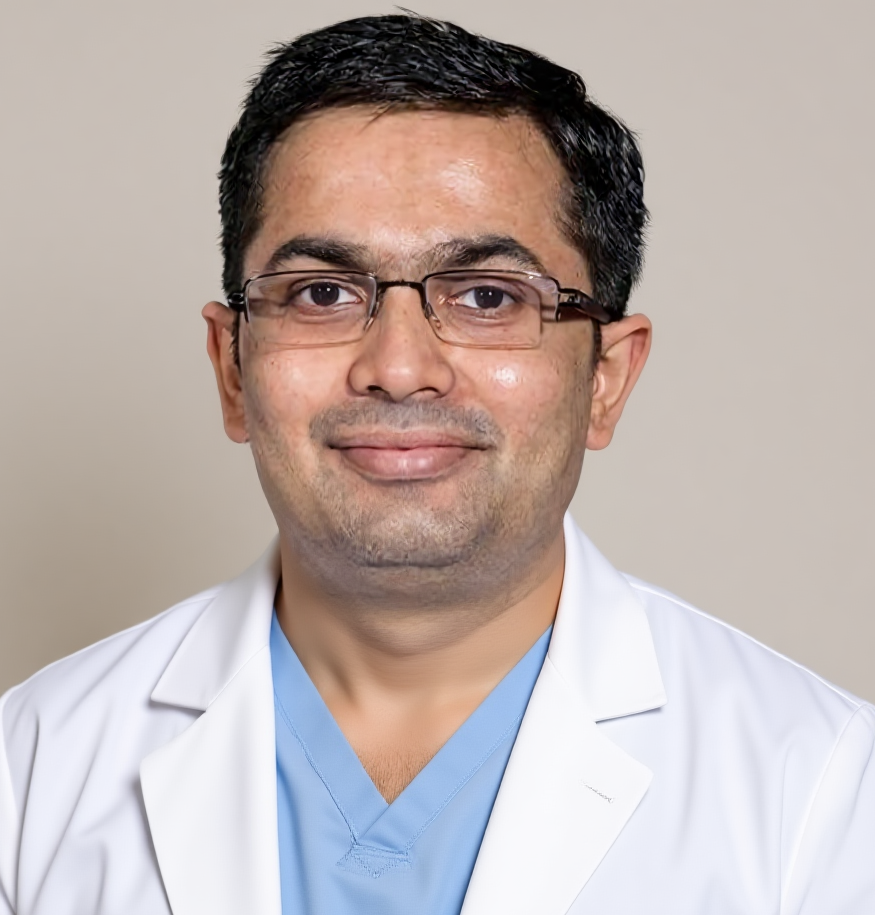
Dr Harsh Shah
MS, MCh (Surgical Gastroenterology), DrNB (Surgical Gastroenterology)
Registered with Gujarat Medical Council, Reg. No. G-38738
Gastro & Cancer Surgeon
Dr. Jivraj Mehta Hospital, Vasna, Ahmedabad · 18 years of experience
In short
Most bleeding ulcers stop with a scope treatment and medicines. An operation is the last step, not the first.
Surgery is considered when bleeding continues or returns after repeat scope treatment, or when a radiology option is not possible.
The decision is made by a team. The surgeon should see you early, so no time is lost if things worsen.
This post explains the surgical step. The full pathway, from the first hours to the scope and recovery, is on our upper GI bleeding treatment page.
A scope can reach the bleeding spot directly and treat it. This is gentler than an operation and works for most people.
The scope is a thin tube with a camera. Through it, the doctor can clip the vessel, inject a medicine, or apply heat. A strong acid-lowering medicine through a drip helps the clot hold.
Because of this, surgery is kept for the few people in whom these steps are not enough. Our post on endoscopy for upper GI bleeding shows what the test is like.
The main reason is bleeding that does not stop, or returns, despite scope treatment and blood transfusion.
A large ulcer on the back wall of the duodenum is more likely to need surgery. A big artery runs close behind it, and the bleeding can be heavy.
A repeat scope is the usual next step. If it fails, a radiologist may block the bleeding artery with a thin tube.
The radiologist passes a tube through an artery in the groin and plugs the vessel that feeds the ulcer. This is called embolisation. It is useful for people who are too weak for a big operation.
It needs a skilled team and a suitable hospital. If it is not available, or it fails, the surgeon steps in.
The surgeon opens the stomach or duodenum, finds the bleeding vessel and stitches it. The aim is to stop the bleed with the smallest operation that works.
The choice between keyhole and open surgery depends on how stable you are. When blood pressure is low, an open operation is often quicker and safer.
The team weighs how unstable you are, what the scope showed, and what is available in the hospital.
| Situation | Usual next step | Why |
|---|---|---|
| Bleeding stopped after scope treatment | Medicines, observation and H. pylori testing | Surgery adds risk without benefit |
| Bleeding returned once | Repeat scope treatment | Many bleeds are controlled on the second try |
| Bleeding returned despite a repeat scope | Embolisation, or surgery | Needs a vessel-level fix |
| Unstable, with heavy bleeding | Urgent surgery or embolisation | Time matters more than gentleness |
| Hole in the gut wall | Surgery | Leakage inside the belly needs repair |
These are general paths. Your own plan depends on your reports, your other illnesses and the team treating you.
Emergency surgery on a weak patient carries real risk. Your team will explain the risks that apply to you before the operation.
Food starts in small steps once the gut wakes up. Most people walk on the first or second day. Our post on recovery after a bleeding ulcer covers medicines, food and follow-up.
Treat the cause. This means the H. pylori test, the right acid medicine, and no anti-inflammatory painkillers or alcohol.
Take the acid tablet for as long as advised, and keep your follow-up visits. If you need aspirin or a blood thinner for the heart or brain, never stop it on your own. Your doctor can add stomach protection.
Our post on painkillers, alcohol and stomach bleeding explains how to cut the risk.
No. Most bleeding ulcers stop after a scope treatment and acid-lowering medicine. Surgery is for bleeding that cannot be controlled any other way.
Fresh bleeding is seen again, or blood pressure keeps falling and transfusions do not keep pace. A repeat scope is usually tried once before surgery.
The surgeon opens the stomach or duodenum, finds the bleeding vessel and stitches it shut. A diseased part is removed only when needed.
In an emergency with an unstable patient, an open operation is often safer. Keyhole can suit a stable patient when the surgeon and team are ready for it.
People with a large ulcer, a very low blood count, repeated bleeding, older age, or blood-thinning medicines have a higher chance.
A radiologist can block the bleeding artery through a thin tube. It suits people who are weak for a big operation, and it is done in a hospital with this facility.
It depends on the cause and your condition. Many people stay several days, and some need a short time in intensive care first.
It can, if the cause is not treated. The H. pylori germ, painkillers and alcohol are the usual triggers, so follow-up matters.
For the whole pathway of upper GI bleeding, start at the upper GI bleeding treatment page. For questions before you travel, call +91-63555-64601.
Dr Harsh Shah — Dr. Jivraj Mehta Hospital, Vasna, Ahmedabad
Dr. Jivraj Mehta Hospital, Dr Jivraj Mehta Marg, Vasna, Ahmedabad 380007.
Consultations, review of reports and scans, operations and follow-up. OPD Monday to Saturday, 9 am to 5 pm.
Appointments: +91-63555-64601 · +91-63590-11009 · Hospital 079-2663 6363
Directions to the hospital · WhatsApp +91-63555-64601
Has a scope not stopped the bleeding, or has it come back? Surgery may be one of the options, and the decision needs a careful second look. Dr Harsh Shah reviews your scope findings and blood reports and explains what is sensible. If you are bleeding now, go to the nearest hospital first. You can also call us, or message on WhatsApp. Call +91-63555-64601 Ask on WhatsApp
Tapping Book on WhatsApp will likely open the WhatsApp app on your phone.
Swasth Parivar: every week, practical advice on recovery, diet and warning signs. No advertising. Stop any time.
Your number is used for these updates and for the clinic to reach you. It is never sold or passed on. To stop, reply STOP on WhatsApp.