Skip to main contentLast updated: 04-Nov-2026
Tapping Book on WhatsApp will likely open the WhatsApp app on your phone.

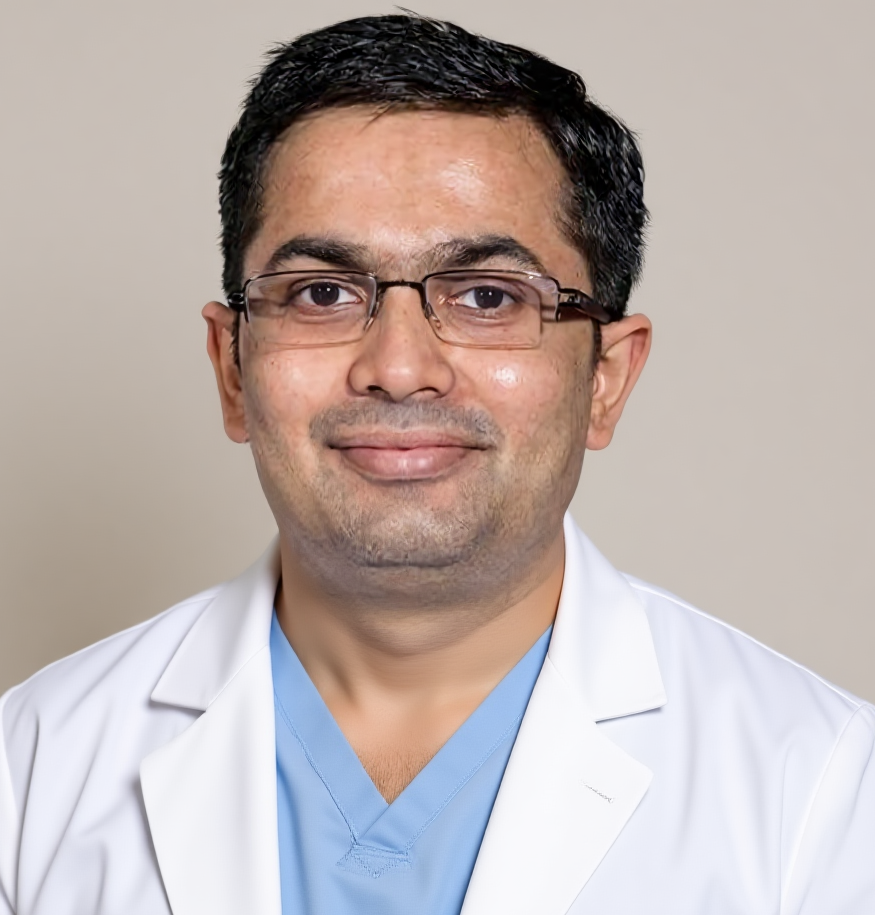
Dr Harsh Shah
MS, MCh (Surgical Gastroenterology), DrNB (Surgical Gastroenterology)
Registered with Gujarat Medical Council, Reg. No. G-38738
Rectal Cancer Surgeon
Dr. Jivraj Mehta Hospital, Vasna, Ahmedabad · 18 years of experience
In short
The past year brought better news on keeping the rectum, on the order of radiation and chemotherapy, and on small points of surgery. No study changed the basic plan: scan, team decision, treatment, then close follow-up.
Some ideas were tested and dropped. Adding another drug to chemoradiation did not help and caused more side effects.
Be careful with headlines. A result from a research centre may not apply to your tumour. Your own scans decide.
The full plan for a tumour in the middle of the rectum is on our middle rectal cancer surgery page. This post only lists what is newer.
Most new studies refine the plan; they do not replace it. The main gains are for people who keep the rectum, and for the order in which treatments are given.
| Topic | What the newer study found | Does it change care now? |
|---|---|---|
| Keeping the rectum | Bowel function and daily life were better after organ preservation than after surgery, over five years | Supports offering it to the right people |
| Short radiation plus chemotherapy | Survival after five years was better than with the long course, but cancer-free time was not clearly different | An accepted option, chosen case by case |
| Extra drug with chemoradiation | No gain; more severe side effects | Not used |
| Pelvic side-wall lymph nodes | Leaving them out was not harmful when they shrank after treatment | Helps selection; scans decide |
| Joining the bowel | Little difference between high and low tying of the main vessel; no gain from a newer stapler | Surgeon’s judgement stays the same |
The sections below explain each line in plain words.
A German trial group followed quality of life for five years. People who kept the rectum after treatment reported better bowel control and fewer toilet visits than those who had the operation.
This supports a careful offer of the non-operative path, not a general switch. Our post on watch and wait for rectal cancer explains who qualifies and how the checks work.
Giving a short course of radiation followed by chemotherapy before surgery is now backed by more follow-up data. Longer follow-up showed better overall survival, though cancer-free time was similar.
A longer course of chemotherapy after radiation has also been tested. People who had it saw their cancer-free time rise a little, but the difference was not firm. Their quality of life dipped during chemotherapy and recovered after surgery.
We discuss the choice between these plans in treatment before surgery and TNT. The right plan depends on your MRI, not on the latest headline.
Some tumours spread to lymph nodes on the side wall of the pelvis. A study found that when these nodes shrink after chemoradiation, leaving them out did not harm cancer control.
Your MRI before and after treatment shows which group you are in. That is why we ask for both scans.
Studies of the join between bowel ends found small differences, if any. The basics of a careful total mesorectal excision have not changed.
The strongest protection against a leak is still careful technique, good blood supply and a covering stoma when the risk is high. Read more in our post on follow-up and low anterior resection syndrome.
Yes. Rectal cancer care goes better when a full team plans each case: surgeon, radiologist, pathologist, and oncologists. New work keeps pointing to this.
Our guidelines summary for rectal cancer shows how the main guides agree on this.
No. Surgery is still the main treatment for most people. A small group whose tumour disappears after treatment can be offered close watching instead, but only after strict checks.
It means giving radiation and chemotherapy together, all before the operation. The aim is to shrink the tumour, treat hidden spread early and, for some people, avoid surgery.
Studies so far show little difference in leaks or bowel function. Careful technique matters more than any single device, and your surgeon chooses what suits your anatomy.
In people chosen because their tumour had gone, studies report better bowel control than after surgery. It needs frequent scope and MRI checks, and surgery stays ready if the tumour returns.
No. Delay can let the tumour grow. Current treatment is well tested, and new findings usually refine it rather than replace it.
Ask for the study and who took part. Findings from selected patients at research centres may not fit your stage, tumour height or health. Your scans and your team decide.
Yes. A team that sees many rectal cancers and plans each case together, with MRI review, tends to give the safest care. Ask who will review your scans and who will operate.
The full range of rectal cancer care starts at the middle rectal cancer page. For questions before you travel, call +91-63555-64601.
Dr Harsh Shah — Dr. Jivraj Mehta Hospital, Vasna, Ahmedabad
Dr. Jivraj Mehta Hospital, Dr Jivraj Mehta Marg, Vasna, Ahmedabad 380007.
Consultations, review of reports and scans, operations and follow-up. OPD Monday to Saturday, 9 am to 5 pm.
Appointments: +91-63555-64601 · +91-63590-11009 · Hospital 079-2663 6363
Directions to the hospital · WhatsApp +91-63555-64601
Have you read news about a new way to treat rectal cancer and wonder if it applies to you? Headlines often sound bigger than the study behind them. Bring your reports and ask. Dr Harsh Shah will tell you what has really changed, and what has not. Call, or send a message on WhatsApp. Call +91-63555-64601 Ask on WhatsApp
Tapping Book on WhatsApp will likely open the WhatsApp app on your phone.
Swasth Parivar: every week, practical advice on recovery, diet and warning signs. No advertising. Stop any time.
Your number is used for these updates and for the clinic to reach you. It is never sold or passed on. To stop, reply STOP on WhatsApp.