WhatsApp Skip to main content

Dr. Harsh J Shah

Close to the Throat and Windpipe: Checks, Chemoradiation and Surgery for Cancer in the Upper Food Pipe

Shah's Gastro, Cancer & Robotic Surgery Centre · Ahmedabad & Gandhinagar

Last updated: 11-Oct-2026

Upper third oesophageal cancer · Gota OPD, Ahmedabad · Apollo Hospital, Bhat, Gandhinagar

A cancer high in the food pipe sits in the neck or the upper chest. Its neighbours are the throat, the voice box and the windpipe.

Those neighbours set the order of care. The throat and the airway are checked from inside before any treatment is chosen.

In the neck part, chemoradiation is usually the main treatment, not a step before surgery. In the upper chest, the tumour board weighs chemoradiation and an operation.

Neck part or chest part: the line that changes the plan

The upper food pipe has two parts. One is a short segment in the neck, just below the throat. The other lies in the upper chest, behind the windpipe. The endoscopy measures where the tumour starts and ends. That puts it on one side of the line.
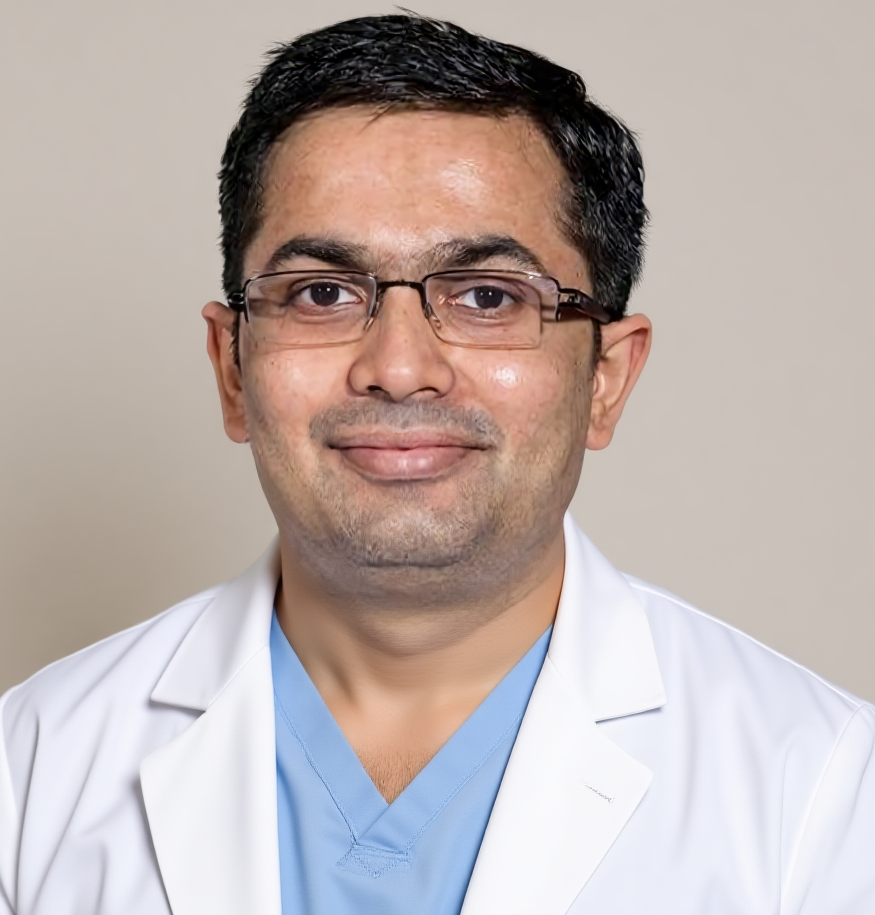
Dr Harsh Shah, food pipe cancer surgeon, Ahmedabad
Dr Harsh Shah — MS, MCh (Surgical Gastroenterology), DrNB (Surgical Gastroenterology).

Shah’s Gastro, Cancer & Robotic Surgery Centre. Trained in super-specialty surgical gastroenterology programmes, qualified twice over in the specialty, with 18 years of experience in food pipe and stomach surgery. Mapping endoscopy, coordination of ENT and airway checks, the tumour board with radiation and medical oncology, three-stage oesophagectomy, feeding access, and close surveillance after chemoradiation sit within one practice.

Dr Harsh Shah
MS, MCh (Surgical Gastroenterology), DrNB (Surgical Gastroenterology)
Registered with Gujarat Medical Council, Reg. No. G-38738
Food Pipe Cancer Surgeon · Apollo Hospital, Bhat, Gandhinagar · Gota OPD, Ahmedabad

Google rating at the Gota clinic: 4.89 from 216 reviews. At Apollo, Bhat: 4.94 from 18 reviews.

Upper food pipe cancer: how the level changes the plan
Neck part (cervical)Upper chest (upper thoracic)
Usual main treatment for squamous cell cancer.Chemoradiation alone. The voice box and throat are kept.Chemoradiation, then an operation, for a fit patient with locally advanced disease.
Extra checks before planning.Throat and voice-box check. Airway check.Bronchoscopy of the windpipe. Throat and voice-box check.
If an operation is done.Only for selected cases, such as a cancer that returns after chemoradiation.McKeown oesophagectomy. The new join is made in the neck.
Follow-up.Close endoscopy and CT, so a returning cancer can still be removed.Depends on the treatment received.

Signs that bring a patient in

Food sticking high up, just below the throat, is the usual first sign. Solids stick first, then liquids. Pain on swallowing, weight loss, anaemia or a lump in the neck also call for an endoscopy.

Two signs carry extra weight at this level. A hoarse voice can mean the tumour is pressing on the nerve to the voice box. Coughing each time you drink can mean a channel has opened into the windpipe. Both suggest a more advanced tumour. Call the surgeon the same day if you have either. Do the same if you choke on food, vomit blood or cannot swallow saliva.

Three checks that matter most for a high tumour

A high tumour needs three checks beyond the usual endoscopy and scans. The throat and voice box are examined. The windpipe is looked at from inside. The lining is mapped with dye.

  1. Throat and voice-box check by the ENT surgeon. Squamous cell cancer of the food pipe can come with a second cancer in the head and neck. Finding it first changes what is treated, and how.
  2. Bronchoscopy. A thin camera goes into the windpipe. It shows whether the tumour has grown into the airway. If it has, an operation is no longer the right choice. Chemoradiation becomes the plan.
  3. Lugol dye mapping at endoscopy. The dye shows pale, abnormal patches the eye misses. These may be a second early spot or the true upper edge of the tumour. Each patch is biopsied.

The full test sequence

The checks follow a fixed order. Tissue comes first, then the spread of the tumour, then your fitness. All results are ready before the tumour board meets, so the plan is made once.

Suspected upper food pipe cancer: the tests and what each decides
TestWhat it decides
Endoscopy with many biopsies and photos. The distance from the teeth to each end of the tumour is measured.Whether it is cancer, and which type. Whether it lies in the neck or the chest.
Lugol dye or special-light mapping.The true edges, and any second early spot.
Throat and voice-box check by the ENT surgeon.A second head and neck cancer.
Bronchoscopy.Whether the windpipe is invaded.
Contrast CT of chest, abdomen and pelvis.Spread to nodes, liver or lungs.
PET-CT when the aim is to remove the tumour.Hidden spread far away.
Endoscopic ultrasound, only when it changes the plan.The depth of an early tumour. A sample from a suspicious node.
Blood tests, albumin and sugar. ECG, heart echo and lung tests with DLCO.Your fitness for chemoradiation and for any chest operation.

No blood tumour marker is used to diagnose or to decide treatment. If the cancer has already spread, the biopsy is tested for PD-L1 and MSI. Adenocarcinoma is also tested for HER2. These results choose the first medicines, so they come back before treatment starts.

Is it cancer at all?

A high narrowing is not always a food pipe cancer. It can be a benign narrowing, a leiomyoma or GIST, or a cancer that began in the throat. Each needs a different team, so the biopsy and ENT check come first.

The rule is the same as anywhere in the food pipe. Nothing is stretched, stented or operated on until tissue has been read. If the first biopsies do not settle it, the endoscopy is repeated. A tear during stretching is a same-day emergency.

What a high narrowing can turn out to be
FindingWhere it goes next
Squamous cell cancer or adenocarcinoma of the food pipe.It is staged and treated as on this page.
Cancer of the throat or voice box.It is treated with the head and neck cancer team.
Leiomyoma or GIST under a normal lining.It follows its own pathway after endoscopic ultrasound.
Benign narrowing, with no cancer on biopsy.It is managed as a benign stricture.

The treatment ladder at this level

The ladder has the same steps as lower down. But here chemoradiation carries more weight. The tumour board decides every plan, unless the cancer has spread, and every neck-part cancer.

Upper food pipe cancer: which treatment for which case
CaseUsual treatment
Very early, only in the lining.Removal through the endoscope (EMR or ESD).
Squamous cell cancer in the neck part.Chemoradiation alone, then close checks.
Grown into the windpipe or another vital organ (T4b).Chemoradiation alone.
Locally advanced squamous cell cancer in the upper chest, fit patient.Chemoradiation, then McKeown oesophagectomy.
Unfit for surgery, or not wanting it.Chemoradiation alone.
Adenocarcinoma at this level.The adenocarcinoma track, with chemotherapy around an operation. The board decides.
Spread to distant organs.Immunotherapy with chemotherapy, chosen by biomarkers. Help with swallowing.

When chemoradiation is the treatment, not a step before surgery

Chemoradiation alone is the first-line treatment for some patients. No operation is planned. The voice box and throat are kept. This is the plan for three groups.

  1. Squamous cell cancer in the neck part of the food pipe.
  2. A tumour that has grown into the airway.
  3. Patients who are unfit for surgery or do not want it.

Definitive chemoradiation means a full course of radiation over about five to six weeks. Chemotherapy is given alongside it. Nothing is removed, so the response is judged later by endoscopy and CT. Follow-up is close and frequent. The cancer may come back at the same place. If so, an operation to remove it may still be possible. This is a salvage oesophagectomy. That is why this treatment is planned only where that operation can be done.

Some centres now watch instead of operating when all visible tumour has gone. This is a new approach, not yet standard. It is considered only at the tumour board, with the salvage option kept open.

If an operation is advised

For an upper-chest tumour in a fit patient, the usual operation is a McKeown oesophagectomy. It is done in three stages: chest, abdomen and neck. The new join is made in the neck.

The stomach is shaped into a tube. It is joined to the food pipe in the neck, well above the tumour. This keeps the upper margin safe. Lymph nodes in the chest and abdomen are removed. If nodes in the neck or upper chest are involved, the neck nodes are removed too. This is called a three-field operation. If an edge is in doubt, it is checked under the microscope during surgery.

A keyhole or robotic approach is used where it suits the tumour. It lowers lung problems. An open operation is chosen when earlier treatment has made the tissues hard. The nerve to the voice box runs close to the neck part of the operation. The risk of a hoarse voice is discussed before consent.

Swallowing and nutrition during treatment

Swallowing may get worse before it improves during chemoradiation. Poor nutrition must never stop treatment, so the dietitian joins early if you are losing weight or eating little.

Large weight loss, very low weight, low albumin, or eating under half your needs for over a week all bring in the dietitian. This happens before treatment starts.

  1. If eating becomes nearly impossible and an operation is planned, a feeding tube into the small bowel is preferred to a stent.
  2. If no operation is planned, a stent or radiotherapy can keep swallowing open.
  3. Report coughing with each swallow the same day. It can mean a channel has opened into the windpipe.
  4. Stop smoking and alcohol, walk daily and do breathing exercises from the first visit.

What patients say

★★★★★

“Met with Dr. Harsh Shah for the consultation of one of my relative. Dr. Harsh Shah is an exceptional surgical oncologist in Ahmedabad. His expertise in treating complex GI cancers like liver, pancreas, and colon cancers is truly remarkable. He explains everything clearly and gives patients full confidence in their treatment. Highly recommended for anyone looking for a skilled and compassionate cancer specialist. — Nagesh Patidar, Google review, Gota clinic listing”

★★★★★

“We consulted Dr. Harsh Shah for rectal cancer treatment and had a very good experience. He is a very experienced and knowledgeable doctor who explained the treatment process clearly and guided us at every step. His supportive nature and professional approach gave us confidence throughout the treatment. We are grateful for his dedication and the care provided by him and his team. Highly recommended for rectal cancer treatment in Ahmedabad. — Mamta Somar, Google review, Apollo, Bhat listing”

★★★★★

“Dr harsh sir is a good doctor for Liver, Gastro & Cancer Surgeon in Ahmedabad thanks sir. — Milan Pareek, Google review, Gota clinic listing”

These are real Google reviews from Dr Harsh Shah’s two listings, shown exactly as written. None of them is about a food pipe cancer. They speak about his cancer care in general.

Two videos, before you come

Dr Harsh Shah explains how chemoradiation, surgery, chemotherapy and immunotherapy fit together in food pipe cancer.

A patient describes the operation and recovery after an oesophagectomy by Dr Harsh Shah. It was recorded and shared with written consent.

After a McKeown operation: the hospital stay

Recovery follows a written plan for each day. You sit out of bed the same evening. You walk from the next day. You are fed through a bowel tube while the neck join heals.

A swallowing test comes before anything is taken by mouth. Because the join is in the neck, the neck wound is checked every day. Redness or swelling there can be an early sign of a leak. A neck leak is usually managed by opening the wound at the bedside so it can drain.

A fast or irregular heartbeat, fever or a rising need for oxygen stops the plan. A scan is done the same day. A hoarse voice or coughing on thin liquids is checked by the ENT team and the swallowing therapist. It usually recovers. You go home walking. You will be taking liquids or soft food, or be settled on tube feeds. Your family is trained in tube care.

The risks, named in words

Chemoradiation and an oesophagectomy each carry real risks. Dr Harsh Shah names each one at the consent talk, with figures that fit your age, fitness and earlier treatment.

An oesophagectomy carries a risk of death. This is stated plainly at that talk. Chemoradiation has its own side effects. The oncology team explains them before the course starts.

After an operation: there can be a leak at the neck join. Chest infection and other lung problems can occur. So can an irregular heartbeat. The voice can turn hoarse, or thin liquids can be hard to swallow. There can be a milky lymph leak into the chest. The new food pipe can get too little blood. Bleeding, wound infection and clots can occur. Longer term: the join can narrow. Acid or bile can come back up. Small, frequent meals and sleeping with the head raised become habits.

Follow-up, by the treatment you received

At this level, follow-up after chemoradiation is very close. A cancer that returns at the same place can sometimes still be removed. After an operation, visits and scans go on for many years.

Follow-up after treatment for an upper food pipe cancer
Treatment receivedWhat follow-up involves
Chemoradiation alone.Endoscopy and CT every three months for two years. Then every six months to five years.
Oesophagectomy.A visit at two weeks to explain the pathology. Visits every three months for ten years. CT every six months for two years, then yearly to five years.
Endoscopic removal.Endoscopy twice in the first months, then yearly. CT yearly for some years if the cancer was invasive.
All patients.Weight, swallowing, voice, vitamin B12 and iron, for life.

Your patient journey, in five steps

  1. Book your consultation. Come to the Gota OPD, Ahmedabad, with every endoscopy, biopsy and scan report you have.
  2. The three extra checks. ENT check, bronchoscopy and dye mapping are done. Scans and heart and lung tests are added where still needed.
  3. The tumour board. Neck or chest, cell type and stage are presented. The plan is agreed: chemoradiation alone, or chemoradiation and an operation.
  4. Treatment. Chemoradiation is given with the oncology teams. Any operation is done at Apollo Hospital, Bhat, Gandhinagar.
  5. Follow-up. Endoscopy and CT follow a written schedule. After chemoradiation, the salvage option is kept open.

Cost, insurance and admission

The cost depends on the treatment you need and on the room and length of stay. You get a written estimate before treatment starts, and we explain what it covers.

Apollo Hospital, Bhat, works with the major insurers and cashless schemes. Its office handles pre-authorisation directly. Immunotherapy and some newer medicines cost extra. Help schemes are discussed when they are advised. Please bring every endoscopy report with photos and every biopsy report. Bring CT and PET-CT images and any bronchoscopy or ENT report. Bring past treatment notes, a list of your medicines, your insurance card and an ID.

Frequently asked questions

Is an operation always needed for a cancer high in the food pipe?

No. For a squamous cell cancer in the neck part of the food pipe, chemoradiation is usually the main treatment and no operation is planned. An operation is weighed for a tumour in the upper chest in a fit patient, usually after chemoradiation.

Why do I need an ENT examination for a food pipe cancer?

Squamous cell cancer of the food pipe can come with a second cancer in the throat or voice box. The ENT surgeon looks for it before treatment, because finding one changes the plan.

What does the bronchoscopy show?

Whether the tumour has grown into the windpipe. If it has, an operation is no longer the right treatment and chemoradiation becomes the plan.

Will my voice be affected?

A hoarse voice before treatment can mean the tumour is pressing on the nerve to the voice box. After an operation with a neck join, a hoarse voice can occur and usually recovers; the risk is discussed at the consent visit.

What happens if the cancer comes back after chemoradiation?

Follow-up after chemoradiation is close and frequent for this reason. A cancer that returns at the same place can sometimes still be removed with a salvage operation, which is planned only where that operation can be done.

I cannot swallow during chemoradiation. What can be done?

If an operation is planned, a feeding tube into the small bowel is usually preferred to a stent. For patients who will not be operated on, a stent or radiotherapy can keep swallowing open.

Where Dr Harsh Shah sees and operates

Shah’s Gastro, Cancer & Robotic Surgery Centre — Gota, Ahmedabad
Consultations, review of endoscopy, biopsy, ENT and scan reports, follow-up after chemoradiation or an operation.
Google: Dr Harsh Shah · 4.89 from 216 reviews
Directions to the Gota clinic · +91-63555-64601

Apollo Hospital — Bhat, Gandhinagar
Apollo Hospital International Limited, Plot No. 1 A, GIDC Bhat Industrial Estate, Bhat, Gandhinagar.
Google: Dr Harsh Shah – Robotic GI Surgeon · 4.94 from 18 reviews
Directions to Apollo, Bhat · WhatsApp +91-63555-64601

Patients come to Ahmedabad from across Gujarat. They come from Gandhinagar, Mehsana, Banaskantha, Nadiad, Anand, Bhavnagar, Rajkot, Jamnagar and Kutch. Many also come from southern Rajasthan and western Madhya Pradesh.

Food sticking just below the throat, or a hoarse voice with swallowing trouble? Endoscopy and biopsy reports with photographs, CT or PET-CT images with reports, any ENT or bronchoscopy report and blood reports can be sent ahead of the appointment, so the consultation starts with them already read; treatment is decided at the consultation, after examination and at the tumour board. Choking on food, coughing blood or being unable to swallow saliva needs the nearest emergency department now. Call +91-63555-64601 · Send the reports ahead on WhatsApp

Rate this page

Get health updates from Dr Harsh Shah on WhatsApp

Swasth Parivar: twice a month, practical advice on recovery, diet and warning signs. No advertising. Stop any time.

Your number is used for these updates and for the clinic to reach you. It is never sold or passed on. To stop, reply STOP on WhatsApp.

Dr. Harsh J Shah
Dr Harsh Shah - Surgical Gastroenterologist and GI Robotic Surgeon, Ahmedabad
Privacy Overview

This website uses cookies so that we can provide you with the best user experience possible. Cookie information is stored in your browser and performs functions such as recognising you when you return to our website and helping our team to understand which sections of the website you find most interesting and useful.